
WEBDESK - NAYADAUR
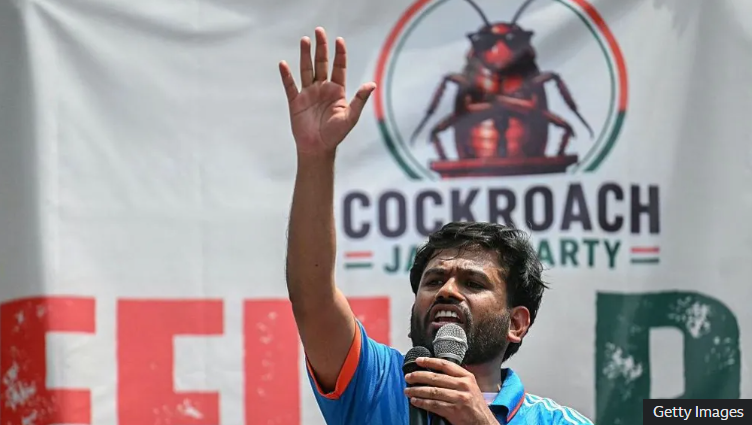
India’s youth-led Cockroach Janta Party (CJP) is returning to the streets, this time demanding the resignation of Chief Election Commissioner Gyanesh Kumar and calling for greater transparency in the country’s electoral system.
The group has announced a protest in Mumbai on Friday, Oct. 2, as part of a wider campaign over allegations surrounding the Election Commission’s Special Intensive Revision (SIR) of electoral rolls. CJP founder Abhijeet Dipke has said the movement will continue in other Indian cities, including Goa, Bengaluru and Kolkata.
The planned Mumbai demonstration was initially scheduled for Shivaji Park, but Mumbai Police denied permission, citing requirements for civic approval as well as concerns over traffic, noise and access for emergency vehicles. Dipke subsequently announced a “Jail Bharo Andolan”, or voluntary arrest campaign, in response.
The protests have been triggered by growing controversy surrounding the Election Commission’s revision of voter lists. An investigation by The Indian Express reported that Election Commissioners Sukhbir Singh Sandhu and Vivek Joshi had formally raised objections at least 14 times over 10 months concerning decisions and processes at the commission. The reported disagreements included issues involving electoral-roll revisions, voter registration forms and access to the voter database.
The dispute has focused particularly on the SIR exercise, under which millions of names have been removed from draft electoral rolls across India. The Election Commission has said the process is intended to identify duplicate, deceased and otherwise ineligible entries, while allowing eligible voters to seek inclusion.
Opposition parties and activists, however, have alleged that the process could exclude legitimate voters. They have also accused the commission of acting in ways that could benefit the ruling Bharatiya Janata Party (BJP). The BJP and Election Commission have rejected those allegations.
The controversy has also moved to court. The Supreme Court has agreed to hear a petition challenging aspects of the Election Commission's functioning and the SIR process, including allegations that decisions were taken without the required collective decision-making.
The Election Commission has defended its internal decision-making, saying differing views are part of the process and that decisions were ultimately taken unanimously. The commission has also ordered a special drive in states where SIR has been completed to enroll eligible voters who may have been left out.
The CJP emerged earlier this year as a satirical online movement before transforming into a pressure group. Its founder, Dipke, has used social media to mobilize young Indians around issues including electoral transparency and examination reforms. The movement has attracted millions of followers online.
The latest demonstrations mark a new phase for the group, bringing its campaign from social media into direct confrontation over India’s electoral institutions. Opposition parties and civil-society groups have also announced separate demonstrations concerning the Election Commission.
The protests are expected to keep pressure on the poll panel as the debate over voter-list revisions, internal disagreements within the commission, and the protection of eligible voters continues.