
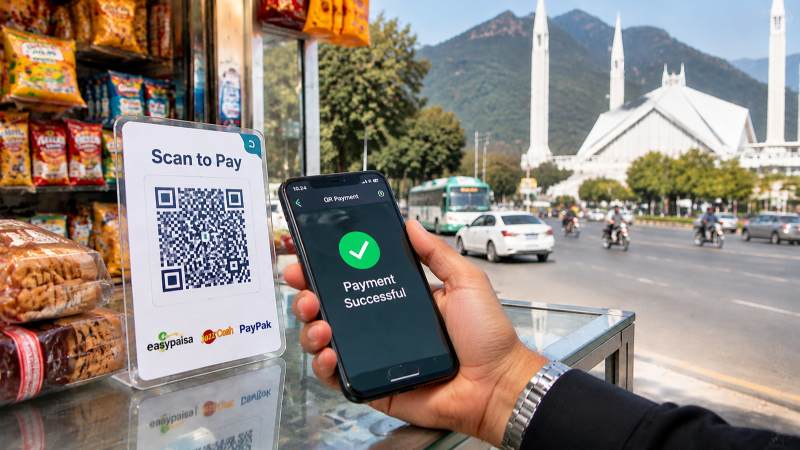
ISLAMABAD: The government has set December 31 as the deadline to transform Islamabad into Pakistan’s first cashless city, launching an ambitious digital payments initiative that promises to modernise financial transactions but raises questions about implementation, and digital accessibility.
The decision was taken during a high-level meeting on the Cashless Capital project, chaired by State Minister for Interior Tallal Chaudhry in Islamabad on Friday, according to an official statement issued by the Ministry of Interior on X.
اسلام آباد کو ملک کا پہلا مکمل کیش لیس شہر بنانے کا فیصلہ، 31 دسمبر ڈیڈ لائن مقرر، وزیر مملکت برائے داخلہ طلال چوہدری کی زیر صدارت کیش لیس اسلام آباد کے حوالے سے اہم اجلاس، https://t.co/QPxAieLv1Z
— Ministry of Interior GoP (@MOIofficialGoP) November 13, 2026
The initiative is being presented as part of a broader push to promote financial digitisation, improve transparency and reduce dependence on physical currency. Digital payments can potentially streamline commercial transactions, improve documentation and limit opportunities for informal financial dealings that often escape regulatory scrutiny.
However, declaring a city cashless is considerably easier than building the infrastructure and public trust required to sustain such a transition. Islamabad's financial and technological landscape cannot automatically be treated as representative of the country's wider population, where millions remain outside formal banking networks and depend heavily on cash for everyday transactions.
The government's deadline also raises questions about the preparedness of small businesses, street vendors, transport operators and low-income households, many of whom may lack access to smartphones, reliable internet connectivity or digital banking facilities.
Cybersecurity and consumer protection will also be central to the project's credibility. As financial transactions increasingly move online, vulnerabilities involving digital fraud, data breaches and unauthorised access could expose citizens to new forms of financial exploitation. A credible cashless framework would therefore require robust safeguards, effective complaint mechanisms and clear accountability for payment service providers.
While Islamabad's transformation could provide a blueprint for wider financial modernisation, its success will ultimately depend on more than official announcements and administrative deadlines. Without institutional preparedness, digital literacy and meaningful inclusion, the Cashless Capital project risks becoming another headline-driven reform whose ambitions outpace its execution.