
WEBDESK - NAYADAUR
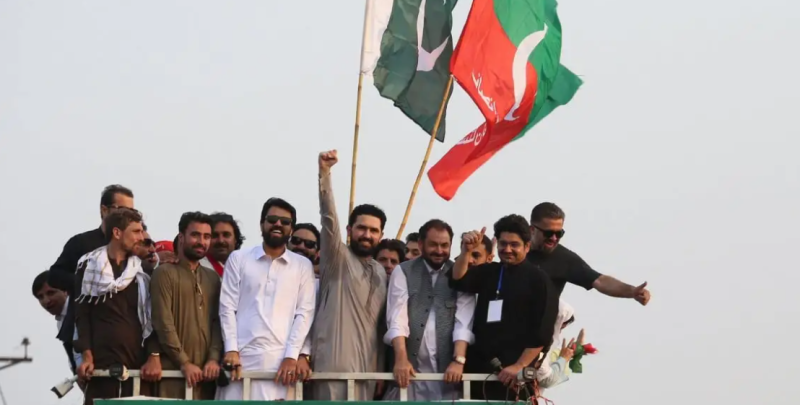
Pakistan’s Minister of State for Interior Talal Chaudhry has confirmed that former Khyber-Pakhtunkhwa chief minister Sohail Afridi and several members of his cabinet have been taken into preventive custody following the imposition of emergency rule and governor’s rule in the province.
“Yes, I can confirm that the chief minister (Sohail Afridi) and some of his cabinet members have been taken into preventive custody,” Chaudhry told Reuters on Monday.
He said the detentions took place on Sunday and added that those facing cases would be charged and tried, while others would be released.
The confirmation came a day after Khyber-Pakhtunkhwa Information Minister Shafi Jan claimed that Afridi had been arrested and urged people across the province to gather in Peshawar. At the time, no government official had publicly confirmed his detention.
The deputy inspector general of police in Peshawar had earlier said Afridi remained in protective custody. According to the police official, eight senior Pakistan Tehreek-e-Insaf (PTI) leaders had been taken into protective custody following the introduction of emergency measures and governor’s rule.
Those detained reportedly included Afridi, PTI leader Junaid Akbar and Khyber-Pakhtunkhwa Assembly Speaker Babar Saleem Swati.
169 PTI workers arrested in Swabi
Separately, police arrested 169 PTI workers during a crackdown across several areas of Swabi district, including Shewa Adda, Yar Hussain, Razar, Swabi Khas, Topi, Lahor and Gadoon.
The deputy inspector general said those arrested included local party office-bearers and active workers. Police took them into custody over concerns that preparations for PTI’s long march, which began on October 4, could disrupt public order.
A heavy police contingent was deployed across the district, with authorities indicating that further arrests could follow.
The detentions have taken place amid heightened political tensions between the federal government and PTI, whose planned protest has become a focal point of the confrontation.
Afridi initially planned to launch the long march on September 27 but rescheduled it to October 4 amid extensive security and traffic restrictions and efforts to negotiate with the federal government.
Marathon negotiations between government and opposition representatives on October 2 and 3 failed to produce an agreement. PTI Secretary General Salman Akram Raja subsequently said the deadlock centred on differences over counterterrorism policy in Khyber-Pakhtunkhwa.
Emergency rule transfers provincial powers
The detentions followed President Asif Ali Zardari’s approval of Prime Minister Shehbaz Sharif’s recommendation to impose emergency rule in Khyber-Pakhtunkhwa amid worsening security concerns.
The federal government’s proclamation cited the provincial government’s alleged failure to take adequate measures against terrorism and referred to a report by the governor highlighting what it described as a breakdown of the constitutional system.
Issued under Articles 232(1) and 234(1) of the Constitution, the proclamation stated that the provincial government could not function in accordance with the Constitution under the prevailing circumstances.
Under the measures, the federal government gained authority to direct the governor to assume some or all provincial government functions. Powers of the provincial assembly were to be exercised by Parliament or under its authority.
The chief minister, provincial ministers, advisers, special assistants and advocate general ceased to hold office with immediate effect.
The federal government also authorised the deployment of Pakistan Army troops and assets under Article 245 to protect citizens, property and government installations for the duration of the emergency proclamation.
Federal government establishes advisory council
Following the decision, the federal government assumed control of provincial affairs, authorised military assistance to the civil administration and established an 11-member advisory council.
The council comprises Tariq Mahmood Pasha, Dr Amir Abdullah, Lieutenant General (retd) Nigar Johar, Samar Bilour, Dr Sarfaraz Ali, Aamir Javed, Dr M Irshad, Kifayatullah, Tayyab Qureshi, Usman Saifullah Khan and Asif Rafiq. Sanaullah Advocate was appointed provincial advocate general.
PTI has rejected the imposition of emergency and governor’s rule as unconstitutional and vowed to continue its political struggle.
With senior party figures in custody, workers facing arrests and negotiations between the government and opposition stalled, the situation in Khyber-Pakhtunkhwa remains tense. The government's next steps regarding the detained leaders, including whether charges will be formally filed or individuals released, are expected to shape the course of the political confrontation.