
WEBDESK - NAYADAUR
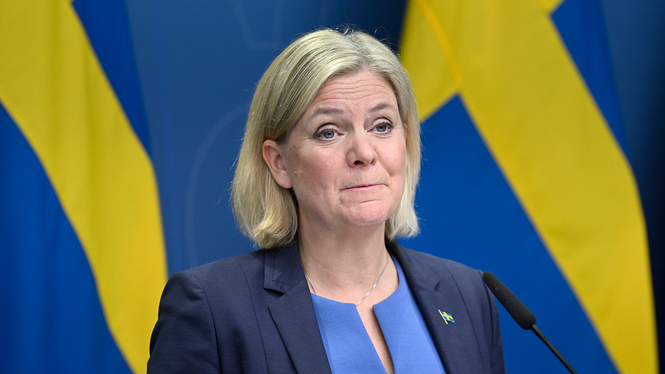
Sweden’s center-left opposition has won the country’s parliamentary election by an exceptionally narrow margin, according to public broadcaster SVT, putting Social Democratic leader Magdalena Andersson in position to seek a return as prime minister.
With 99% of votes counted on Wednesday, the opposition bloc was projected to secure 175 of the Riksdag’s 349 seats, one more than the 174 seats projected for the governing right-wing bloc led by Prime Minister Ulf Kristersson. Reuters reported that only 26,169 votes separated the two blocs at the time.
SVT said the likelihood of the result being overturned was extremely low, although the count was not yet formally complete. Sweden’s election authorities were continuing to process late-arriving advance ballots as well as votes from overseas voters, with the final count expected to extend into Thursday.
The election marks a potential change in government after Kristersson’s right-wing coalition came to power following the 2022 election. His governing bloc includes the Moderates, Christian Democrats and Liberals, with support from the Sweden Democrats.
The opposition grouping is led by Andersson’s Social Democrats and includes the Left Party, Green Party and Centre Party. SVT’s election results showed the Social Democrats as the largest individual party, with about 28% of the vote and 99 seats in the Riksdag in the count reported Wednesday.
The razor-thin result means the election outcome alone does not settle how Sweden will be governed. Andersson and the parties in her bloc will have to navigate negotiations over forming a government and securing parliamentary support.
Those negotiations could prove significant because the opposition parties have differences on several policy issues, including taxation, migration and energy. Reuters had reported before the election that the center-left grouping could face difficult discussions even if it emerged with the largest number of seats.
The election was closely watched because of the role played by the Sweden Democrats, which have supported Kristersson’s government since 2022 without formally joining the cabinet. The party has pushed for stricter immigration policies and sought greater influence over government policy.
For Andersson, the result could represent a return to the office she held from 2021 until the 2022 election. She would need to build sufficient parliamentary support to form and sustain a government.
The unusually close result also highlights the importance of Sweden’s remaining ballots. SVT reported that the seat balance fluctuated during the final stages of counting, with the blocs at different points separated by a single seat.
As of the latest reported count, the opposition remains ahead, but the formal result and subsequent government formation process remain the next steps. Sweden’s 349-seat parliament requires 175 seats for a majority, making even a one-seat difference politically significant.
Why it matters: A change of government could affect Sweden’s domestic priorities, including welfare, taxation, migration, crime policy, and energy, while negotiations among the opposition parties will determine how any new administration can govern.