
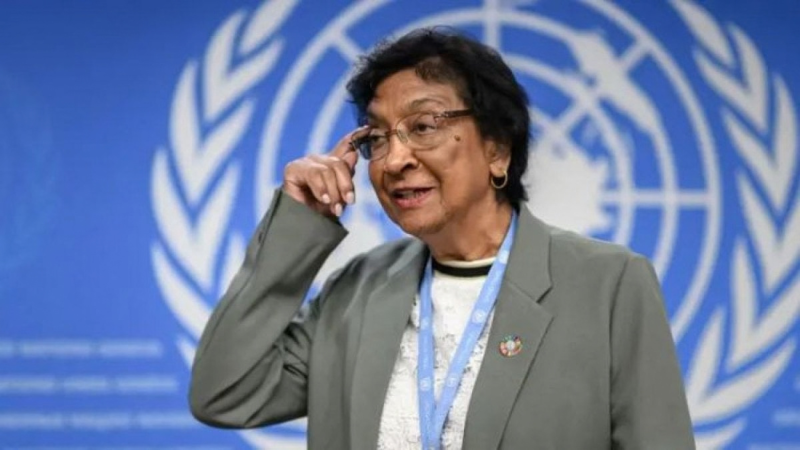
South African human rights lawyer and jurist Navanethem “Navi” Pillay was awarded the 2026 Nobel Peace Prize on October 9 in recognition of her efforts to promote peace, international law and accountability for serious human rights violations.
The Norwegian Nobel Committee announced the award, highlighting Pillay’s longstanding contribution to strengthening the international legal order and ensuring that war crimes, crimes against humanity and genocide are prosecuted. The committee praised her courage, integrity and commitment to universal legal principles at a time when international legal institutions face growing pressure.
Born in Durban, South Africa, in 1941 to a family of Indian Tamil origin, Pillay grew up under apartheid and experienced racial discrimination. She became a lawyer and established her own law practice in 1967, defending anti-apartheid activists and advocating for political prisoners, including Nelson Mandela and others who challenged the apartheid system.
In 1995, Pillay became the first Black woman appointed to South Africa’s High Court. The same year, she joined the International Criminal Tribunal for Rwanda, later serving as its president. Her judicial work contributed to a landmark 1998 judgment establishing that rape and sexual violence could constitute acts of genocide when committed with the requisite intent.
Pillay subsequently served as a judge at the International Criminal Court from 2003 to 2008 before becoming the United Nations High Commissioner for Human Rights, a position she held from 2008 to 2014. During her tenure, she advocated for human rights protections, equality and accountability for abuses.
From 2021 to 2025, she chaired the United Nations Independent International Commission of Inquiry on the Occupied Palestinian Territory, including East Jerusalem, and Israel. The commission concluded in 2025 that Israel had committed genocide in Gaza. Pillay has also served as an ad hoc judge at the International Court of Justice in proceedings concerning allegations of genocide against Myanmar.
The Nobel Committee said Pillay’s career demonstrated the importance of resolving conflicts through legal mechanisms rather than force, emphasizing that lasting peace depends on accountability, justice and respect for international law. Her award comes amid concerns over rising global conflicts and challenges to institutions responsible for upholding international legal standards. By recognising Pillay, the committee underscored the role of independent judges and international courts in protecting victims, establishing responsibility for atrocities and strengthening the foundations of peaceful coexistence.