
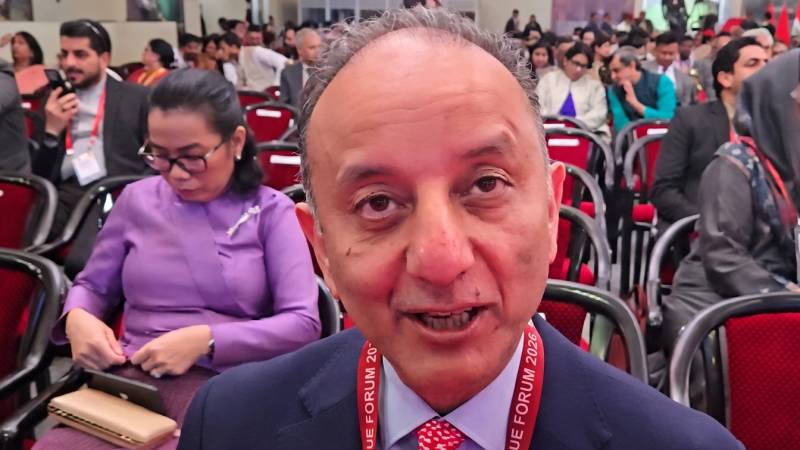
Pakistan’s Climate Change Minister Musadik Masood Malik has expressed optimism about improving relations with India, describing the rapidly shifting geopolitical landscape as an opportunity for regional countries to adopt a broader approach to political, social and diplomatic challenges.
Speaking to reporters in New Delhi on November 20, 2026, on the sidelines of the inaugural Shanghai Cooperation Organisation (SCO) Civilisational Dialogue Forum, Malik said he was hopeful that regional relationships would improve through greater engagement and a collective understanding of shared challenges.
Asked whether India-Pakistan relations could improve following the forum, Malik said, “I think all of our relationships will improve. The region is in flux, as you know. The plates underneath geopolitics are shifting very fast.”
He emphasised the need to look beyond individual political disagreements and adopt a broader regional perspective, adding that countries should address political and social issues while advancing a common regional agenda.
Malik said he hoped participating nations would take a “macro view” of the challenges confronting the region, stressing that dialogue should extend beyond immediate political differences to encompass broader questions of cooperation and shared interests.
Leading Pakistan’s delegation at the three-day forum, scheduled from November 20 to 22, Malik described the gathering as a “tremendous opportunity” for multilateral engagement. He highlighted the importance of shared history, culture and civilisation as foundations for dialogue among regional countries.
His remarks come against the backdrop of strained India-Pakistan relations following the military confrontation between the two nuclear-armed neighbours in May 2025. The minister’s visit marks the first by a Pakistani federal minister to India since that confrontation, making his participation diplomatically significant.
Malik's call for a broader regional perspective underscores the importance of sustained dialogue, although whether cultural engagement can create momentum for a meaningful diplomatic reset remains to be seen.