
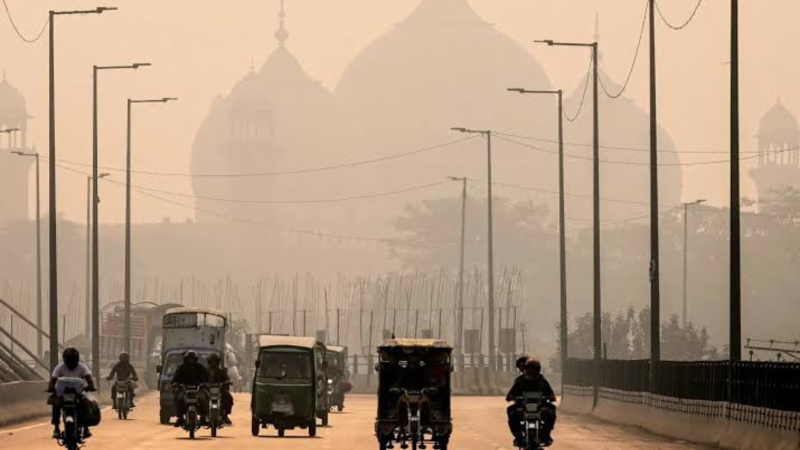
Lahore recorded its lowest average air pollution levels for October 29 in nine years, according to Hawanama data, even as the city’s air quality remained in the ‘Very Unhealthy’ category, highlighting the persistent challenge of tackling smog in Punjab’s provincial capital.
The city’s air quality index (AQI) averaged 208, equivalent to a PM2.5 concentration of 158.3 micrograms per cubic metre, on October 29, 2026. Hawanama records dating back to 2018 show that this was the lowest pollution level recorded for the corresponding date in the nine-year period.
Despite the relative improvement, an average AQI of 208 indicates that Lahore’s air remained hazardous, particularly for children, older people and individuals with respiratory or cardiovascular conditions. The figures suggest that lower pollution compared with previous years does not necessarily translate into safe air for residents.
Cleanest on record for these dates Lahore's air averaged Very Unhealthy at 208 AQI (158.3 µg/m³) over 29–29 October 2026, the lowest for these dates in 9 years of Hawanama records (since 2018). https://t.co/JBoortZeEr
— LahoreAir (@LahoreSmog) October 30, 2026
Meanwhile, the Punjab Environment Protection Agency (EPA) has stepped up its enforcement campaign against sources of air pollution ahead of the smog season, carrying out action against brick kilns, industrial units and other polluting activities.
The Punjab EPA demolished 197 non-compliant brick kilns, sealed 163 units and registered 162 FIRs during its month-long anti-smog operation, as the provincial government intensified enforcement against major sources of air pollution. The enforcement drive reflects the provincial government's broader effort to curb emissions from smoke-emitting vehicles, industrial operations, plastic burning and construction activities that contribute to deteriorating air quality.
EPA Director General Abdullah Nayyar Sheikh said the department was pursuing a data-driven, zero-tolerance strategy to protect public health. The campaign is intended to ensure compliance with environmental regulations and take action against units contributing to air pollution.
However, the enforcement figures also underline the scale of the challenge facing environmental authorities, as pollution continues to pose a serious public health concern despite regulatory action.
Medical experts have urged residents to minimise unnecessary outdoor activities, particularly during periods of elevated pollution. They have also advised wearing protective masks when going outside and keeping windows closed at homes and workplaces to limit exposure to polluted air.
While the latest Hawanama figures offer a relative improvement compared with previous years, Lahore's persistently unhealthy air underscores the need for sustained enforcement, effective emissions monitoring and long-term measures to address the sources of pollution.