
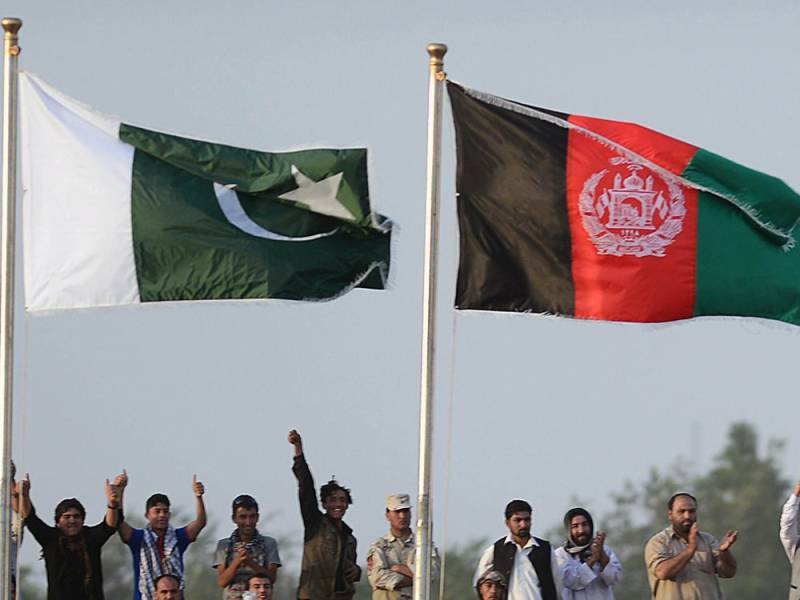
History bears clear testimony that Pakistan has stood by Afghanistan through every trial, whether war, peace, turmoil, or transition. The bond between the two nations, forged through geography, culture, and centuries of shared heritage, has endured countless tests. Yet one lesson history consistently offers is this: while Pakistan has repeatedly extended a hand of support, Afghanistan’s internal divisions have too often undermined the path to lasting stability.
When the Soviet Union invaded Afghanistan on 24 December 1979, Pakistan became the frontline state defending not only its own sovereignty but also the freedom of its neighbour. Pakistan opened its borders to nearly four million Afghan refugees, providing shelter, education, and essential services—an unprecedented humanitarian effort in modern times. Despite facing its own economic challenges, Pakistan shouldered this responsibility with resilience and compassion, motivated by solidarity rather than political gain. The United Nations High Commissioner for Refugees has repeatedly described this as one of the largest and longest-running humanitarian operations in history.
Even after the Soviet withdrawal on 15 February 1989, when much of the international community withdrew its attention, Pakistan remained committed. It continued to support Afghanistan in rebuilding its war-torn society, facilitating dialogue among rival factions and hosting successive rounds of peace talks. Pakistan’s efforts were driven by a sincere desire for regional stability, recognising that an unstable Afghanistan has always posed a security risk to its neighbour.
Afghanistan’s greatest challenge, however, has not only been external aggression but also internal division. During the 1990s civil war, Pakistan worked tirelessly to unite the warring Afghan factions. In a notable initiative, Pakistan facilitated a meeting of Afghan leaders in Makkah, where they pledged to end hostilities and restore peace. Yet, many of these commitments were not upheld, and the nation once again fell into chaos. This failure to honour even solemn agreements reflects Afghanistan’s chronic disunity, where tribal and personal interests have often overshadowed the national interest.
Sustainable peace between Pakistan and Afghanistan is not merely a regional necessity; it is a shared responsibility grounded in mutual interest and historical connection
This pattern has persisted into the present. Decades later, following the U.S. invasion and subsequent withdrawal, Pakistan once again played a constructive role by facilitating the Doha Agreement between the Taliban and the United States on 29 February 2020, a landmark accord intended to end two decades of conflict. Pakistan’s diplomatic efforts were acknowledged internationally, including by Washington.
Despite these efforts, cooperation remains elusive. Recent Pakistan-Afghanistan talks in Istanbul, following earlier sessions in Qatar, highlighted the persistent gap between goodwill and ground realities. Reports indicate that the negotiations—spanning three intensive days and nearly fifty hours were marked by obstruction and a defensive stance from the Afghan delegation. Mediators from Qatar and Turkey, who invested considerable diplomatic effort to bridge differences, were reportedly frustrated by the Afghan delegation’s reluctance to engage, their evasions, and last-minute withdrawals from commitments.
Pakistani delegates presented documented evidence of cross-border militant movement, including sanctuaries and command links. Instead of addressing this evidence, Afghan representatives reportedly relied on procedural delays, legalistic arguments, and repeated consultations with Kabul. Even when a draft agreement was finalised multiple times, Afghan consent was withdrawn after consulting their capital. Observers noted the difficulty in securing a consistent commitment.
There are also allegations—voiced in Pakistani circles that external actors, particularly Indian advisers, influenced Afghan interlocutors to abandon commitments reached in Istanbul. If substantiated, these claims would suggest that certain external interests are seeking to perpetuate discord between Islamabad and Kabul for strategic purposes. Whether proven or remaining part of confidential diplomatic records, these allegations have deepened mistrust.
Despite these challenges, Pakistan’s official stance remains measured. Islamabad continues to seek resolution through dialogue and diplomacy, while making clear that all options remain under consideration if Afghan territory continues to be used to launch attacks against Pakistan. At the same time, Pakistan remains committed to a peaceful, negotiated outcome.
Its approach is guided not by hostility but by the understanding that Afghanistan’s stability is inextricably linked to its own security. Both nations share deep ethnic, cultural, and linguistic ties that transcend political boundaries. Their economies, trade routes, and natural resources are intertwined, making cooperation mutually beneficial.
The lesson of both the Makkah meeting decades ago and the recent Istanbul talks is consistent: peace cannot be built on empty promises or rhetorical gestures. It requires sincerity, unity, and the honouring of commitments. Pakistan, despite suffering over $150 billion in economic losses and more than 80,000 lives to terrorism, continues to demonstrate patience, goodwill, and faith in dialogue.
History once again tests this bilateral relationship, but one principle endures: sustainable peace between Pakistan and Afghanistan is not merely a regional necessity; it is a shared responsibility grounded in mutual interest and historical connection.