
As the moon rises in the velvet expanse of the night, its silver light touches every shore and every mountain, reminding us of a universal harmony visible to all. In much the same way, Pakistan’s military and diplomatic stature has ascended with full brilliance, casting a glow of respect and strength far beyond our borders. Our armed forces stand as a bulwark of honour, while our diplomatic sagacity has navigated complex global currents with wisdom and resolve.
Yet in this journey of illumination, the economic moon lingers behind thick clouds of uncertainty. Its dimmed radiance fails to light the path forward, leaving a shadow that stretches from the modest homes of labourers and farmers to the stately chambers of governance. This structural weakness has become a heavy burden upon the state, constraining its ability to extend genuine welfare to its people.
Burdened by colossal debt, the government finds its hands tied. Resources that ought to nourish development, build infrastructure, and uplift the masses are instead consumed by interest payments and debt servicing. Reluctantly, policymakers are compelled to take decisions that sting the common citizen—measures born not of developmental ambition, but of fiscal compulsion.
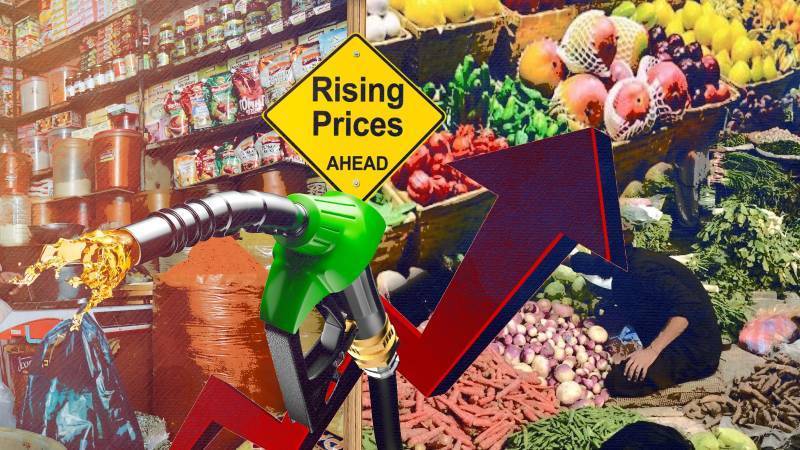
Inflation, that relentless force, has broken loose and now erodes the purchasing power of ordinary families. The prices of flour, medicine, fuel, and essential commodities continue to rise, turning aspirations of modest stability into distant memories. Global volatility has compounded the crisis: fluctuating commodity markets, geopolitical tensions, and surging energy prices have intensified Pakistan’s economic imbalance. What was once a manageable strain has now evolved into a structural crisis.
Must Pakistan, adorned with laurels in security and statecraft, now descend into the quagmire of economic instability and perpetual indebtedness? Must policy continue to be shaped more by external conditionalities than by the aspirations of its own people? These questions demand serious reflection from the nation’s leadership and its citizens alike. The future of development, the dignity of the people, and the very meaning of sovereignty now stand at a delicate crossroads.
It is encouraging that an austerity drive has been initiated at the national level. Reducing unnecessary expenditure, promoting simplicity in official conduct, and encouraging fiscal restraint reflect a necessary recognition of the crisis. Yet such measures, however virtuous, offer only partial relief. They cannot on their own address structural weaknesses or generate the momentum required for sustained recovery.
If government, institutions, and citizens move forward together with clarity, sacrifice, and resolve, the economic moon will one day rise in full splendour—casting light, hope, and prosperity across the nation
What is needed instead is an urgent, coordinated national effort—animated by the same unity, discipline, and resolve that have strengthened Pakistan’s defence and diplomatic domains. At both federal and provincial levels, all stakeholders must rise above partisan, personal, or regional interests. A living covenant of cooperation must be forged, rooted in mutual trust and shared sacrifice.
Rather than competing for scarce resources, provinces should collaborate on initiatives of collective benefit, particularly in agriculture, water management, and industrial development. Political forces, civil society, business leaders, and the youth must converge around a shared national economic vision. In this endeavour, civil and military leadership alike bear responsibility, for economic security has become inseparable from national security.
To translate vision into reality, a bold and multi-pronged strategy is essential. First, Pakistan must pursue self-reliance with determination. Broadening the tax base, curbing evasion through transparent systems, and rewarding compliance would strengthen public finances without overburdening the vulnerable.
Second, agriculture—the backbone of the economy—requires urgent modernisation. Quality inputs, efficient irrigation, accessible credit, and value-added processing can transform rural regions into engines of growth and employment.
Third, a sustained export drive must be prioritised. Small and medium enterprises, often the backbone of economic resilience, need easier access to finance, skill development, and international market linkages. Diversifying exports beyond traditional categories and expanding into new markets across Asia, Africa, and beyond will help generate vital foreign exchange.
Loss-making state-owned enterprises must be restructured or privatised with transparency and care, ensuring protection for workers while relieving the fiscal burden on the state. Strict control over non-development expenditure, elimination of ghost employees, and plugging leakages in public procurement are essential reforms that can no longer be deferred.
Investment in human capital must remain central. Quality education, technical and vocational training, and accessible healthcare are indispensable for transforming Pakistan’s youth into productive national assets. Equally critical is the restoration of investor confidence through policy continuity, respect for contracts, swift justice, and a predictable business environment.
Regional cooperation also presents untapped opportunities. Peaceful trade in energy and goods with neighbouring states can open new pathways to prosperity. At the same time, a culture of savings and financial discipline must be nurtured at every level—from state institutions to households. Borrowing should be strictly directed towards self-sustaining development projects, not consumption or symbolic ventures.
The road ahead is undeniably steep, yet Pakistan has repeatedly demonstrated resilience in the face of adversity. The same national character that has illuminated its military and diplomatic spheres can dispel the clouds over its economy. What is required is not despair but disciplined action; not fragmentation but unity of purpose.
If government, institutions, and citizens move forward together with clarity, sacrifice, and resolve, the economic moon will one day rise in full splendour—casting light, hope, and prosperity across the nation.