
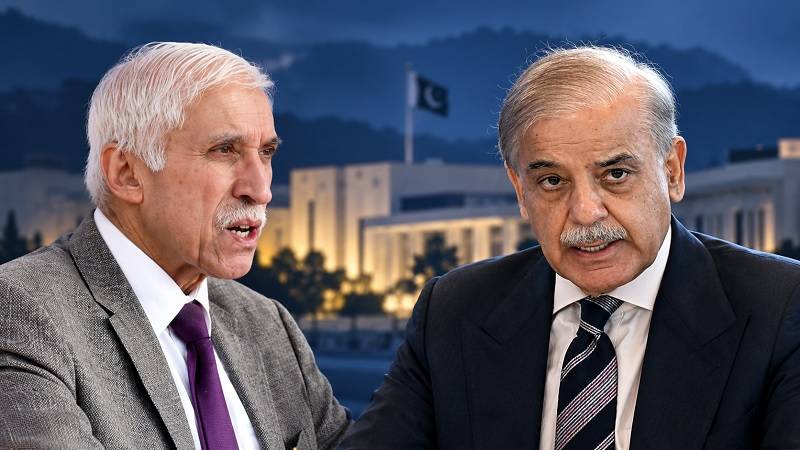
The federal cabinet initially favoured giving the Pakistan Tehreek-e-Insaf (PTI)-led Khyber Pakhtunkhwa government another chance before moving towards emergency measures in the province, Federal Minister for Board of Investment Qaiser Ahmed Sheikh has said, offering a fresh account of the deliberations that preceded the imposition of emergency and governor’s rule on 11 October.
According to details shared by Sheikh in a recent media interview, several ministers, including Interior Minister Mohsin Naqvi, opposed rushing into the decision and argued that political engagement should be explored before taking the extraordinary constitutional step. Sheikh reportedly supported this approach, maintaining that the provincial government should be given another opportunity to resolve the crisis through dialogue.
According to Sheikh's account, Maulana Fazlur Rehman, chief of Jamiat Ulema-e-Islam-Fazl (JUI-F), was not mentioned during the initial phase of the cabinet discussion. Nor, he reportedly said, was the removal of KP Chief Minister Sohail Afridi raised as a condition during that part of the meeting.
The sequence reportedly changed after Prime Minister Shehbaz Sharif called a brief recess in response to ministers' insistence that political negotiations be explored.
The prime minister then tasked Deputy Prime Minister and Foreign Minister Ishaq Dar with contacting Fazlur Rehman to assess whether a political breakthrough remained possible. When the cabinet reconvened, Shehbaz according to Qaisar Sheikh, misinformed ministers that the backchannel efforts had failed to produce the desired outcome, clearing the way for approval of the emergency proposal.
کابینہ کے پہلے سیشن میں مولانا سے کی گئی کسی بات کا ذکر نہیں ہوا اور ناہی سہیل آفریدی کو وزارت اعلیٰ سے ہٹانے کی شرط کی بات ہوئی لیکن وقفے کے بعد وزیراعظم نے کہا مولانا سے بات ہوئی ہے لیکن بات بن نہیں سکی اسلئے ایمرجنسی لگانا پڑے گی۔وفاقی وزیر قیصر شیخ https://t.co/9y1iSpojjZ
— Naeem Ashraf Butt (@NaeemAshrafBut2) October 29, 2026
The federal government publicly justified its decision by citing worsening law and order in the province and what it described as insufficient cooperation from the KP government in counterterrorism efforts. At a joint news conference on 11 October, Law Minister Azam Nazeer Tarar said emergency had been promulgated under Articles 232 and 234 of the Constitution. He said the provincial government had ceased to function in its previous form, with its powers transferred to the governor. Interior Minister Mohsin Naqvi said the federal government had made sustained efforts to bring the PTI administration on board in the fight against terrorism, but negotiations had failed.
Naqvi maintained that the government's principal concern was security rather than political protests. He said repeated contacts with PTI leaders and efforts involving Fazlur Rehman had failed to secure an agreement. The imposition of emergency and governor’s rule marked a significant escalation in the confrontation between Islamabad and the PTI-led provincial administration.
Under Article 234, the Constitution provides for the assumption of provincial governmental functions by the president or the governor when constitutional machinery in a province is considered to have failed, subject to the applicable constitutional requirements. Article 232 provides a separate framework for a proclamation of emergency in specified circumstances.
The federal government's decision has therefore raised questions about the relationship between provincial autonomy, constitutional intervention and the centre's responsibility for national security while Sheikh's account adds another dimension to the debate by suggesting that the cabinet initially considered continued political engagement before opting for emergency measures.