
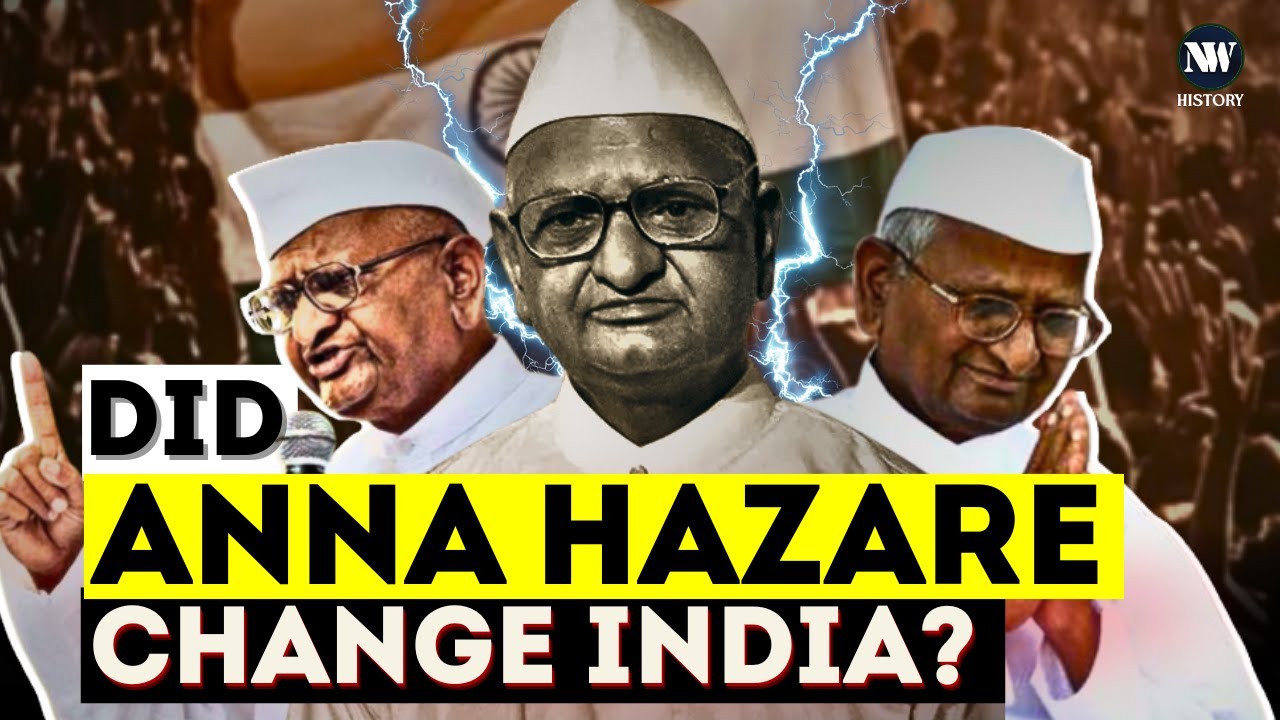
In a country that prided itself on democratic rituals, Anna Hazare arrived as a reminder of something older and more unsettling: moral protest. At a time when India’s ballot boxes were intact but public trust was eroding, Hazare turned his own body into a question mark. Could personal sacrifice repair institutions hollowed out by corruption?
Born in 1937 in the drought-stricken district of Ahmednagar, Hazare’s early life was shaped by scarcity and neglect. He sold flowers as a child to support his family, learning early that the state demanded loyalty but offered little in return. When he joined the Indian Army in 1963, discipline gave him structure but not purpose. That came later, in the shadow of death. During the 1965 war, Hazare survived an attack that killed most of his unit. Haunted by survival, he turned to Gandhi, discovering in austerity not escape, but obligation.
Returning to his village of Ralegan Siddhi in the late 1970s, Hazare began rebuilding society from the ground up. Water conservation transformed barren land. Collective labour restored dignity. Transparency became habit. Yet progress came with control. Alcohol was banned. Behaviour was regulated. Prosperity arrived, but freedom narrowed. Ralegan became both a model of participatory governance and a warning about moral coercion.
By the 1990s, Hazare took his methods to the state itself. Hunger strikes forced resignations. Files opened. Officials were suspended. His greatest achievement came not through fasting alone, but through law: the Right to Information Act of 2005. It was a rare moment when moral pressure crystallised into institutional reform.
Then came 2011. As scandals engulfed India’s political class, Hazare’s fast ignited urban fury. Candlelight replaced committees. Television replaced Parliament. For thirteen days, moral authority overshadowed democratic process. Supporters saw a cleansing force; critics warned of authoritarian impatience disguised as virtue.
When the crowds dispersed, Hazare remained sceptical of electoral politics. His associates formed parties. He returned to protest. And slowly, the spectacle faded.
Anna Hazare’s legacy is not simple. He proved that citizens could still shake power. But he also revealed a danger: when institutions fail, societies search for saints. And saints, however sincere, cannot replace democracy.