
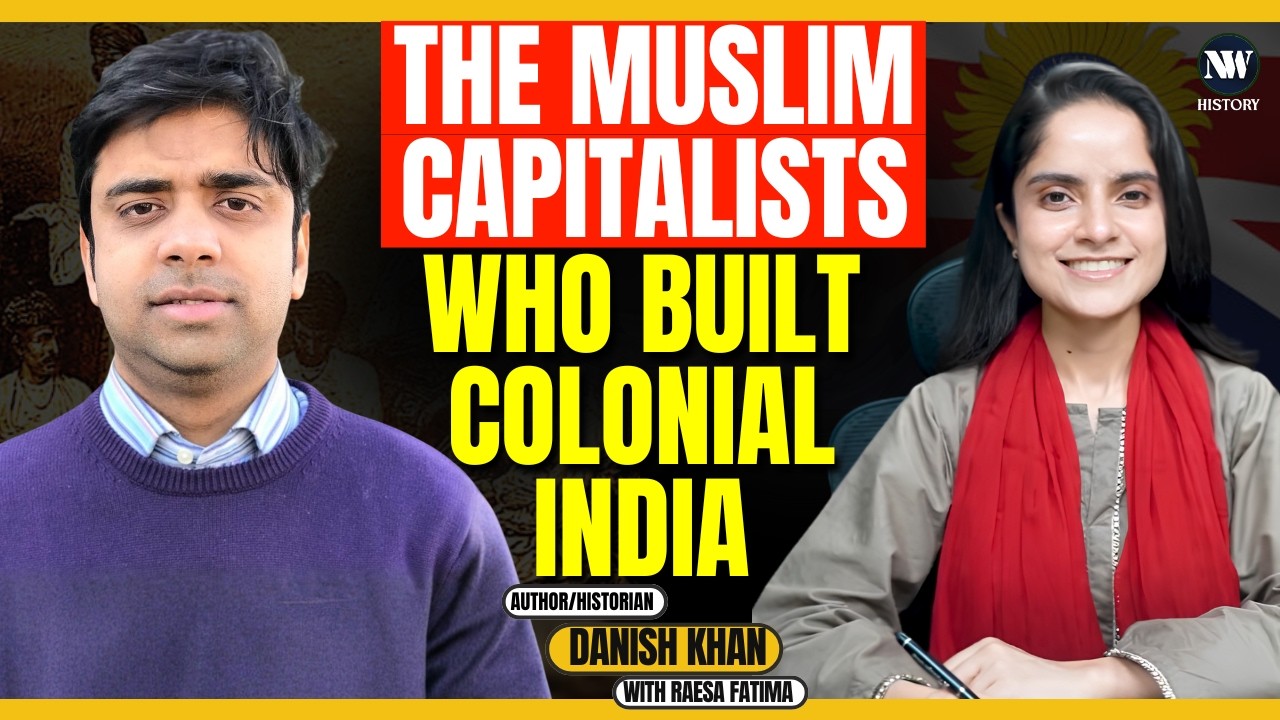
For decades, the history of South Asian Muslims under British rule has largely been narrated through the decline of the Mughal Empire, political movements, religious reform and the eventual creation of Pakistan. Commerce and entrepreneurship, however, have remained on the margins of this story. Historian Danish Khan seeks to change that narrative.
In a thought-provoking conversation, Khan argues that Muslim commercial communities such as the Khojas, Bohras and Memons were not peripheral actors in colonial India but central participants in building modern capitalism. His forthcoming book, Muslim Capitalism, published by Cambridge University Press, examines how these communities navigated British legal institutions while preserving their own commercial traditions and networks.
According to Khan, Bombay stood apart from other colonial cities because indigenous trading communities dominated its commercial landscape. Muslim merchants worked alongside Parsis, Jains and Marwaris, adapting quickly to changing legal and political circumstances while maintaining extensive trading links across the Indian Ocean. Rather than simply inheriting a colonial economic system, they actively shaped it through entrepreneurship, innovation and collaboration.
The discussion also revisits the economic consequences of Partition. While the political violence of 1947 has rightly occupied historians, Khan notes that far less attention has been paid to the fate of Muslim business networks. Many merchant families already operated simultaneously in Bombay, Karachi, Singapore and other commercial centres. For them, Pakistan initially represented another promising marketplace rather than a complete rupture. It was only when borders hardened that these longstanding commercial links became increasingly difficult to sustain.
Khan also challenges the common assumption that Islam and capitalism are fundamentally incompatible. Drawing on historical evidence, he highlights that Muslim merchants successfully combined religious ethics with commercial enterprise. Community institutions, family networks and trust-based systems provided access to finance, information and support, enabling these trading groups to expand across continents while remaining rooted in their cultural traditions.
Reflecting on Pakistan's contemporary economic challenges, Khan suggests that today's entrepreneurs can learn valuable lessons from these historical communities. Diversifying investments, building partnerships across social and religious lines, avoiding excessive political dependence and remaining adaptable to changing markets were among the qualities that underpinned their success.
Ultimately, Muslim Capitalism broadens our understanding of South Asian history. It reminds us that Muslims were not merely political actors or subjects of colonial rule, they were also influential entrepreneurs whose commercial achievements helped shape regional and global markets. By recovering this overlooked legacy, Danish Khan offers a richer and more balanced account of the economic foundations of modern South Asia.