
WEBDESK - NAYADAUR
Pakistan carried out what it described as “calibrated” air strikes against terrorist camps and hideouts near the Afghan border, following a series of deadly attacks in Khyber-Pakhtunkhwa, the Ministry of Information and Broadcasting said Monday.
According to the ministry, a total of 37 terrorists were killed in intelligence-based ground operations in Kohat and Hangu and subsequent precision strikes in the border region with Afghanistan.
The operation comes days after a deadly attack at a mosque inside Kohat’s Police Lines that killed at least 21 people, including 15 police personnel, according to local authorities. Seven attackers were also killed during the subsequent security operation.
Nine militants killed in ground operation
The Information Ministry said security forces conducted an intelligence-based operation on September 20 against militants in the Kohat and Hangu districts.
It said nine militants belonging to what the government calls Fitna al-Khawarij were killed during the operation, while several others were injured.
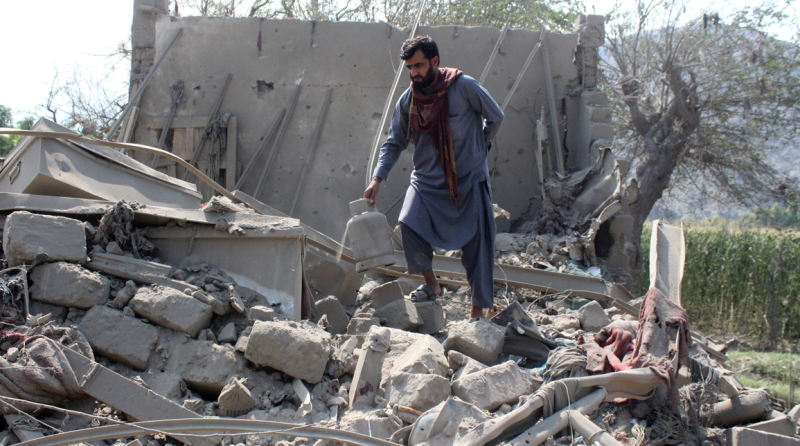
The operation was followed by what the ministry described as selective and precise strikes against militant camps and hideouts in the Afghanistan border region.
Three targets were reportedly destroyed, including a training facility for suicide bombers. The ministry said 28 terrorists, including several suicide bombers, were killed and weapons and ammunition stored at the sites were destroyed.
Strikes follow deadly K-P attacks
The military action followed a series of attacks in Khyber-Pakhtunkhwa.
In the Kohat Police Lines attack on September 18, an explosives-laden vehicle detonated near a mosque during Friday prayers before armed attackers entered the compound. At least 21 people were killed and more than 100 injured, according to initial reports.
A separate attack in Hangu the following day resulted in the deaths of six security personnel, including two army officers. Security forces said eight militants were also killed during the exchange of fire.
Islamabad points to Afghan-based militant networks
The Ministry of Information said Pakistan's action was directed at what it described as terrorist hubs responsible for attacks inside the country.
The ministry said Afghanistan remained a major security concern for Pakistan and alleged that militant networks operating from Afghan territory were responsible for attacks inside Pakistan.
It also said precautions were taken during the strikes to prevent civilian casualties.
Pakistan has repeatedly raised concerns with the Afghan Taliban government over the presence and activities of militant groups, particularly the banned Tehreek-e-Taliban Pakistan (TTP).
Pakistan's military leadership has previously said Islamabad reserves the right to self-defence under Article 51 of the UN Charter against attacks originating from Afghan territory.
Counterterrorism campaign to continue
The Information Ministry said the counterterrorism campaign Ghazab lil Haq, being conducted under the broader Azm-e-Istehkam framework, would continue.
The government has described the campaign as an effort to counter what it calls foreign-sponsored and supported terrorism.
The latest strikes add another military dimension to already strained Pakistan-Afghanistan relations, as Islamabad continues to press Kabul over militant groups allegedly operating from Afghan soil.
The Afghan side has disputed Pakistan's accusations in previous cross-border disputes, while independent reporting on the latest strikes indicates that Afghan authorities reported deaths following the Pakistani airstrikes. The Associated Press reported that Pakistan said 28 militants were killed in the strikes, while authorities in Kabul reported at least three deaths.
For Pakistan, the immediate focus remains on preventing further attacks in Khyber-Pakhtunkhwa and targeting networks it says are responsible for violence inside the country.