
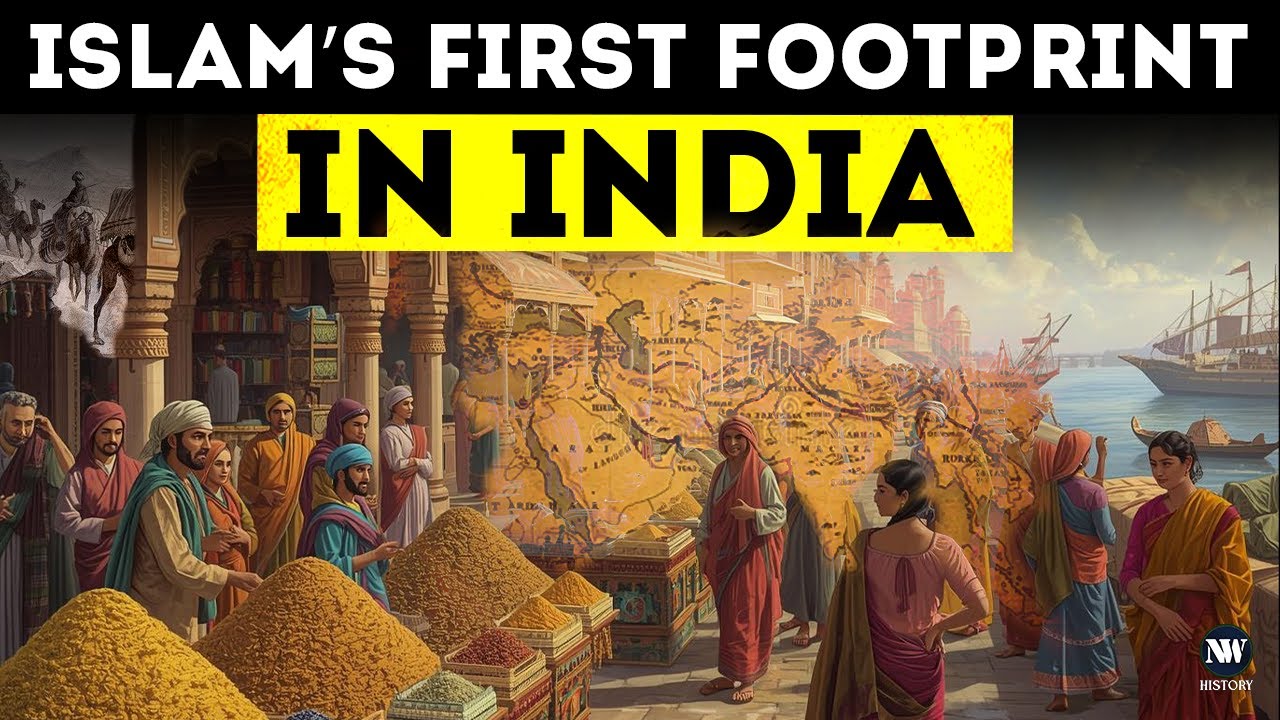
A new historical investigation sheds light on the overlooked maritime networks that brought Islam to India centuries before the arrival of any conquerors. According to historians, India’s earliest encounter with the Muslim world was not forged on the battlefield, but through wind-driven trade routes, bustling ports, and thriving coastal communities stretching from Kerala to Gujarat.
As early as the 1st century AD, monsoon winds carried Arab traders to Indian ports like Muziris, establishing a commercial bond long before the rise of Islam. After the 7th century, these merchants, now Muslim, intensified their presence along the Malabar and Konkan coasts. One of the most significant markers of this early settlement is the Cheraman Juma Mosque in Kodungalloor, built around 629 CE during the Prophet Muhammad’s lifetime, and regarded as one of the earliest mosques in South Asia.
These traders did not merely pass through. Over time, they became part of the local population. Indian rulers, particularly the Zamorin of Calicut, welcomed Muslim merchants for their maritime skills and economic contribution. Merchant guilds such as Anjuvannam, comprising Arab, Persian, Jewish, Christian, and Muslim traders, flourished under royal patronage by the 9th century. Their networks connected Indian ports to the Middle East, Southeast Asia, and the wider Indian Ocean world.
Integration ran deeper than commerce. Muslim settlers married locally, adopted regional languages, and established communities whose descendants survive today, including the Labbay communities in Tamil Nadu and the Nawaits along the Konkan–Gujarat belt. Their influence extended into administration as well: historical records show Muslim merchants issuing land grants, funding temples and mosques, and building bridges between civilisations.
Sufi missionaries soon followed these trade routes, spreading ideas through humility, spirituality, and everyday interaction, further embedding Muslim culture across India’s coastal regions. By the medieval period, Muslim communities had become an inseparable part of India’s social, economic, and cultural landscape.
Contrary to the widespread belief that Islam entered India through military conquest, emerging historical evidence underscores a different narrative, one shaped by peaceful trade, shared prosperity, and cross-cultural exchange. The legacy of these early Muslim traders remains visible in India’s architecture, languages, coastal communities, and centuries-old maritime traditions.