WEBDESK - NAYADAUR
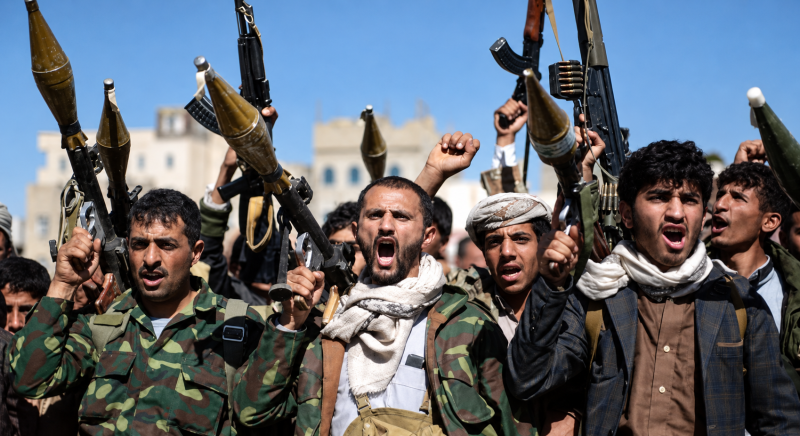
The Houthi movement in Yemen has warned Pakistan and Türkiye against intervening militarily in support of Saudi Arabia, saying any direct involvement by either country could trigger retaliation as fighting and cross-border attacks intensify across the region.
Mohammed al-Bukhaiti, a senior Houthi political official, reportedly warned that if Pakistani or Turkish forces become directly involved, the group would respond with what he described as an “iron fist.” The remarks were reported by News18 and come amid growing speculation over whether Saudi Arabia could seek military assistance from its partners under a newly signed defence agreement.
The warning comes as Saudi Arabia faces intensified attacks claimed by the Houthis. On Saturday, the group claimed responsibility for missile and drone attacks targeting sensitive sites in Riyadh and said it had also struck an Aramco facility in Yanbu. Saudi authorities said they intercepted incoming missiles and prevented attacks on several locations.
Makkah pact faces first major test
Saudi Arabia, Pakistan and Türkiye signed the Makkah Joint Defence Agreement in August, establishing a framework for collective security and expanded military cooperation. The agreement states that an armed attack against any one of the three countries will be regarded as an attack against all three.
Pakistan has described the agreement as defensive in nature and said it is not directed against any particular country. Islamabad has also reiterated its commitment to resolving regional disputes peacefully and respecting international law.
The three countries have since begun institutionalising the agreement. At a meeting in Istanbul on Aug. 31, their foreign and defence ministers and military chiefs agreed to strengthen cooperation, establish a secretariat in Saudi Arabia and expand defence-industry and military coordination.
Türkiye has also indicated that it could help Saudi Arabia meet military requirements under the pact. Turkish Foreign Minister Hakan Fidan said Ankara was prepared to provide technical military support, while stressing that the agreement was defensive.
Pakistan and Türkiye face a delicate choice
The Houthi warning adds pressure on Islamabad and Ankara as Riyadh confronts an increasingly difficult security environment. The Associated Press reported that Saudi Arabia has been seeking military assistance from several regional and Western partners as its stocks of missile interceptors come under pressure. No country had publicly committed to direct military support at the time of that report.
Al-Bukhaiti has urged Pakistan and Türkiye to remain outside the conflict, according to reports, arguing that military intervention would make them participants in the Yemen war.
For Pakistan, the issue carries particular diplomatic sensitivity because Islamabad maintains important relations with both Saudi Arabia and Iran. Pakistan has meanwhile emphasized diplomatic engagement and de-escalation as regional tensions rise.
The situation also puts the Makkah agreement under its first significant test. Although the pact provides for collective defense, its precise application to Saudi Arabia's confrontation with the Houthis remains open to interpretation, particularly because the agreement was presented by its signatories as a defensive arrangement rather than an instrument for offensive military operations.
The Houthis' latest warning therefore raises the prospect that any decision by Pakistan or Türkiye to provide direct military assistance to Saudi Arabia could widen the conflict beyond Yemen and Saudi territory, potentially drawing additional regional powers into the confrontation.