
WEBDESK - NAYADAUR
Pakistan has warned Afghanistan’s Taliban authorities against providing safe haven to militant groups, telling the United Nations Security Council that terrorism emanating from Afghan territory has caused thousands of deaths in Pakistan.
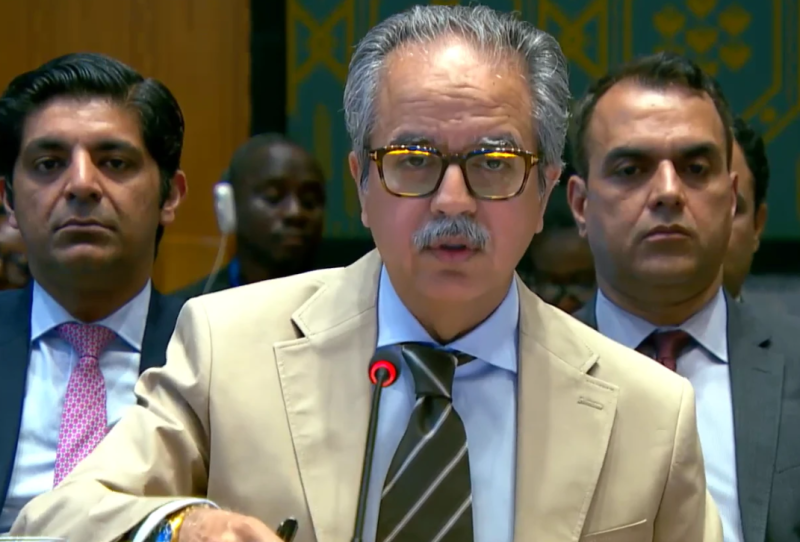
Pakistan’s UN ambassador, Asim Iftikhar Ahmad, made the remarks Wednesday during a Security Council meeting on Afghanistan, where he also criticized the Taliban’s treatment of women and girls and called for stronger action against terrorist organizations operating from the country.
Ahmad said more than 4,700 Pakistanis had been killed over the past three years in what he described as terrorism “emanating from Afghanistan.” He said Pakistan had repeatedly raised its security concerns with the Taliban authorities but had seen insufficient action against militant groups.
The ambassador warned that Pakistan would respond in self-defense when necessary, while emphasizing that Islamabad’s concerns were centered on militant groups operating from Afghan territory rather than the Afghan population.
The remarks come amid a sharp deterioration in relations between Pakistan and Afghanistan since the Taliban returned to power in 2021. The two countries have repeatedly exchanged accusations over cross-border militancy, with Pakistan alleging that Tehrik-e-Taliban Pakistan, or TTP, and other groups operate from Afghan soil. The Taliban has denied allowing Afghan territory to be used against other countries.
At the Security Council, Ahmad said Pakistan had expected the Taliban to address the presence of terrorist organizations after taking power in 2021 but accused the authorities of failing to meet those expectations.
The United Nations has also raised concerns about the continued presence of terrorist groups in Afghanistan. In her briefing to the council on Wednesday, UNAMA acting head Georgette Gagnon said terrorist groups continued to threaten Afghanistan, the region and international peace and security.
The issue has featured repeatedly in Security Council discussions this year. In an earlier council meeting, Pakistan said elements within the Taliban were collaborating with terrorist groups and providing them with safe havens, while the council has expressed concern over the presence of militant organizations in Afghanistan.
Ahmad also raised concerns about weapons and military equipment left behind in Afghanistan following the withdrawal of US forces, saying advanced weapons and large quantities of ammunition had subsequently fallen into Taliban hands.
Women and girls remain another major concern
The Security Council meeting also focused heavily on restrictions imposed on Afghan women and girls.
Ahmad criticized restrictions on female education, employment and participation in public life, while former Afghan minister Nargis Nehan described the treatment of women and girls as the “worst form of gender apartheid” and called for international recognition of what she described as institutionalized discrimination.
Gagnon said the UN had documented recent cases of women being arrested over alleged violations of dress codes. She warned that restrictions preventing women from accessing education, professions and public life were limiting Afghanistan’s ability to recover economically and socially.
US Ambassador to the UN Mike Waltz also criticized the Taliban’s restrictions on girls’ education, describing the continued exclusion of Afghan girls from secondary and higher education as deeply troubling.
The UN briefing comes five years after the Taliban returned to power following the withdrawal of US forces. The UN continues to identify severe restrictions on women and girls, exclusionary governance, human rights concerns and the presence of terrorist groups as major challenges facing Afghanistan.
Pakistan-Afghanistan tensions
Security concerns have increasingly complicated relations between the two neighboring countries. Pakistan says militant attacks planned or supported from Afghan territory have become a major national security concern, while Afghan authorities have rejected Islamabad’s accusations and accused Pakistan of contributing to instability through its own policies.
At the Security Council, Pakistan reiterated that dialogue remained important but said meaningful progress required action against militant groups.
The dispute also comes against the backdrop of previous border clashes and Pakistani military operations. UN officials have urged Islamabad and Kabul to reduce tensions and resolve their differences through dialogue, particularly over the presence and activities of terrorist groups.
For Pakistan, the issue is both a bilateral security dispute and an international concern. Islamabad is seeking greater international attention to militant activity it says originates in Afghanistan, while the UN is urging both sides to prevent further escalation.
Why it matters: The dispute over militant groups operating from Afghanistan remains one of the most serious sources of tension between Pakistan and the Taliban authorities. Any escalation could affect border security, regional stability, and efforts to address Afghanistan’s broader political and humanitarian challenges.