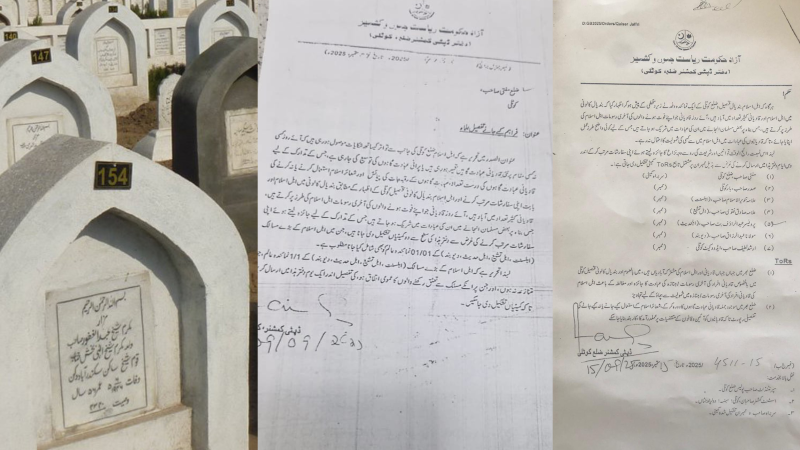
The district administration of Kotli, Azad Jammu and Kashmir, has constituted a special committee of clerics representing different schools of thought to review and recommend measures regarding the participation of Muslims in funeral rites of members of the Ahmadiyya community.
The move comes after complaints from residents of Islam Bandyal Colony and surrounding areas in Kotli district, who reported that a large number of Ahmadis were conducting funerary practices in a manner resembling Muslim rituals. Local elders argued that this resemblance created confusion and inadvertently led to the participation of Muslims in rites not sanctioned by Islamic practice.
In response, the office of the Deputy Commissioner Kotli issued formal instructions, noting that the issue had “religious, legal and constitutional implications.” The notification states that a committee has been formed to “prepare recommendations in the light of Islamic injunctions and state laws” to prevent Muslims from being misled or from unintentionally taking part in Ahmadiyya rituals.
The committee includes representatives from Deobandi, Barelvi, Shia, and Ahl-e-Hadith schools of thought, as well as a local lawyer. Among the named members are Allama Noor-ul-Islam, Allama Sadiq Taqvi, Maulana Abdul Razzaq, Rooh-ul-Ameen, and Advocate Arshad Latif.
The Terms of Reference (ToRs) given to the committee include:
1) Examining the burial and funeral practices of the Ahmadiyya community in Kotli, especially in Islam Bandyal Colony.
2) Assessing whether their rites intentionally resemble Islamic funerals and thereby risk misleading Muslims.
3) Reviewing existing religious and legal prohibitions regarding the public performance of Ahmadiyya rituals.
4) Suggesting measures to ensure clear separation between Muslim and Ahmadiyya religious practices in public life.
Officials have underlined that the committee’s work will be advisory in nature, but its recommendations are expected to carry significant weight given the sensitivity of the issue in AJK.