
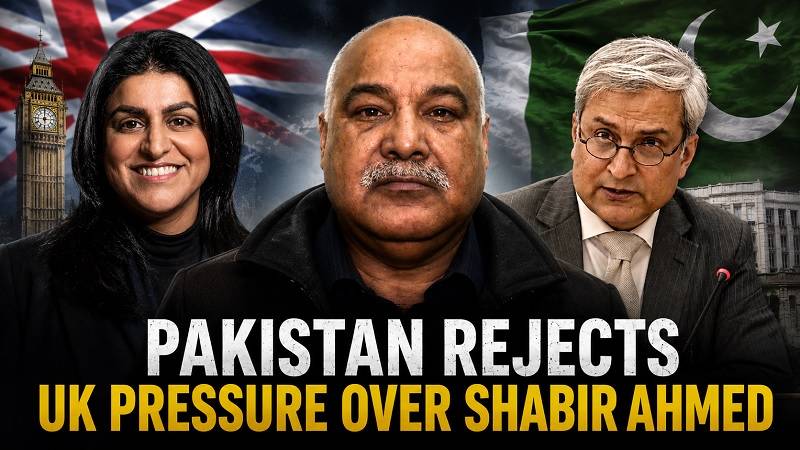
Pakistan has publicly pushed back against growing British pressure over convicted Rochdale grooming gang leader Shabir Ahmed, declaring that the case is entirely Britain's responsibility and insisting Islamabad has "no connection whatsoever" with the 73-year-old child rapist.
In its first official comments on the controversy, Foreign Office spokesperson Tahir Andrabi said Pakistan unequivocally condemns child sexual abuse and believes offenders should be prosecuted and punished regardless of race, religion or ethnicity.
However, he rejected suggestions that Pakistan bears any responsibility for Ahmed, arguing that the convict spent his entire adult life in Britain, committed his crimes there and was convicted by a British court.
Andrabi said decisions regarding Ahmed's release, supervision and legal status rest entirely with British authorities and stressed that the priority should be justice for the victims, not attempts to shift responsibility to another country.
????Pakistan has, for the first time, officially commented on the case of UK grooming gang leader Shabir Ahmed, strongly condemning child sexual abuse and calling for perpetrators to be prosecuted and punished regardless of race or religion.
— Murtaza Ali Shah (@MurtazaViews) July 16, 2026
Foreign Office spokesperson Tahir… pic.twitter.com/lc60svJYVB
The statement comes amid an increasingly public diplomatic dispute between Islamabad and London over Ahmed's future.
Ahmed, who was sentenced to 22 years in prison in 2012 for leading the Rochdale child sexual exploitation gang, was released earlier this month after serving part of his sentence. The case has reignited political debate in Britain over grooming gangs, deportation laws and immigration policy.
British Home Secretary Shabana Mahmood has announced plans to amend the Immigration Act 1971 to remove a legal barrier that currently prevents Ahmed's deportation, despite his British citizenship having been revoked.
British media have reported that the UK has been pressing Pakistan to accept Ahmed if legal changes allow his removal.
Those reports also claim discussions between the two governments have become increasingly contentious, with suggestions that Britain considered measures such as visa restrictions and other forms of diplomatic pressure if Pakistan refused to cooperate. Pakistan, however, has reportedly maintained that it is under no legal obligation to receive Ahmed because his crimes were committed in Britain and his life has been rooted there for decades.
Some British newspaper reports have further claimed that Pakistan linked the issue to its long-standing requests for the extradition of Pakistani political fugitives and suspects living in the UK. Those claims have not been publicly confirmed by either government.