
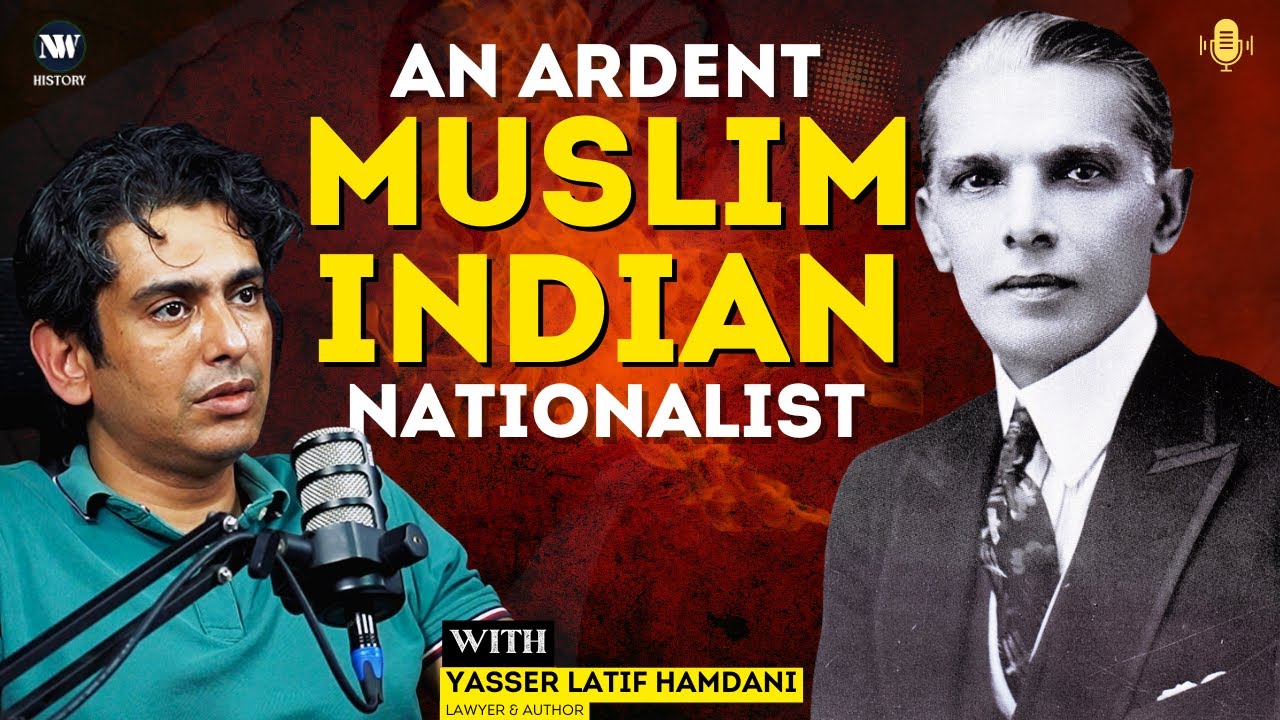
In the latest episode of New Wave History, host Ali Warsi sat down with lawyer and historian Yasser Latif Hamdani to explore Muhammad Ali Jinnah’s transformation from the “ambassador of Hindu-Muslim unity” into the founding father of Pakistan, and how this evolution was shaped by political exclusion, not communal ambition.
Hamdani, author of several books on Jinnah, argued that colonial and nationalist historiographies have both overlooked Jinnah’s brilliance as a legislator and lawyer. “Even India’s Supreme Court owes something to Jinnah’s legal imagination,” he said, noting his influence on constitutional reform and institutions like the Indian Military Academy.
The discussion traced how Jinnah’s secular constitutionalism collided with Gandhi’s religious populism. Hamdani criticised Gandhi’s failure to defend Jinnah when he was heckled for calling him “Mr. Gandhi” rather than “Mahatma.” “Had Gandhi been sincere about Hindu-Muslim unity, he would have stood up for Jinnah’s right to differ,” Hamdani remarked.
He described how, by the 1920s, the Congress had become a “cult around Gandhi,” where dissent was impossible. Figures like Motilal Nehru and Subhas Chandra Bose were eventually sidelined, illustrating a party culture that demanded conformity rather than debate.
The conversation moved to the 1937 provincial elections, which Hamdani identified as the decisive rupture. Despite an electoral understanding, Congress refused coalition governments with the Muslim League, claiming to represent all Indians, including Muslims. Jinnah’s insistence on parity, rooted in the Lucknow Pact, was rebuffed, deepening mistrust.
By 1939, growing Muslim disillusionment led to the Day of Deliverance, when even figures like Dr B.R. Ambedkar and Periyar joined in celebrating the end of Congress rule. Hamdani argued that Congress’s tenure reflected “soft Hindutva”, privileging Hindi, Vande Mataram, and Hindu symbols at the expense of minorities.
Ultimately, Hamdani concluded, Jinnah’s call for Pakistan was not born of religious chauvinism but of a constitutional response to exclusion. “He wanted equality through law, when that failed in united India, he sought it through Pakistan.”