
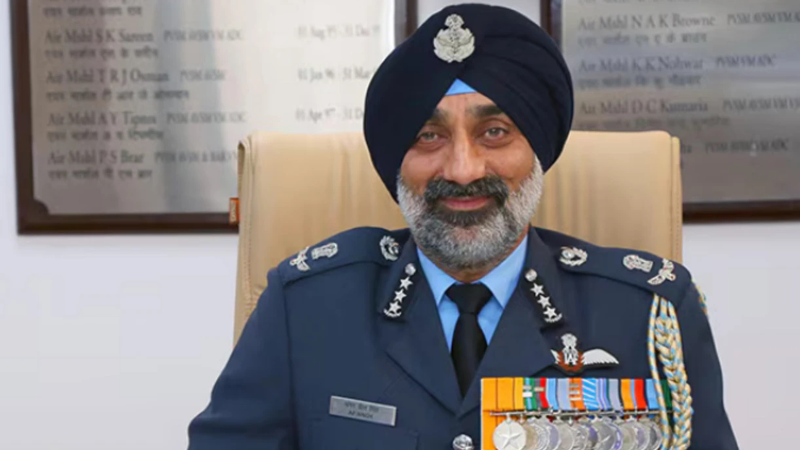
On August 9, speaking at an event in Bengaluru, Air Chief Marshal Amar Preet Singh announced that five Pakistani fighter jets and one large military aircraft, possibly a surveillance plane, were shot down, most by India’s Russian-made S-400 air defence systems. He also alleged that Indian airstrikes hit another surveillance aircraft and “a few F-16” fighters in hangars at two Pakistani air bases. Singh called it “the largest ever recorded surface-to-air kill.”
However, no proof, wreckage, or photographic evidence was presented to substantiate the claims. Pakistan’s Defence Minister Khawaja Muhammad Asif dismissed the statement as “comical” and “implausible,” insisting that “not a single Pakistani aircraft was hit or destroyed” and reiterating Islamabad’s counterclaim of downing six Indian jets during the May 7–10 conflict.
The timing of Singh’s remarks has raised eyebrows. The announcement came nearly three months after the fighting, two days after opposition leader Rahul Gandhi made fresh allegations in the Mahadevapura controversy, three days after former US President Donald Trump’s tariff announcement, and three days before the Supreme Court was to begin hearings on Bihar’s Special Intensive Revision of the electoral rolls.
It is no secret that Singh’s original press release for the Bengaluru event made no mention of any aircraft kills, indicating the claims were a last-minute political addition. Across global defence circles, the consensus is that Singh was not delivering an independent military assessment but parroting the government’s political line—a move that, critics argue, has badly damaged the credibility of the Indian armed forces in the eyes of the world. The remarks are widely viewed as part of a politically choreographed effort to manufacture an illusion of military success, deflect public anger, and stifle mounting domestic criticism after what opposition figures have described as India’s “global humiliation” during and after the May conflict.
Pakistan has challenged India to allow independent verification of both sides’ aircraft inventories, arguing that such an audit would settle the dispute. Islamabad has also pointed to earlier Indian briefings that made no mention of such kills, questioning why the claims emerged only now.
The May conflict, the most intense India-Pakistan fighting in decades, was triggered by the killing of 26 tourists in Pahalgam, which New Delhi blamed on Pakistan—an allegation Islamabad strongly denied. Both sides exchanged airstrikes and claimed significant enemy losses, but neither has provided conclusive public evidence to back their versions.
With no independent verification and no physical proof offered, Singh’s announcement has become another contested chapter in the long-running battle of narratives between the nuclear-armed rivals—one that, critics say, risks overshadowing pressing domestic issues in India while deepening mistrust over the politicisation of its military leadership.