
WEBDESK - NAYADAUR
Rights groups and opposition parties have urged Pakistan to let Afghan medical students already enrolled in local institutions complete their degrees, warning of humanitarian and educational consequences.
Human rights groups and opposition parties have criticized a Pakistan Medical and Dental Council directive requiring Afghan nationals already enrolled in medical and dental institutions to return to Afghanistan, arguing that students should not bear the consequences of deteriorating relations between the two countries.
The PMDC reiterated the directive in a Sept. 1 letter to medical and dental colleges, instructing institutions to comply with earlier policy measures. The directive prohibits the admission, placement, transfer, migration or other facilitation of Afghan nationals during the current academic session.
It also requires Afghan nationals already enrolled in medical and dental programs in Pakistan to return to Afghanistan.
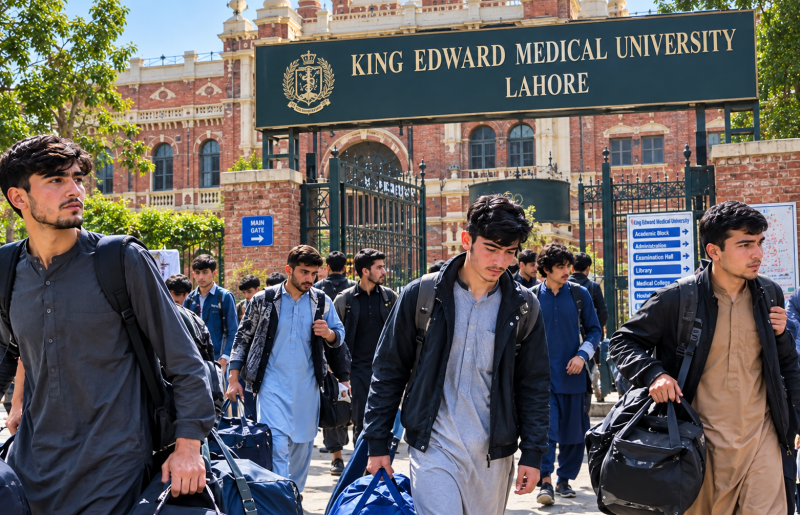
The policy has already begun affecting students at universities. King Edward Medical University in Lahore on Tuesday ordered 20 Afghan MBBS students to report within 24 hours. Seven of those students are in their final year, according to university sources.
KEMU is processing no-objection certificates and other formalities to facilitate the students' departure.
The Human Rights Commission of Pakistan strongly condemned the move Wednesday, saying the decision had become a humanitarian issue involving young people whose education, safety and future were at risk.
HRCP said Afghan students in Lahore had reported that about 100 medical and dental students could potentially be affected, including an estimated 20 to 40 women. Some students have approached the commission for legal and institutional assistance, as well as safe shelter.
The commission urged the government to uphold the principle of non-refoulement, which prohibits returning people to places where they face serious risks of persecution or other grave harm.
"Given the well-documented risks faced by Afghans returning to Afghanistan — and particularly by women — no student should be forcibly returned without an individual assessment of the risks they face," HRCP said.
It called for the repatriation orders to be suspended, the students' enrolment to be restored, and protection arrangements to be made for those who require shelter.
Opposition figures have also challenged the policy.
Senate Opposition Leader Allama Raja Nasir Abbas called for Afghan students to be allowed to complete their degrees, saying students who had legally entered Pakistan and obtained student visas had a legitimate expectation of being able to continue their education.
"There are students who have already reached the final year of their studies. Education is a fundamental human right," Abbas said in a statement issued through the opposition alliance Tehreek-e-Tahafuz-e-Ayin-e-Pakistan.
He noted that Afghan students pay tuition fees and argued that removing them before graduation could damage Pakistan's reputation as a destination for international education.
Abbas described the PMDC notification as politically motivated and warned that transferring tensions between governments to students could create long-term resentment between the two populations.
PTI leader and TTAP Secretary General Asad Qaiser also called for the decision to be withdrawn. He said expelling students before they complete their degrees amounted to putting their futures at risk.
Qaiser said relations between governments could fluctuate but warned that hostility generated among ordinary people could persist for years. He said he had filed a case challenging the PMDC notification in the Peshawar High Court and would raise the issue in the National Assembly.
The PMDC's restrictions extend beyond the repatriation of existing students. New admissions, transfers and migration applications involving Afghan nationals have also been suspended until further notice.
Medical institutions have been instructed to comply with the regulatory order and coordinate with relevant government authorities where necessary.
The measures could have their greatest academic impact on students approaching graduation, particularly those in the final year of MBBS. Medical education experts have raised concerns that disruptions during the clinical phase of training could make it difficult for students to complete their required academic and practical work.
Universities are processing transcripts, examination records and other documents for affected students, potentially allowing them to pursue further education elsewhere where permitted under applicable regulations.
Hostel administrations have also begun exit procedures, with students expected to complete clearance requirements, return university property, settle outstanding accommodation and mess charges and vacate their rooms.
The controversy comes amid broader tensions between Pakistan and Afghanistan, with Afghan nationals facing increasing uncertainty over their ability to remain in Pakistan.
For the affected medical students, however, rights groups and opposition politicians argue that their years of education should not be disrupted because of disputes between governments.