
WEBDESK - NAYADAUR - Imran Malik
Pakistan on Tuesday reaffirmed its “unwavering” support for Saudi Arabia and backed the kingdom’s right to take necessary measures to defend its territory and protect its citizens following a series of Houthi attacks on southern Saudi Arabia.
Pakistan’s Ministry of Foreign Affairs strongly condemned what it described as “reprehensible attacks” by the Houthi militia against civilian and economic targets in the Saudi cities of Abha, Khamis Mushait, Jazan and Najran.
The Saudi authorities said 73 people were injured in the attacks, with women and children among those hurt. The strikes also sparked fires at some energy facilities, prompting emergency and firefighting teams to contain the damage and assess the impact on operations.
In a statement, Pakistan’s Foreign Office said Islamabad “fully supports the Kingdom’s legitimate right to take all necessary measures to defend its territory, protect its citizens and residents and safeguard its national assets against any threat.”
Pakistan also reiterated its support for Saudi sovereignty, territorial integrity, security and prosperity, saying it stood in “complete solidarity” with the kingdom’s leadership, government and people.
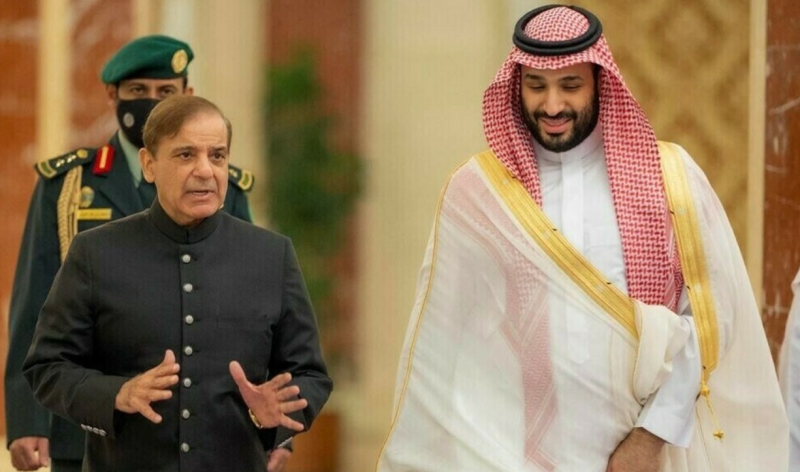
Prime Minister Shehbaz Sharif separately condemned the attacks in the strongest terms, describing them as cowardly and warning that they threatened both civilian lives and regional stability.
“I condemn in the strongest terms the cowardly attack by Houthis targeting civilian and energy facilities in the Kingdom of Saudi Arabia, which have left many people injured,” Shehbaz said in a post on X.
The prime minister reaffirmed Pakistan’s support for Saudi King Salman bin Abdulaziz Al Saud, Crown Prince Mohammed bin Salman and the Saudi people.
“Such dastardly attacks threaten innocent lives as well as regional peace and security,” he said, while praying for the swift recovery of those injured.
Pakistan’s Foreign Office said the attacks represented a “flagrant violation” of Saudi Arabia’s sovereignty and territorial integrity. It warned that continued attacks could undermine regional peace and efforts toward a peaceful and lasting resolution of the conflict in Yemen.
The latest escalation comes after the Houthis intensified threats against Saudi interests, including maritime and energy targets. The group has previously claimed attacks on Saudi-linked vessels in the Red Sea and controls significant territory in northern Yemen near the Bab el-Mandeb Strait, a major global shipping route.
Saudi authorities have vowed to take measures to protect energy infrastructure, workers and national assets. The Saudi-led coalition supporting Yemen’s internationally recognised government has also warned that it would respond firmly to attacks against the kingdom.
The escalation comes against the backdrop of wider tensions involving the United States and Iran, with instability across the Middle East contributing to volatility in global energy markets.
Makkah Defense Pact Adds Strategic Context
The attacks also come shortly after Pakistan, Saudi Arabia, and Türkiye formalized their longstanding strategic cooperation by signing the Makkah Joint Defense Agreement.
The trilateral framework aims to strengthen collective deterrence, expand military cooperation, and promote regional stability. Its emergence has drawn comparisons with formal military alliances, although security analysts say it is primarily intended to institutionalize defense cooperation that has developed over decades.
The framework envisages closer coordination in areas such as military planning, intelligence sharing, strategic consultations, and defense cooperation.
Analysts say the agreement reflects a changing regional security environment in which states are seeking stronger collective mechanisms to deter attacks and respond to emerging threats.
At its core, the arrangement is based on collective security and deterrence, with aggression against one member considered a potential security threat to the others.
For Pakistan, the latest Houthi attacks therefore come at a particularly sensitive moment in its strategic relationship with Riyadh. Islamabad’s explicit backing of Saudi Arabia’s right to defend its territory underscores the depth of the two countries’ longstanding defense and political ties while highlighting the broader security implications of the new trilateral framework.
Pakistan said it would continue supporting efforts aimed at promoting peace and stability across the region and conveyed its wishes for the speedy recovery of those injured in the attacks.