
The United States has warned Iran that any attack on commercial shipping in the Strait of Hormuz will trigger a “devastating” military response, even as Washington maintains that a fragile ceasefire between the two sides remains in place.
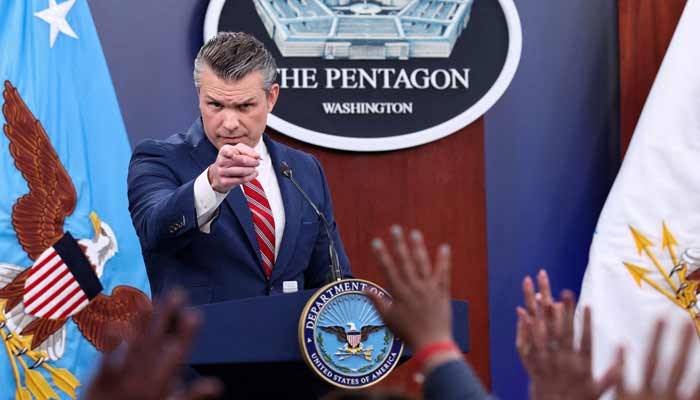
US Defence Secretary Pete Hegseth said on Tuesday that Washington was “not looking for a fight” but would act decisively if American forces or international shipping were targeted. His remarks came as the US military launched “Project Freedom”, an operation aimed at restoring the flow of maritime trade through the strategically vital waterway.
“We’re not looking for a fight,” Hegseth told reporters at the Pentagon. “But Iran cannot be allowed to block innocent countries and their goods from an international waterway.”
Despite the ceasefire announced in April, tensions in the Gulf remain high. Chairman of the Joint Chiefs of Staff Dan Caine said Iran had fired on commercial vessels nine times and seized two container ships since the truce began. He added that US forces had been targeted more than ten times, though he described the incidents as “below the threshold” of full-scale conflict.
The Strait of Hormuz, a narrow shipping corridor between the Persian Gulf and the Gulf of Oman, is a critical artery for global energy supplies, previously carrying roughly a fifth of the world’s oil and liquefied natural gas. Iran closed the passage following the outbreak of war with the United States and Israel on 28 February, triggering widespread disruption to global markets.
In response, Washington has deployed naval and air assets to establish what Hegseth described as a “red, white and blue dome” over the strait. While US forces are not directly escorting ships, officials say a secure transit corridor has been created, supported by layered defences including destroyers, surveillance aircraft and electronic warfare systems.
Admiral Brad Cooper said US forces had intercepted Iranian missiles and drones and destroyed six small boats deemed a threat to shipping. Several vessels in the Gulf have also reported explosions or fires in recent days, underscoring the volatility of the situation.
President Donald Trump has extended the ceasefire indefinitely, though officials caution that the situation remains fluid. Around 22,500 mariners aboard more than 1,500 vessels remain unable to transit the Gulf, highlighting the scale of disruption.
Washington has signalled that its role is temporary, urging allies to assume greater responsibility for securing maritime routes. However, with both sides continuing limited hostilities, the risk of escalation remains significant.