
WEBDESK - NAYADAUR
A Pakistani cleric recently honored by the Archbishop of Canterbury is facing renewed scrutiny over allegations that his brother was involved in a group accused of exploiting Pakistan’s blasphemy laws to abduct, torture and extort men.
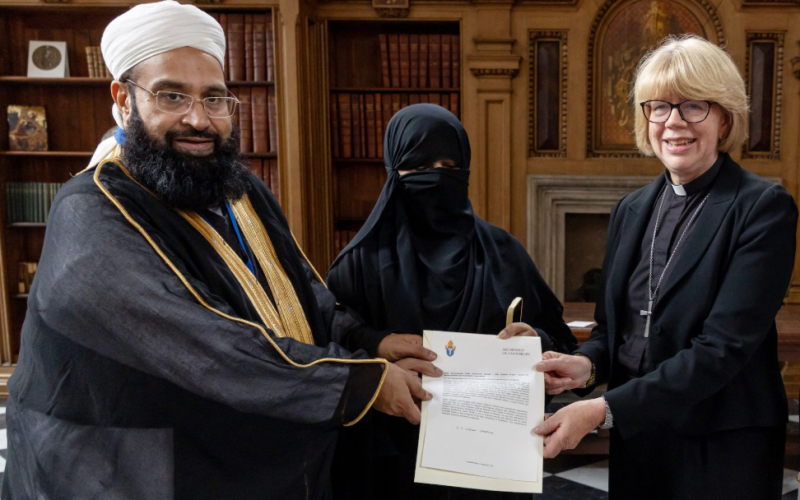
Tahir Ashrafi, Pakistan’s special envoy on interfaith harmony and chairman of the Pakistan Ulema Council, received the Hubert Walter Award for his stated commitment to religious tolerance. The award was later withdrawn after earlier controversy surrounding his past remarks about Osama bin Laden.
A subsequent investigation raised further allegations involving Ashrafi and his brother, Hassan Muawiya Ashrafi, who has been accused of leading what victims and investigators have described as a “blasphemy gang.”
The allegations include claims that the group used social media “honey traps” to lure men into sharing material that could be interpreted as blasphemous before abducting them and demanding money from their families.
Police and human rights sources have linked a sharp increase in blasphemy cases to organized groups allegedly operating with corrupt officials. Pakistan’s National Commission for Human Rights recorded more than 200 people jailed for blasphemy in 2023, compared with about 10 annually in 2020 and 2021.
Families of alleged victims have described severe financial and personal consequences. According to the investigation, one family was allegedly asked to pay one million Pakistani rupees after their relative was abducted and accused of blasphemy.
An investigation by the exiled Pakistani media outlet Fact Focus has also reported that at least four alleged victims died following torture. The claims include allegations of severe physical abuse while victims were in custody.
Ashrafi has denied being part of any blasphemy gang and has challenged critics to prove that he or his brother received money from the cases.
He has also publicly defended his brother, describing him as a religious and humble man while criticizing lawyers representing alleged victims and questioning the conduct of a judge who investigated the accusations.
The controversy was examined during proceedings before Islamabad High Court Judge Sardar Ejaz Ishaq Khan, who held dozens of hearings following petitions from more than 100 families. The proceedings were livestreamed amid concerns about possible disruption.
At the conclusion of the proceedings, the judge ordered the government to establish an inquiry commission, citing concerns including missing evidence, inadequate police investigations and the alleged repeated use of women in online conversations that resulted in the sharing of blasphemous material.
The order was subsequently suspended after an appeal.
The allegations have also drawn attention to Ashrafi’s public record. He has previously intervened in high-profile blasphemy cases, including that of Rimsha Masih, a Christian girl who was accused of blasphemy in 2012. Supporters have credited him with helping protect people accused under Pakistan’s blasphemy laws, while some minority-rights activists have questioned the extent and consistency of his interventions.
The Archbishop of Canterbury’s office said it recognizes concerns about Ashrafi’s inclusion in the awards ceremony and is reviewing its nomination and vetting procedures.
The allegations against Ashrafi and his brother remain contested. Ashrafi has denied involvement in extortion, while the investigation has cited victims’ families, police records, court proceedings, and other sources in presenting the allegations.