
A wedding celebration turned into a deadly spectacle in Sialkot after a massive crowd surge at a private sports stadium on Daska Road claimed at least two lives and injured more than 17 people, raising troubling questions about the commercialisation of public gatherings, the exploitation of economic vulnerability and the failure of authorities to enforce basic safety regulations.
The October 31 incident occurred during the mehndi celebrations of Pakistani TikToker Ansar Mahmood, popularly known as Mr Patlu. Thousands reportedly converged on the venue following announcements of a raffle draw offering expensive prizes, including a car and 50 motorcycles. What was promoted as a series of wedding festivities continuing until November 7 ended in panic when attendees rushed towards the stadium gates, triggering a stampede.
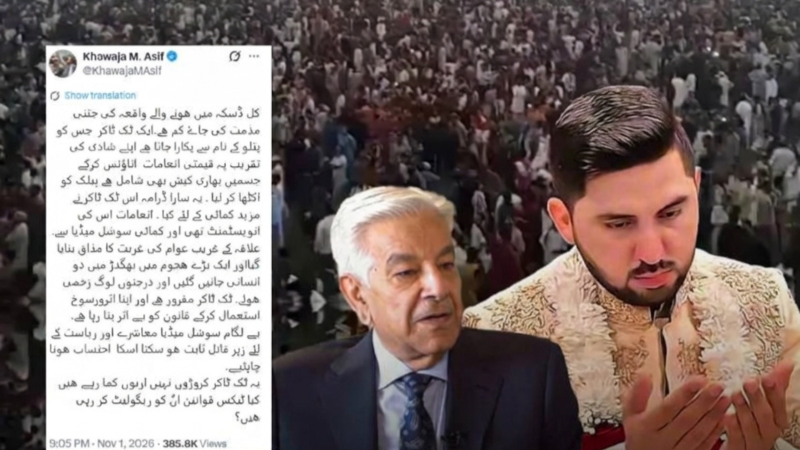
The tragedy has prompted sharp criticism from Defence Minister Khawaja Asif, who accused the influencer of turning public poverty into a commercial opportunity. In a statement posted on X on November 2, Asif alleged that the promise of expensive giveaways and substantial cash rewards was intended to attract an uncontrolled crowd, generate social media views and increase earnings.
Calling the prizes an "investment" in exploiting economic hardship for digital profit, Asif questioned the unchecked influence of social media personalities and described unregulated social media as a "deadly poison" for society.
The allegations are particularly serious given the circumstances surrounding the event. According to the Sialkot district administration, permission had been granted for a Mehfil-e-Sama within an enclosed private venue, with proceedings scheduled to begin after Isha prayers. However, the organisers allegedly began activities around 4pm, several hours ahead of the authorised schedule. The administration subsequently revoked the no-objection certificate (NOC) after reports of violations emerged.
Police have also alleged that an announcement over loudspeakers instructed attendees to enter the stadium simultaneously, triggering the fatal rush. The incident raises an uncomfortable question: how could an event attracting such a large gathering proceed without effective entry controls, crowd monitoring and emergency arrangements?
The police investigation has resulted in a First Information Report (FIR) against nine named individuals, including Mr Patlu, his brother, the stadium owner and other event organisers, alongside 40 to 45 unidentified security guards. Six suspects have reportedly been arrested. The case invokes provisions of the Pakistan Penal Code relating to deaths, negligence-related offences, rioting and disobedience of official orders.
The controversy, however, cannot be reduced to the conduct of one influencer. It exposes a wider failure of oversight in a digital environment where online popularity can translate into enormous physical gatherings almost overnight. Social media personalities can mobilise thousands through promotional campaigns, but the responsibility for public safety cannot be left to follower counts, informal security teams or the commercial calculations of event organisers.
The political response has also exposed questions about the government's own regulatory responsibilities. Speaking to reporters on November 2, Asif said officials who granted permission for the gathering should also share responsibility, acknowledging that the authorities had failed to anticipate the scale of attendance. He called for a regulatory framework governing social media activities and questioned whether the substantial earnings of digital influencers were adequately monitored under existing tax laws.