
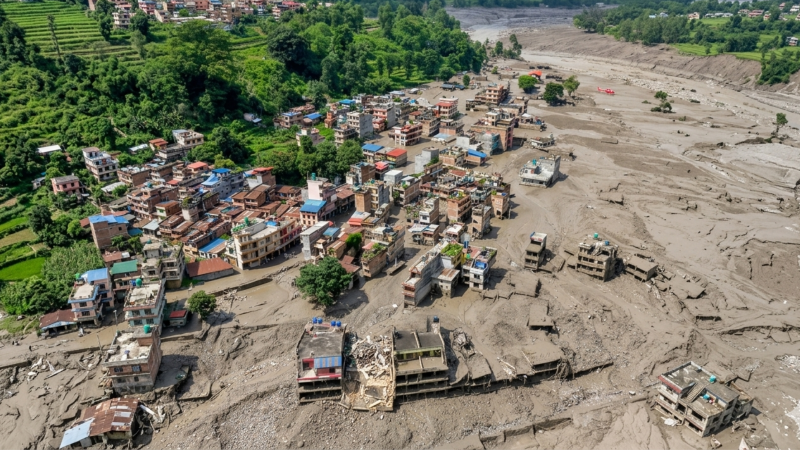
The devastating floods that struck Nepal’s northern districts on August 26 have once again exposed the extraordinary vulnerability of communities living in the Himalayas. The disaster unleashed torrents of water, rock and debris, destroying homes, roads, bridges and vital infrastructure. Communities were cut off, families were separated and rescue operations were severely complicated by the destruction of transport and communication links.
The immediate cause may have been a sudden glacial collapse and flash flooding. Nepal sits on the frontline of climate change. Its glaciers are increasingly unstable, while rising temperatures are altering the behaviour of rivers and mountain ecosystems. Yet the country's development policies have not always kept pace with these changing risks. Roads are constructed across fragile slopes, settlements continue to expand in hazardous areas and infrastructure projects are often approved without sufficiently accounting for the possibility of increasingly extreme climatic events.
Warnings, however, are useful only when they reach people in time. Glacier monitoring, satellite surveillance, river sensors and reliable communication networks are no longer technological luxuries. They are basic components of public safety.
The tragedy should also force Nepal and its neighbours to rethink regional cooperation. The Himalayas are a shared ecological system. Glaciers, rivers and weather patterns do not respect national borders. India, China and Nepal therefore have a common interest in sharing climate data, hydrological information and early warnings. Treating such information as a matter of bureaucratic ownership or national competition could cost lives. That is why international climate finance must move beyond declarations and conferences. Adaptation funding should reach the communities that need it, supporting resilient infrastructure, evacuation systems, monitoring technology and local emergency capacity. The flood was natural. The vulnerability was constructed. And that is the part Nepal and the world must confront.