
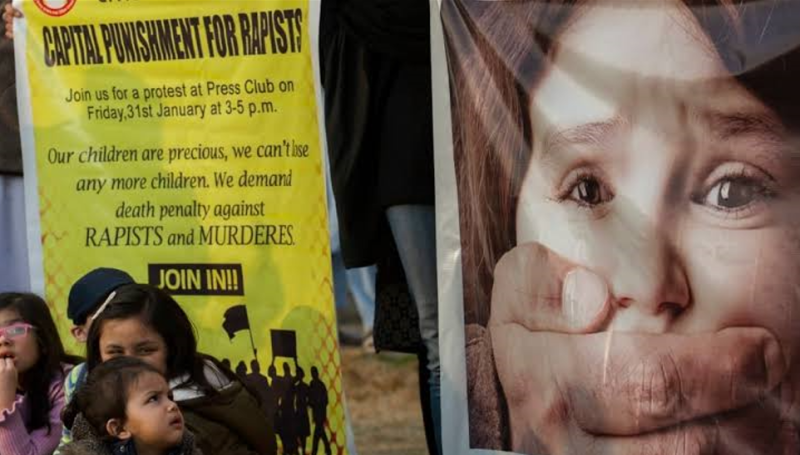
An estimated 1.5 million Pakistani children faced online sexual abuse in one year, while stigma, fear, and weak reporting systems leave many victims without adequate protection.
WEBDESK – NAYADAUR
An estimated 1.5 million children in Pakistan experienced online sexual abuse in a single year, according to a UNICEF report highlighting the growing risks facing children as internet access expands.
The victims, aged between 12 and 17, were frequently targeted by people they already knew. Around 85% of perpetrators were reportedly known to the children they targeted.
For 17-year-old “Zara Shah”, whose name was changed for her protection, the ordeal began while she was playing an online computer game.
She told AFP that a person she met while gaming initially seemed like a friend. The conversation later turned into requests for sexual images, followed by threats that her family would be told about their communication.
Her experience reflects a wider pattern in which online abuse can begin through seemingly ordinary interactions. UNICEF report lead author Daniel Kardefelt said perpetrators may initially approach children through conversations, gaming, gifts, money or promises of romance.
Once trust is established, perpetrators can spend extended periods gathering personal information from social media and using it to manipulate or threaten children.
Most victims remain silent
One of the most serious findings is the reluctance of victims to report abuse.
In Pakistan, 71% of victims did not tell anyone, according to the report, while none of the children surveyed reported their experiences through formal channels such as police, helplines or social workers.
Stigma, shame and fear of family and social consequences were among the reasons children remained silent.
Mehek Naeem, director of Lahore-based children’s rights organization PAHCHAAN, said about 44% of reported abuse was entirely online, with Snapchat and WhatsApp among the platforms frequently identified.
Girls can face additional risks when perpetrators threaten to expose private images or conversations. In conservative families, such threats can lead to restrictions on girls' movement or even withdrawal from school.
For Zara, fear that her family might discover what had happened prevented her from seeking help.
“Staying quiet felt like the better option than speaking up,” she said, describing the continuing anxiety caused by the experience.
Internet access is expanding
The scale of the problem comes as more Pakistani children gain access to the internet.
UNICEF estimates that around 74% of children aged 12 to 17 in Pakistan are internet users, increasing the need for effective safeguards against online exploitation.
The findings have also intensified debate over how governments should respond.
The Punjab government passed a resolution this month seeking to prevent children under 16 from using social media. Digital rights advocates have criticized the proposal, raising questions about enforcement and children's access to online spaces.
Digital rights activist Usama Khilji said such restrictions could be difficult to enforce because children may circumvent them using VPNs. He also raised concerns about freedom of expression.
Experts call for stronger enforcement
Pakistan already has laws addressing technology-facilitated offenses against children, but experts cited in the report say implementation remains a major challenge.
Tahira Afrasiyab, a spokesperson for nonprofit organization Muslim Hands, said Pakistan has a legal framework but lacks effective implementation.
Human rights lawyer Salman Afridi also pointed to gaps in existing laws and warned that economic vulnerability can be exploited to obtain sexual content for relatively small amounts of money.
He described a broader process involving grooming, inducement, coercion, blackmail, production and distribution of abusive material.
The findings suggest that protecting children online requires more than restrictions on internet or social media access. Stronger enforcement of existing laws, accessible reporting mechanisms and greater awareness among children, parents and families are also important in tackling online exploitation.
For Zara, however, the consequences remain deeply personal.
“I was, and am, scared,” she said.
“I live in fear.”