
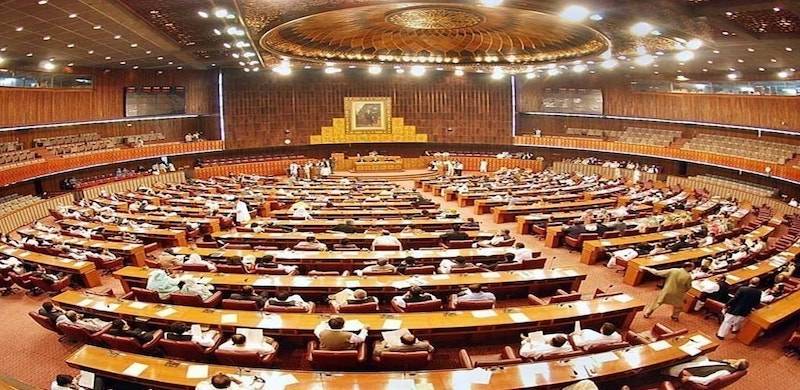
The National Assembly on Wednesday passed the Elections Amendment Bill, 2026, introducing provisions to safeguard the confidentiality of parliamentarians’ assets under certain circumstances.
Currently, members of the National Assembly, Senate, and provincial assemblies are required to submit annual statements of assets and liabilities, including those of their spouses and dependent children, to the Election Commission of Pakistan (ECP) by December 31 each year. Section 138 of the Elections Act mandates the ECP to publish these declarations in the official gazette.
The newly passed bill proposes amending Section 138 to allow the assembly speaker or Senate chairperson, on a member’s written application, to restrict the public disclosure of their assets if publication poses a “serious threat to the life or safety” of the member or their family. The restriction would remain in place for a maximum of one year at a time, provided the member submits a complete and accurate statement confidentially to the ECP.
According to the bill’s statement of objectives, the amendment seeks “a balanced approach between transparency and the protection of individual rights.” While public disclosure promotes accountability and trust in public office, the legislation acknowledges that unrestricted publication may endanger the personal security and privacy of lawmakers and their families.
The bill also includes technical amendments, replacing the word “Supreme” with “Federal Constitutional” in multiple sections to reflect the establishment of the Federal Constitutional Court under the 27th Amendment.
The Elections Amendment Bill now awaits the Senate’s approval and the president’s assent before it can become law. Lawmakers emphasised that the measure is intended to enhance public trust in governance while ensuring the safety and privacy of elected representatives in a challenging security environment.