
Nearly 8,000 people died or went missing on migration routes in 2025, according to a new report by the International Organization for Migration, underscoring what the United Nations agency described as a continuing global failure to prevent migrant deaths.
The report recorded 7,904 fatalities and disappearances worldwide, a slight decline from the record 9,197 deaths reported in 2024. However, officials cautioned that the decrease may not reflect an improvement in conditions, noting that around 1,500 suspected cases could not be verified due to disruptions in aid and monitoring systems.
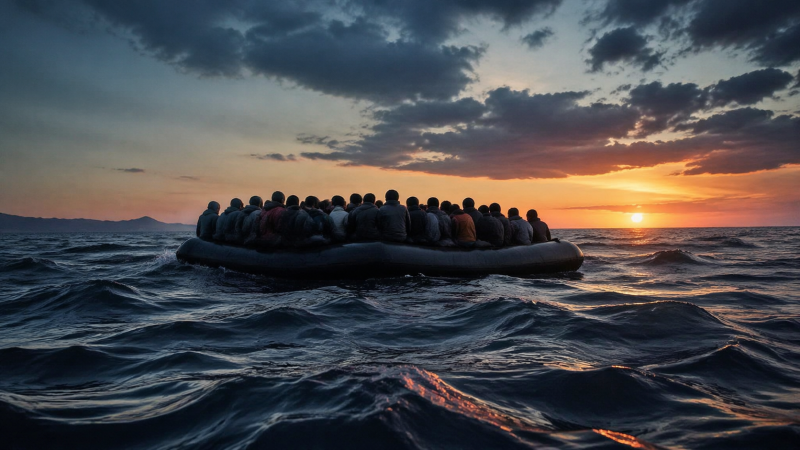
Sea crossings towards Europe remained the deadliest routes, accounting for more than 40 per cent of all recorded deaths and disappearances. The agency highlighted a growing phenomenon it termed “invisible shipwrecks”, in which boats carrying migrants sink or vanish without a trace, leaving no survivors or recoverable bodies. These cases, it said, continue to obscure the full scale of the human toll in the Mediterranean and surrounding waters.
The report also pointed to significant fatalities along the West African migration corridor towards the Canary Islands, where approximately 1,200 deaths were recorded. In Asia, the number of migrant deaths reached a new high, driven in part by the ongoing displacement of Rohingya refugees fleeing violence in Myanmar and precarious conditions in overcrowded camps in Bangladesh.
Officials said migration routes are increasingly shifting in response to conflict, economic hardship, environmental pressures and tightening border policies. Despite these changes, the risks faced by migrants attempting dangerous journeys remain severe.
“These figures bear witness to our collective failure to prevent these tragedies,” said Maria Moita, who heads the agency’s humanitarian and response division, during a briefing in Geneva. Separately, International Organization for Migration Director General Amy Pope warned that behind every statistic lies a human story of loss and uncertainty, with families often left without answers about the fate of their loved ones.
The agency estimates that since 2014, more than 80,000 people have died or disappeared on migration routes globally, while at least 340,000 family members have been directly affected by these losses.
The latest findings add to growing concerns among humanitarian organisations that gaps in rescue operations, data collection and international cooperation are contributing to preventable deaths along some of the world’s most perilous migration routes.