
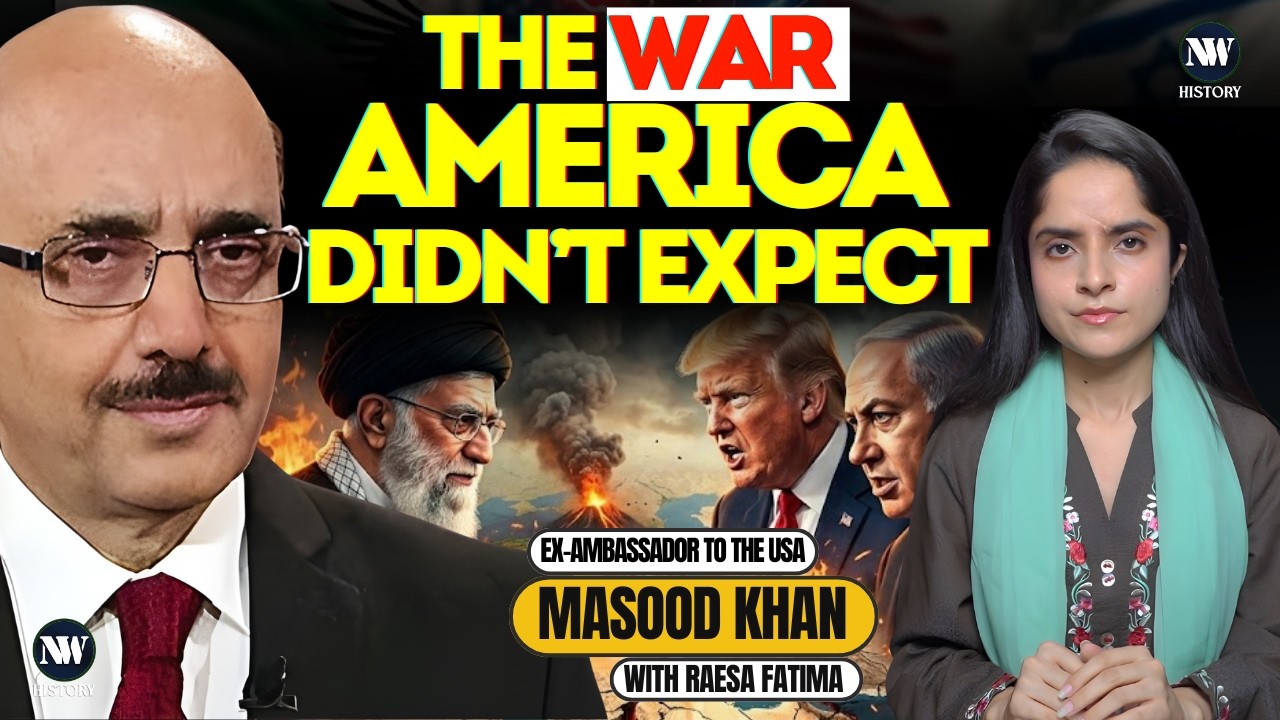
The assassination of Iran’s Supreme Leader, Ayatollah Ali Khamenei, has once again thrust the Strait of Hormuz into global focus, igniting fears of a major Middle Eastern escalation. In a recent episode of New Wave History, former Pakistani Ambassador Sardar Masood Khan offered an incisive look into the origins and implications of the region’s intensifying conflict.
Tracing the roots of the crisis, Khan explained that US–Iran relations were once cooperative during the Shah’s rule, with both nations aligned against Soviet communism. However, the 1979 Iranian Revolution dramatically reversed this trajectory, leaving a legacy of resentment against Western powers that endures today. The overthrow of Prime Minister Mohammad Mossadegh in 1953, orchestrated by the US and UK, further embedded Iranian distrust, culminating in decades of enmity between Iran and the United States.
The ambassador highlighted how post-revolution Iran became a perceived existential threat to Israel, particularly due to its support for Hezbollah, Hamas, and regional militias. While Iran insists its nuclear programme remains civilian, Israel and the United States view its missile development and regional influence as direct security threats. The collapse of the 2015 JCPOA agreement, following the US withdrawal in 2018, has only fuelled this escalation, prompting Tehran to expand its uranium enrichment and regional presence.
Khan noted that while proxy networks like Hezbollah and Hamas have been weakened by ongoing conflicts, the current situation marks a departure from indirect engagements to direct military action. Israeli intelligence operations and targeted strikes within Iran demonstrate the high stakes of this confrontation. Meanwhile, Gulf states, despite hosting US bases, are caught between strategic alignment and economic vulnerability, wary of the broader fallout on oil markets and regional stability.
Looking ahead, the ambassador emphasised that Iran’s leadership transition and the potential return of figures like Reza Pahlavi remain unpredictable. Revolutions and uprisings rarely follow linear paths; civil unrest or systemic continuity could shape the geopolitical landscape in unforeseen ways. With multiple global powers watching closely, the Middle East stands at a precarious juncture, where history, ideology, and strategic calculations converge with immediate international consequences.