
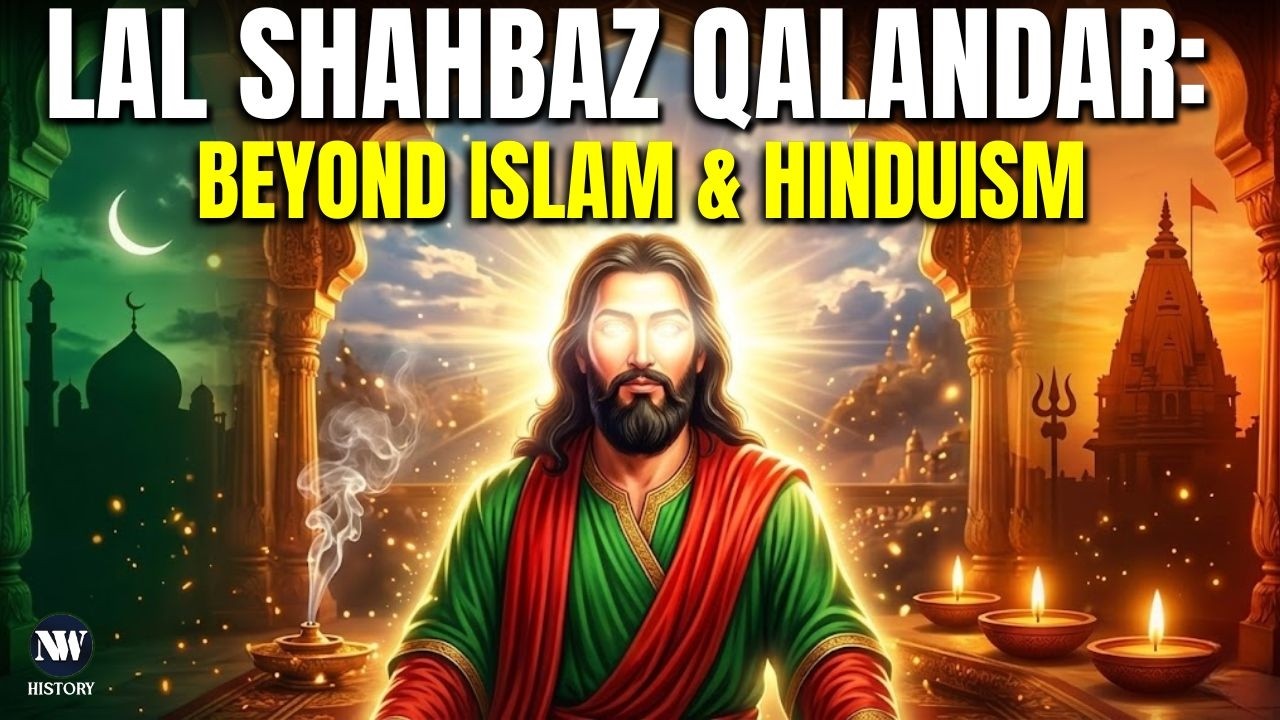
In the historic town of Sehwan, the air trembles each evening with the rhythm of drums and the collective heartbeat of devotion. Beneath a radiant golden dome rests Lal Shahbaz Qalandar, a figure whose legacy defies convention and continues to inspire spiritual ecstasy nearly eight centuries after his death.
Unlike many saints associated with quiet contemplation, Lal Shahbaz Qalandar embodied movement, music, and an unrestrained love for the divine. His very name tells a story: “Lal” for the crimson robes he wore, “Shahbaz” symbolising a royal falcon in flight, and “Qalandar” denoting a wandering mystic answerable only to God. His shrine has long served as a sanctuary for those on the margins, where distinctions of religion, caste, and status dissolve into shared surrender.
Born as Syed Muhammad Usman in 12th-century Marwand, he was educated in theology and philosophy but soon turned away from structured scholarship. Drawn instead to the path of Sufism, he embraced a life of wandering, undertaking the pilgrimage of Hajj multiple times on foot and travelling across Persia, Central Asia, and the Middle East. His journeys, both physical and spiritual, shaped a worldview rooted in unity and transcendence.
His eventual arrival in Sehwan marked a turning point. Settling in a region steeped in diverse religious traditions, he did not seek to impose belief but to embody it. Through dance, poetry, and the famous dhamal ritual, he expressed devotion in its most visceral form. His teachings emphasised the annihilation of the ego, the primacy of inner spirituality over rigid formalism, and a universal brotherhood that welcomed all, Muslim, Hindu, Sikh, and Christian alike.
Today, the shrine remains a living testament to this philosophy. Each year, during his urs, hundreds of thousands gather, transforming Sehwan into a city of devotion where joy eclipses hierarchy. The chant of “Dama Dam Mast Qalandar” reverberates as a declaration of love that transcends boundaries.
In a world often defined by division and order, Lal Shahbaz Qalandar’s legacy offers an alternative vision, one where devotion is expressed through movement, inclusivity, and an unyielding connection to the divine. His shrine endures not merely as a place of remembrance, but as a sanctuary for those seeking meaning beyond the confines of convention.