
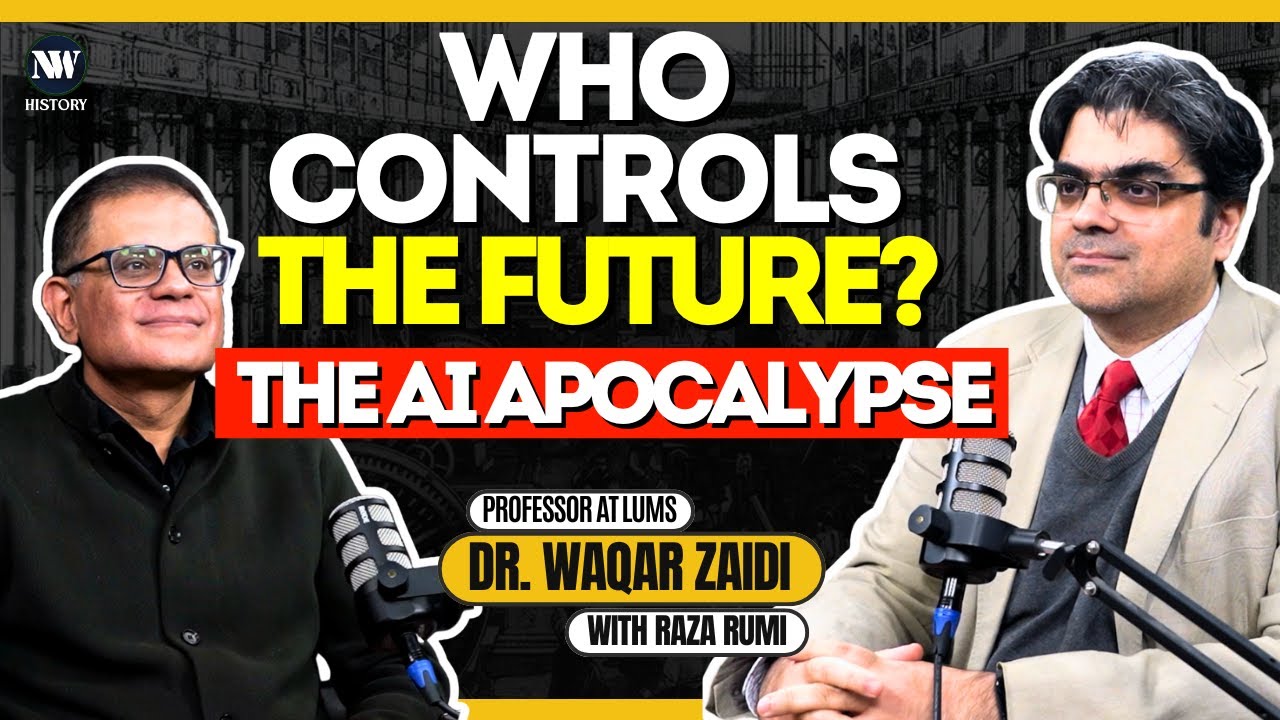
When did war become remote-controlled? When did power shift from battlefields to algorithms? And can global institutions still contain the forces unleashed by a century of technological revolution?
In a searching conversation on New Wave History, Professor Waqar Zaidi traces the arc of modern power from the mushroom clouds of 1945 to the drone-filled skies of today. The 20th century, he argues, was not merely an age of ideology or empire, it was an age of technology.
Nuclear weapons inaugurated what scholars call the “nuclear age”, transforming diplomacy as much as warfare. Though used only twice, in Hiroshima and Nagasaki, their shadow reshaped global politics. The permanent members of the United Nations Security Council were, tellingly, the world’s earliest nuclear powers. Atomic weapons became less battlefield tools than instruments of leverage, silent guarantors of influence.
Yet the revolution did not end there. The microprocessor, a seemingly modest invention, proved equally transformative. As a “general purpose technology”, it seeped into every corner of life: industry, communications, finance and warfare. Computers increased productivity, expanded global wealth and strengthened states. But they also laid the foundations for surveillance systems of unprecedented sophistication.
Transport technologies followed suit. Aviation and shipping globalised the world, shrinking distance and accelerating trade. Today’s conflicts, from Ukraine to South Asia, are increasingly drone-driven. Warfare, Professor Zaidi notes, is becoming autonomous. The soldier risks being replaced by the algorithm.
The digital turn has also democratised communication. From the Arab Spring to grassroots political movements across South Asia, mobile phones and social media have empowered citizens. Yet the same technologies enable misinformation, digital repression and financial surveillance as cash gives way to digital currency.
Now artificial intelligence stands at the frontier. AI promises efficiency and prosperity, but it threatens job displacement, automated weaponry and cyber warfare on a scale yet unseen. Regulation, once attempted through treaties on nuclear or chemical weapons, appears ever harder in an era of weakened multilateralism.
With the United Nations losing influence and major powers retreating from collective leadership, the question is urgent: who governs technology?
The lesson of the past century is sobering. Technology amplifies power, for good and ill. Whether it elevates humanity or overwhelms it depends less on machines than on political will.
And that, perhaps, is the most human question of all.