
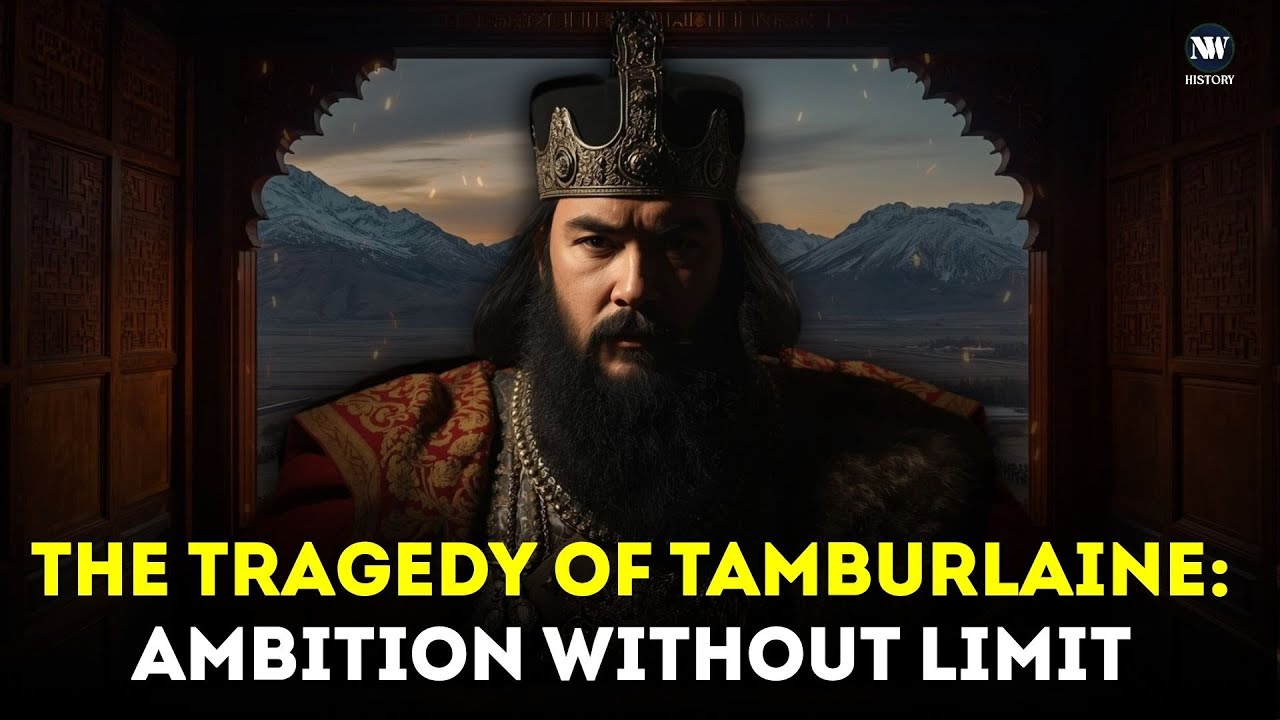
In the late 14th century, the world witnessed the rise of Timur, a formidable Turkic-Mongol conqueror whose empire stretched from Central Asia to the Middle East and India. Two centuries later, in Elizabethan England, Christopher Marlowe would resurrect this figure on stage as Tamburlaine the Great (c. 1587), transforming a ruthless warlord into a poetic symbol of ambition and human potential.
The historical Timur, born near modern-day Uzbekistan in 1336, rose from obscurity to command one of history’s largest empires. His campaigns, marked by brilliance and brutality alike, reshaped much of Asia. In 1402, he famously defeated Ottoman Sultan Bayezid I at Ankara, halting the Ottoman advance into Europe. Timur’s dynasty later became known for its patronage of art and architecture, giving rise to the Timurid Renaissance in Central Asia.
Marlowe’s Tamburlaine, however, was less about history and more about Renaissance ideals. His hero embodies the humanist spirit, a man who defies birth, destiny, and divine order to forge his own greatness. In Marlowe’s verse, Tamburlaine’s eloquence and ambition echo the era’s faith in human mastery and self-creation. Yet his violence and arrogance expose the darker side of that same ambition.
The play’s tension, between admiration and condemnation, mirrors the Renaissance struggle to define the limits of human power. For Elizabethan audiences, Tamburlaine represented both inspiration and warning: the genius who conquers the world, yet loses his soul to pride.
Today, the story of Timur and Marlowe’s Tamburlaine endures as a mirror to modern power and ambition. It asks whether greatness lies in domination or in restraint, and reminds us that history’s heroes often carry the weight of their own creation.