
WEBDESK - NAYADAUR - Imran Malik
Iran launched ballistic missiles at a base used by US forces in Jordan and said it attacked 10 ships near the Strait of Hormuz on Wednesday, escalating a six-month-old war after the United States destroyed five Iranian oil tankers.
The attacks marked a sharp intensification of fighting between Washington and Tehran, with military forces increasingly targeting shipping, energy infrastructure and regional bases.
Iran’s Islamic Revolutionary Guard Corps said it fired ballistic missiles at a US-linked base near Al Azraq in Jordan. Tehran claimed the strike caused heavy damage.
Jordan said its air defenses intercepted 18 of the 20 missiles, while the remaining two landed in unpopulated areas. No casualties were reported.
A US official said the Iranian attack was ineffective and that all American personnel at the base had been accounted for.
The Iranian missile strike came a day after the US military said it had destroyed five Iranian oil tankers. US Central Command released video showing the strikes, saying they were carried out after Iran’s Revolutionary Guard targeted a US Navy warship with ballistic missiles on two occasions.
US Secretary of State Marco Rubio said Washington would continue responding to attacks on American naval forces.
“Iran continues to try to hit US naval ships, and for every time they do that or try to do that, they're going to lose tankers,” Rubio told reporters during a visit to Colombia.
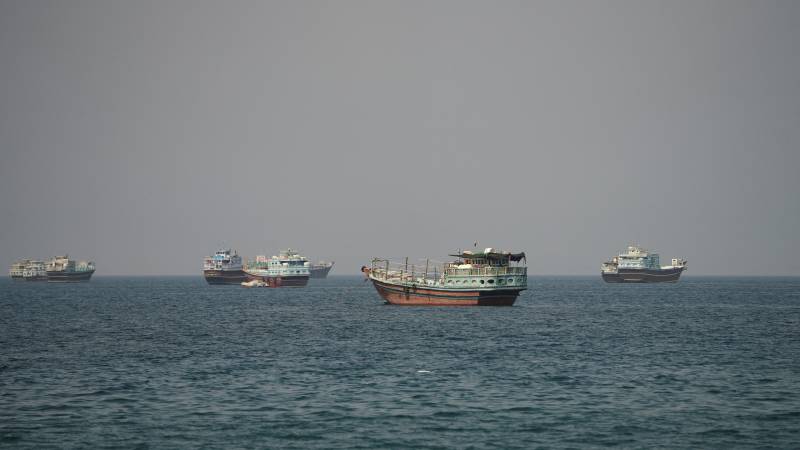
Iran subsequently said its forces had attacked 10 ships attempting to pass through what it described as a “prohibited and unsafe” area of the Strait of Hormuz. The targets reportedly included two US vessels and eight oil tankers.
The developments have heightened fears of further disruption to one of the world's most important energy routes. The Strait of Hormuz carries a substantial share of global oil shipments, and prolonged fighting could put additional pressure on already strained energy markets.
Oil prices rose again on Wednesday, with Brent crude approaching $100 a barrel as traders assessed the risks to tanker traffic and Gulf supplies.
The latest escalation comes alongside renewed attacks by Yemen’s Iran-aligned Houthis against Saudi Arabia.
Houthi-controlled media reported more than 30 Saudi airstrikes across Yemen on Wednesday, a day after the group launched missile and drone attacks against several Saudi cities.
The Houthis said Saudi aircraft conducted 32 strikes in the provinces of Marib, Al-Jawf, Taiz and Hodeida.
The previous Houthi attacks on Saudi Arabia injured 73 people and set fires at energy facilities, according to Saudi authorities. The strikes targeted Khamis Mushait, Abha, Najran and Jazan.
The attacks have added another major flashpoint to an already widening conflict stretching across the Gulf and Red Sea.
Saudi Arabia has fought the Houthis for more than a decade as part of its intervention in Yemen’s civil war. Fighting had eased considerably in recent years, but the ceasefire has now broken down amid the broader regional confrontation.
Washington has sought to maintain the flow of oil through the Strait of Hormuz while restricting Iranian exports. Tehran, meanwhile, has threatened to impose a maritime exclusion zone around the strait.
US Central Command said the five tankers destroyed Tuesday were part of a network used to generate revenue for Iran’s Revolutionary Guard and its regional allies.
The widening attacks have raised the prospect that the conflict could increasingly disrupt commercial shipping and energy supplies well beyond the immediate battlefield, with Gulf producers, Red Sea routes and international oil markets all facing mounting risks.