
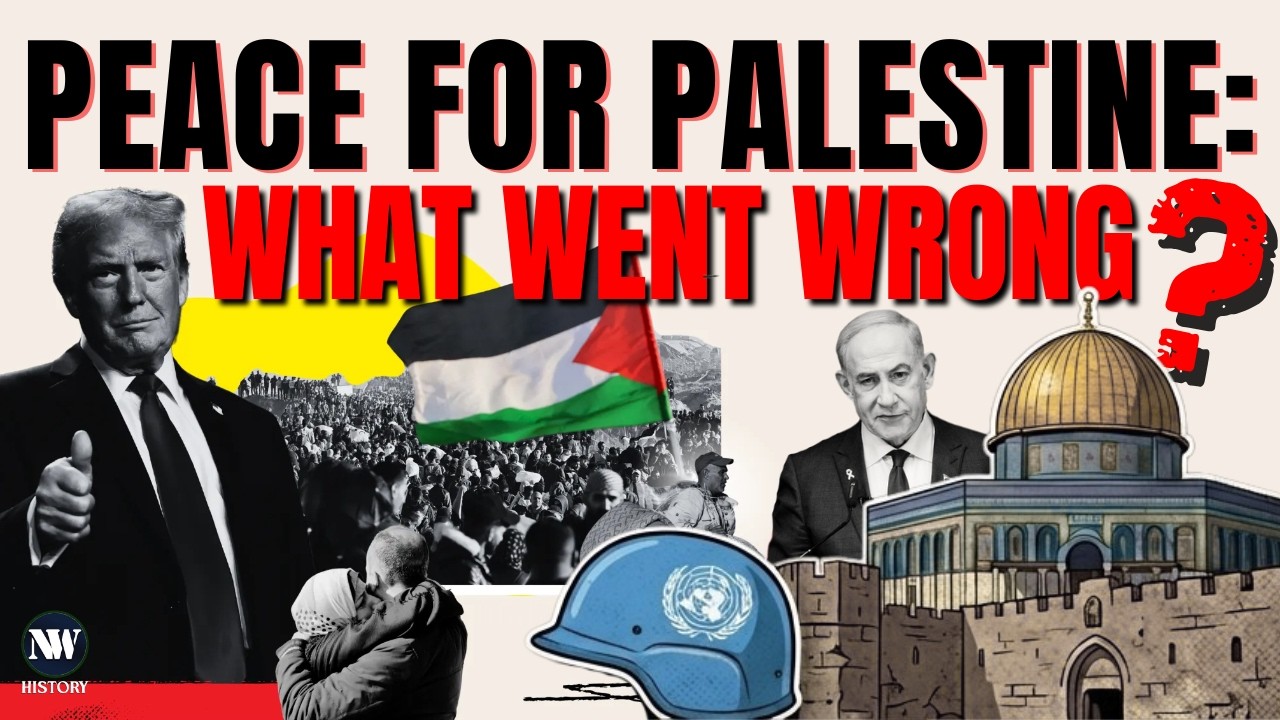
For more than a century, Palestine has been the testing ground for some of the most ambitious peace plans ever devised. From imperial commissions to United Nations resolutions, from regional initiatives to globally endorsed road maps, the international community has repeatedly promised an end to one of the world’s most enduring conflicts. Yet each attempt has collapsed, leaving behind deeper mistrust and renewed violence.
The earliest peace efforts emerged under British rule during the Mandate period. In 1937, as unrest grew between Jewish and Arab communities, the Peel Commission proposed a radical solution: partitioning Palestine into two separate states. It was a revolutionary idea, but one rejected by both sides and quickly abandoned. A decade later, the United Nations revived the concept through the 1947 Partition Plan, recommending Jewish and Arab states with Jerusalem under international control. Jewish leaders accepted the plan; Arab leaders rejected it, and the region descended into war, culminating in the 1948 Nakba and the mass displacement of Palestinians.
Following Israel’s establishment, peace became entangled in Cold War geopolitics and regional warfare. The 1967 Six-Day War reshaped the conflict once again, with Israel occupying the West Bank, Gaza Strip and East Jerusalem. UN Security Council Resolution 242 introduced the principle of “land for peace”, calling for Israeli withdrawal and mutual recognition. While it became the foundation for future diplomacy, its ambiguity allowed each side to interpret it differently.
The late twentieth century saw the rise of the two-state solution as the dominant international framework. This vision appeared closest to reality in the 1990s with the Oslo Accords, when Israel and the Palestine Liberation Organization formally recognised one another. For a brief moment, peace seemed attainable. But violence, political backlash and the assassination of Israeli Prime Minister Yitzhak Rabin shattered momentum.
Regional initiatives followed. The Arab Peace Initiative of 2002 offered full recognition of Israel in exchange for withdrawal from occupied territories and the creation of a Palestinian state. It was unprecedented in scope, yet never seriously pursued. Subsequent summits, ceasefires and conferences failed to resolve core disputes over borders, refugees, Jerusalem and security.
In recent years, diplomatic efforts have resurfaced. In 2025, the UN General Assembly reaffirmed support for a two-state solution, while several Western countries formally recognised Palestine. Still, the gap between international declarations and realities on the ground remains vast.
History suggests that peace in Palestine has never failed for lack of plans. It has failed because trust is absent, power is unequal, and fundamental questions of justice remain unresolved. The story of these peace efforts is not merely one of diplomacy, but of hope repeatedly deferred, and a future still painfully uncertain.