
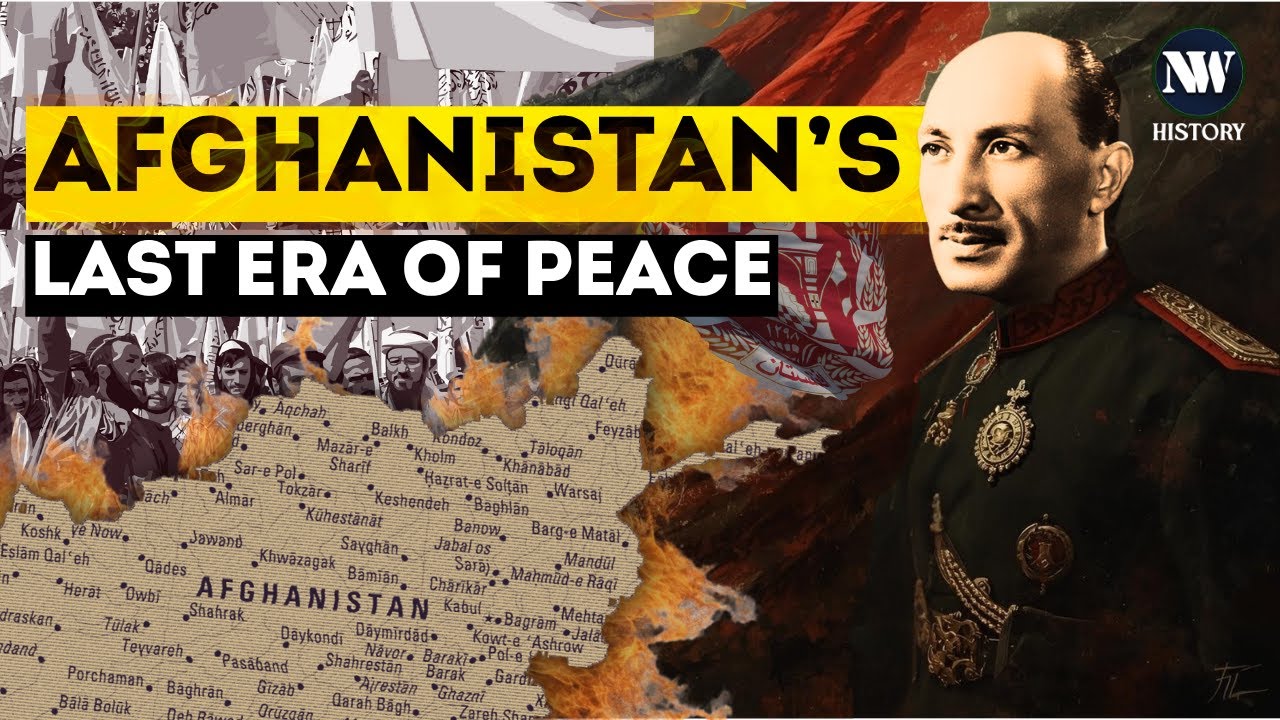
Once a land of poets, monarchs, and mountain kingdoms, Afghanistan’s modern history is one of fractured dreams and lost unity. Before the decades of war, before Soviet tanks and the Taliban’s rise, Afghanistan stood under the calm and cautious reign of King Mohammad Zahir Shah, its last monarch, and perhaps its last symbol of national coherence.
Ascending the throne in 1933 after his father King Nadir Shah’s assassination, Zahir Shah inherited a country balancing tradition with reform. Guided by his cousin, Prime Minister Mohammad Daoud Khan, he maintained Afghanistan’s neutrality during the Cold War, accepting aid from both the United States and the Soviet Union. The result was a fragile golden age: Kabul flourished as a cosmopolitan city, where men and women studied together, art thrived, and peace seemed almost permanent.
Yet, by the 1960s, cracks appeared beneath the surface. Economic dependency, corruption, and growing ideological divides weakened the monarchy. Zahir Shah’s 1964 constitution, intended to democratise Afghanistan, instead deepened divisions between Islamists, Marxists, and nationalists. In 1973, while the king was in Italy, Daoud Khan staged a coup, ending over two centuries of royal rule and declaring a republic.
Daoud’s regime collapsed in 1978 in a bloody communist coup, the Saur Revolution, which triggered rebellion, Soviet intervention, and a decade-long war. The monarchy that had once united the country became a fading memory amid Cold War rivalries, jihad, and occupation.
By the 1990s, as the Mujahideen factions tore Afghanistan apart, the Taliban rose from Kandahar, promising order but imposing a harsh theocratic regime. When the Taliban fell in 2001, Zahir Shah briefly returned from exile, honoured as the “Father of the Nation”, but the monarchy was gone forever.
The fall of Zahir Shah was not merely the end of a royal lineage, but the death of Afghanistan’s political balance, replaced by half a century of conflict and uncertainty that continues to shape the nation today.