
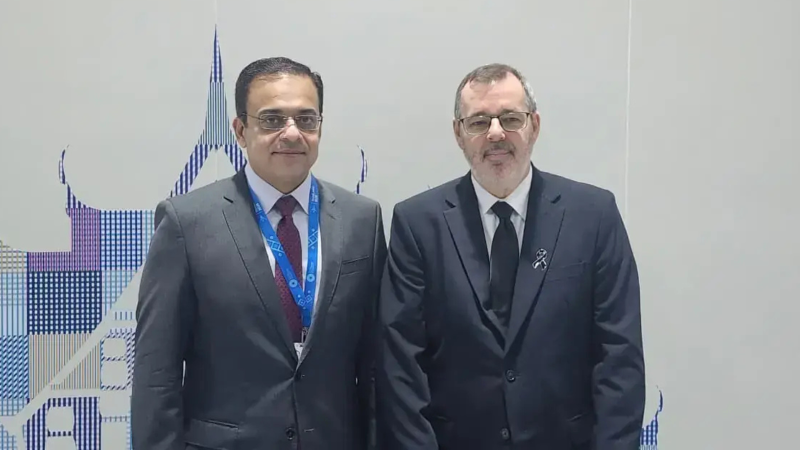
ISLAMABAD: Pakistan will assume the chairmanship of the Boards of Governors of the World Bank Group (WBG) and the International Monetary Fund (IMF) in 2027, marking its return to the prestigious position for the first time since 1953.
Federal Minister for Economic Affairs Ahad Khan Cheema, who also serves as Pakistan’s governor to the World Bank, was formally announced as the incoming chair during the plenary session of the 2026 WBG-IMF Annual Meetings in Bangkok, Thailand, on October 16, according to the Ministry of Economic Affairs.
The government described the appointment as a historic milestone, saying it would provide Pakistan with an opportunity to contribute to international economic and development discussions and promote constructive dialogue among member countries.
The chairmanship comes at a critical time for the global economy, as developing countries face mounting debt-servicing costs, financial pressures, climate-related risks and uncertainty over international development assistance. Pakistan’s incoming role could provide a prominent platform to highlight the economic challenges confronting developing nations.
Following the plenary session, Cheema received a briefing from the World Bank Group’s Corporate Secretariat on the responsibilities associated with the chairmanship. However, the position does not give Pakistan additional voting power or direct control over lending decisions, financial assistance packages or economic programmes administered by the two institutions.
Pakistan’s appointment also comes as the country continues to rely on international financial assistance to stabilise its economy and implement structural reforms. Islamabad is currently operating under a $7 billion IMF Extended Fund Facility and a separate Resilience and Sustainability Facility aimed at addressing longer-term economic and climate vulnerabilities.
The IMF and World Bank play distinct but complementary roles in the global financial system. The IMF focuses on international monetary stability, balance-of-payments support and economic policy, while the World Bank Group provides financing and technical assistance for development projects and poverty reduction.
Pakistan’s chairmanship will therefore offer an opportunity to engage with policymakers from member countries on shared economic challenges, although its practical impact will depend on how effectively the position is used to facilitate dialogue and advance development priorities.