
WEBDESK - NAYADAUR
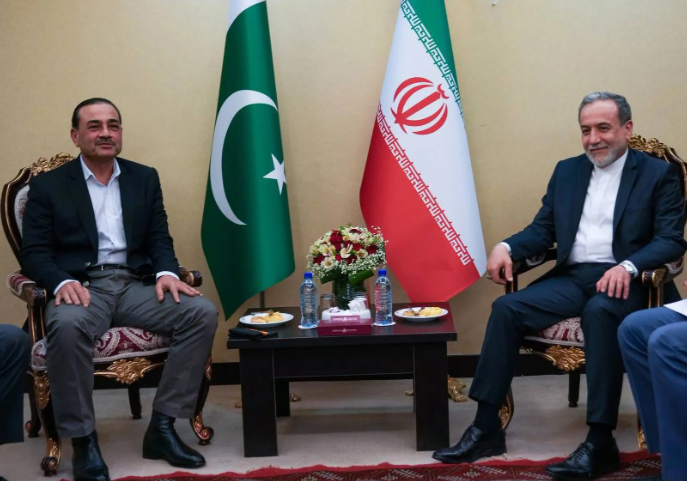
Pakistan’s Chief of Defense Forces and Army Chief Field Marshal Asim Munir has urged Iran to use its influence with Yemen’s Houthi group to stop attacks on Saudi Arabia’s energy and economic infrastructure, according to Pakistani officials.
Munir conveyed the message during a phone conversation with Iranian Foreign Minister Abbas Araghchi as Islamabad stepped up diplomatic efforts to contain the widening Middle East conflict.
According to Pakistani officials cited by Anadolu, Munir asked Tehran to “use its influence” with the Houthis to halt attacks on Saudi oil facilities and other economic infrastructure. The two officials also discussed the broader regional situation and efforts to revive stalled direct negotiations between Iran and the United States.
The call took place on Wednesday while Araghchi was in Beijing. Iranian state media confirmed that the two officials discussed regional developments and matters of mutual interest, although Iran's public account did not provide details of any specific request concerning the Houthis.
The latest diplomatic contact comes as fighting involving the Houthis and Saudi Arabia has intensified, adding another layer to an already wider US-Iran conflict.
Saudi Arabia has accused the Houthis of attacking its territory and energy infrastructure. The Houthis have denied responsibility for at least some recent incidents, including a drone incident near Makkah that Saudi authorities said they had intercepted.
Oil supply risks rise
The attacks have raised concerns over Saudi Arabia’s ability to maintain energy exports and have contributed to heightened volatility in global oil markets.
The Houthi campaign has also coincided with disruptions around the Red Sea, the Bab el-Mandeb Strait, and the Strait of Hormuz, three strategically important routes for global energy and maritime trade. Preliminary shipping data showed only three commodity vessels transited the Strait of Hormuz on Wednesday, compared with 12 the previous day and a 10-day average of about 17.
The situation has increased pressure on Saudi Arabia, the world's largest oil exporter, while global oil prices have remained elevated.
Pakistan seeks diplomatic route
Pakistan has maintained close contacts with both Iran and Saudi Arabia as it seeks to prevent the conflict from spreading further.
Islamabad has a defence agreement with Saudi Arabia and Turkey, while simultaneously maintaining diplomatic channels with Tehran. Pakistani officials have emphasized diplomacy as the preferred means of addressing the escalating crisis.
The latest call between Munir and Araghchi follows earlier contacts between the two sides over the Houthi-Saudi confrontation. Reuters previously reported that their discussions included de-escalation efforts and the possibility of reviving US-Iran negotiations.
According to the supplied report, Pakistani officials described Araghchi’s response to Munir’s latest message as “hopeful,” without providing details of the Iranian position.
Efforts to revive US-Iran talks
Munir and Araghchi also discussed ways to restart stalled direct talks between Washington and Tehran.
According to Pakistani officials, Araghchi indicated that Iran was prepared to return to negotiations if the United States halted hostilities in the Strait of Hormuz and adhered to the Islamabad memorandum. China is also involved in diplomatic efforts to prevent the conflict from spreading further.
Chinese Foreign Minister Wang Yi has called on Iran and the United States to exercise restraint, return to the Islamabad memorandum, and engage in substantive consultations.
Pakistan has played a mediating role between Washington and Tehran during the conflict, which began on Feb. 28. The US and Iran signed an Islamabad memorandum on June 17, but negotiations subsequently stalled over disagreements, including security guarantees and freedom of navigation through the Strait of Hormuz.
For Islamabad, preventing further attacks on Saudi energy infrastructure is also important because prolonged disruption could further strain global energy supplies and fuel prices.
The latest diplomatic initiative therefore puts Pakistan in a delicate position: maintaining its security relationship with Saudi Arabia while keeping communication channels open with Iran and seeking a negotiated end to the wider conflict.
Any sustained attacks on Saudi energy infrastructure or disruption of major Gulf shipping routes could affect global oil supplies and prices. Pakistan’s diplomatic outreach reflects its effort to contain the regional fallout without widening the conflict.