
WEBDESK - NAYADAUR
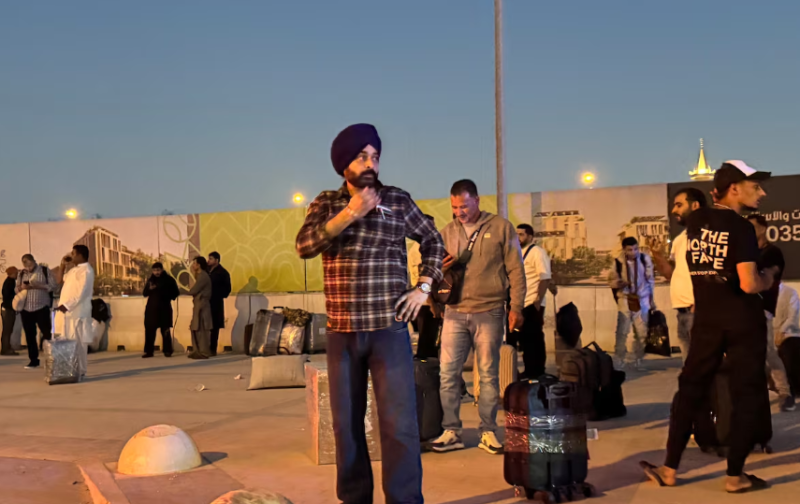
Houthi attacks targeting Saudi Arabia’s King Khalid International Airport in Riyadh have killed nationals of Bangladesh, India and Pakistan, highlighting the growing risks to international travellers as the conflict threatens civilian infrastructure across the region.
Among the victims was Muhammad Nasrullah Badrpuri, a Bangladeshi madrasa teacher who had travelled from Dhaka to perform Umrah in Makkah. He was killed on Saturday while waiting for a connecting flight at Riyadh airport, according to a report by BBC News Bangla.
Nasrullah had departed Bangladesh on Saturday morning and was scheduled to return on October 24. His brother-in-law, Maulana Muhammad Nasiruddin, told BBC Bangla that Nasrullah had a two-hour transit in Riyadh before boarding another flight to Makkah.
“He was standing in the queue to board the flight when the attack happened,” Nasiruddin said.
Nasrullah was travelling with a 45-member Umrah group, 32 of whom reportedly escaped unharmed. He is survived by his parents, wife and three children.
Another Bangladeshi national, Muhammad Shahid Ahmed, who worked in Saudi Arabia, was also killed in the Saturday attack, according to Bangladesh’s Ministry of Expatriates’ Welfare.
The Indian Embassy in Riyadh confirmed that an Indian national injured in the same incident later died. Indian politician Asaduddin Owaisi identified the victim as Muhammad Yusuf Ali, from Hyderabad. Several members of his family were injured, including his sons, one of whom reportedly required surgery.
A separate attack on Sunday killed a Pakistani national and injured 11 other people, according to the supplied report.
Airport attacks disrupt international travel
The attacks have disrupted air travel between Saudi Arabia and South Asia, with several flights cancelled following the incidents.
Five flights between Dhaka and Riyadh scheduled for Monday were reportedly cancelled, including two operated by Biman Bangladesh Airlines.
Bangladesh’s State Minister for Foreign Affairs, Shama Obaed, said officials were working with Saudi authorities to verify the identities and conditions of injured Bangladeshi nationals. Four Bangladeshi citizens were reportedly receiving treatment in intensive care at King Khalid Hospital.
The attacks have also prompted diplomatic concern, as Saudi Arabia and several Gulf countries condemned the strikes.
King Khalid International Airport is a major regional aviation hub connecting Saudi Arabia with destinations across Asia, Europe and the Middle East. Attacks on passenger facilities raise concerns about the safety of civilian aviation and the potential for wider disruption to international travel.
Houthis claim responsibility for strikes
The Houthi movement in Yemen claimed responsibility for attacks on King Khalid International Airport using ballistic missiles, cruise missiles and drones over a 24-hour period.
The group also claimed to have targeted Dammam airport and Saudi oil facilities. Its military spokesperson, Yahya Saree, warned that Saudi airports could be potential targets, while excluding those serving the holy cities of Makkah and Madinah from the threat.
Saudi authorities reported that a projectile struck a passenger hall at Riyadh airport during Sunday's incident, triggering a fire. Saudi military officials said air defences intercepted a missile near the airport, while another unidentified projectile struck passenger hall No. 4.
The incidents followed a series of reported attacks on Saudi airports and other infrastructure in recent days.
Saudi authorities have also reported interceptions of ballistic missiles and attacks affecting airports closer to the Yemeni border. The wider campaign has raised concerns about the security of energy facilities and civilian transport infrastructure in the kingdom.
Regional security concerns deepen
The attacks come amid heightened tensions involving Yemen's Houthis and Saudi Arabia, with the group claiming responsibility for strikes against airports and other strategic sites.
For Bangladesh, India and Pakistan, the deaths carry particular significance because millions of their citizens live and work in Gulf countries, while large numbers travel to Saudi Arabia for employment, family visits and religious pilgrimages.
The killing of travellers at an international airport also underscores the vulnerability of civilians caught up in regional hostilities, even when they are not directly involved in the conflict.
As authorities investigate the incidents and assist injured passengers, the attacks have renewed concerns about aviation safety, flight disruptions and the protection of foreign nationals across the Gulf.