
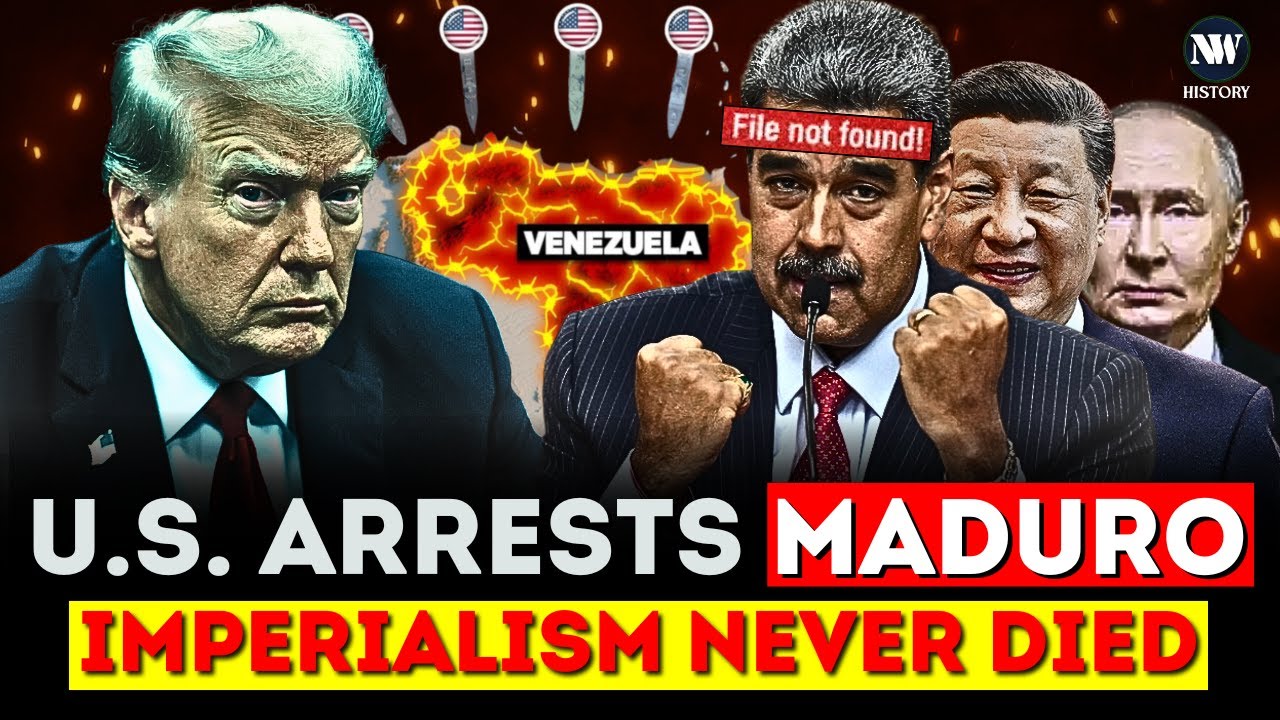
In a dramatic escalation of United States foreign policy, American forces reportedly carried out a covert operation in Caracas on the direct order of President Donald Trump, apprehending Venezuelan President Nicolás Maduro and his wife, Cecilia Maduro, and transferring them into US custody. The operation, described by Washington as a law-enforcement action, has stunned the international community and raised urgent questions about sovereignty, international law and the return of overt imperial power in the Western Hemisphere.
According to US officials, the mission was framed as the arrest of two indicted individuals accused of narcotics trafficking and links to transnational criminal networks. However, critics argue that the operation resembled a military raid rather than a judicial process, treating a sitting head of state as a fugitive rather than a sovereign leader. The spectacle has drawn comparisons not to diplomatic pressure or sanctions, but to wartime interventions unseen since the mid-20th century.
The timing of the operation is particularly striking. As global attention remained focused on tensions in West Asia, the sudden shift to Latin America underscored Washington’s enduring sensitivity to challenges within its traditional sphere of influence. Analysts suggest that the move reflects a revival of the Monroe Doctrine, the 1823 declaration that sought to bar external powers from the Americas but later evolved into a justification for US dominance across the region.
While the Trump administration’s rhetoric is notably blunt, historians point out that the underlying logic is longstanding. Venezuela’s political identity, rooted in the legacy of Simón Bolívar and reinforced under Hugo Chávez, has long challenged US economic and ideological authority. Caracas’s independent foreign policy, including ties with China, Russia, Iran and Palestine, has consistently placed it at odds with Washington.
US officials have justified the arrest by portraying Maduro as a “narco-terrorist”, a framing that critics argue deliberately collapses regime change into criminal prosecution. By redefining political defiance as organised crime, Washington sidesteps the language of war while exercising comparable force.
The implications extend beyond Venezuela. Observers warn that the operation sends a stark message to left-leaning governments, labour movements and social movements across Latin America: ideological dissent may be met not merely with pressure, but with removal.
For many countries beyond the region, including Pakistan, the episode serves as a reminder that global politics is driven less by morality than by power. The arrest of a sitting president under the banner of law enforcement may mark the end of diplomatic restraint, and the beginning of a far more openly coercive global order.