
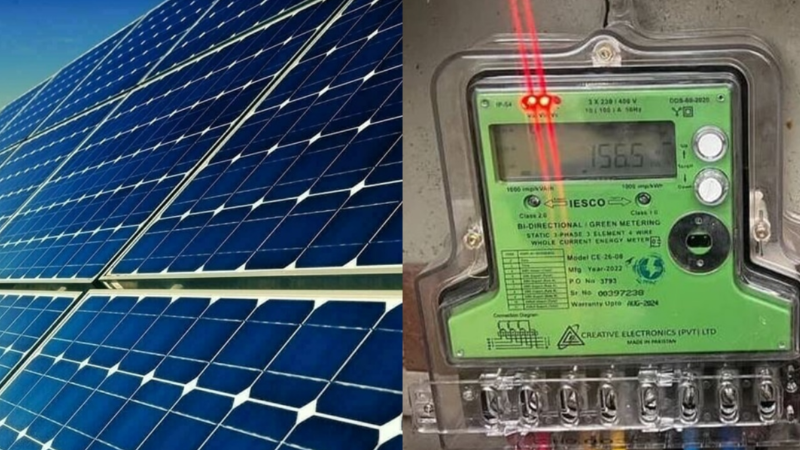
Tensions flared in the National Assembly on Monday as members debated recent changes to Pakistan’s net-metering policy, with Power Minister Sardar Awais Leghari defending the government’s move as an issue of “fair pricing, not being anti-solar.”
The power regulator, NEPRA, recently revised contracts for existing and future net-metered solar consumers, or prosumers, effectively ending the current net-metering regime and replacing it with net-billing. The change was justified as a measure to manage rising solar energy penetration and protect an inefficient state-owned power network. Prime Minister Shehbaz Sharif, facing public criticism, directed the Power Division to file a review petition against the move.
During a call to attention notice raised by Pakistan Peoples Party MNA Sharmila Faruqui, Leghari defended the policy, citing that only 456,000 out of an estimated 20,000-22,000 megawatts of distributed solar energy used net-metering. He emphasised that the majority of solar users, including industrial, commercial, and domestic consumers, would not be affected.
Leghari noted that the new regulations maintained the Rs27 per unit purchase rate for existing users but argued that higher resale rates of Rs45-65 were unfair compared to the average grid price of Rs8.31. He said profits for investors would drop from 50 to 37 per cent annually, but insisted that “no one was going to incur losses” and general consumers would benefit from slightly lower electricity costs.
Faruqui criticised the government for reversing its clean energy policy, calling the action “broad daylight robbery” and accusing the Power Division of compensating for its inefficiencies by targeting solar consumers.
The minister responded that with the prime minister’s intervention, net-billing implementation has been halted for now, and prosumers will remain under the net-metering system until NEPRA completes its review.