
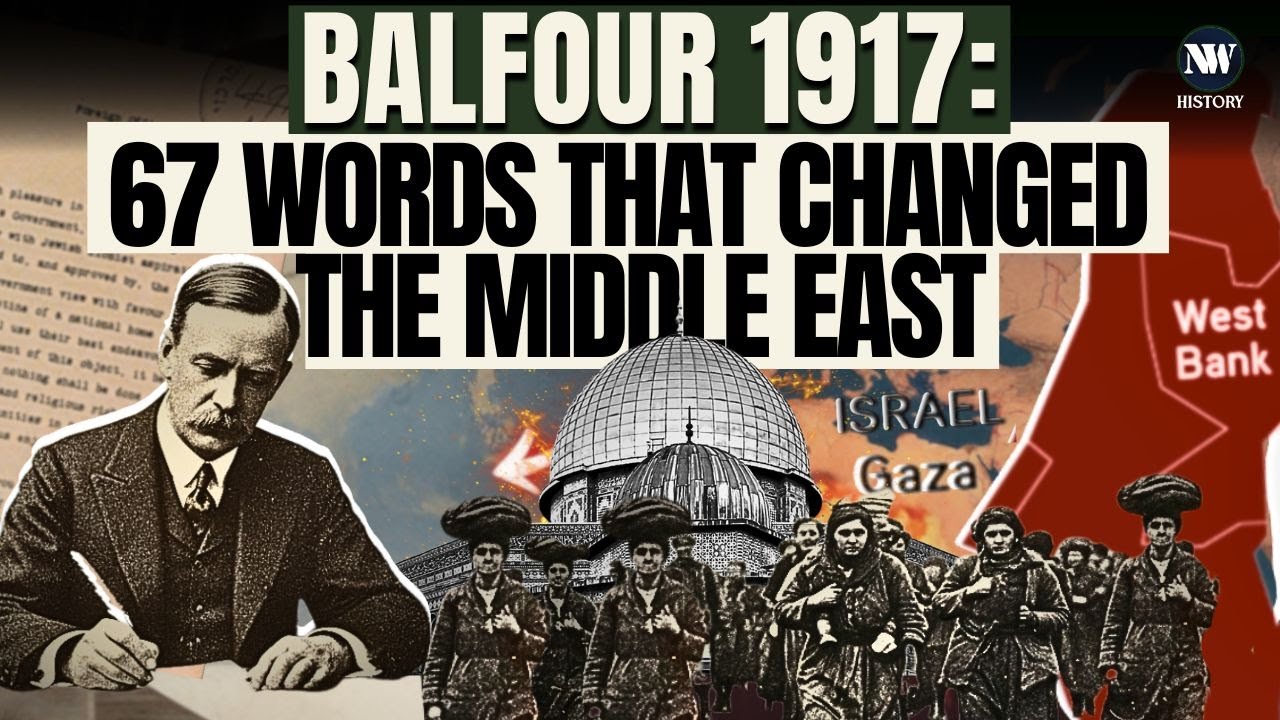
Sixty-seven words. That was all it took to alter the course of Middle Eastern history.
Written in the middle of the First World War, the Balfour Declaration remains one of the most consequential, and controversial, documents of the twentieth century.
On 2 November 1917, as Europe bled in trench warfare and empires crumbled, the British Empire issued a short letter that would echo far beyond the war itself. Addressed by Foreign Secretary Arthur James Balfour to Lord Lionel Walter Rothschild, a leading figure in the British Jewish community, the letter expressed Britain’s support for the establishment of a “national home for the Jewish people” in Palestine.
At the time, Palestine was under Ottoman rule and inhabited overwhelmingly by Arab Muslims and Christians, with a small Jewish minority. Yet Britain, locked in a global war and eyeing the post-war order, was already planning the region’s future. Zionism, the political movement advocating a Jewish homeland, had gained momentum in Europe, and British policymakers believed that supporting it could bring strategic benefits. They hoped to secure influence in the Middle East, protect imperial routes such as the Suez Canal, and rally Jewish support for the Allied cause, particularly in the United States and Russia.
Crucially, the declaration did not promise a Jewish state. Its ambiguous language spoke of a “national home” while also pledging that nothing would prejudice the civil and religious rights of existing non-Jewish communities. This contradiction would soon prove fatal.
After the war, Britain received the League of Nations Mandate for Palestine, legally binding it to uphold both commitments. In practice, it failed to reconcile them. Jewish immigration increased, institutions expanded, and Zionist political organisation flourished. For many Jews, the declaration symbolised long-denied recognition. For Palestinian Arabs, it represented betrayal, a decision made over their heads, threatening displacement and loss.
By the 1930s, tensions had erupted into widespread unrest. Britain oscillated between repression and compromise, satisfying neither side. When the horrors of the Holocaust reshaped global opinion, pressure for Jewish statehood intensified. In 1947, Britain withdrew, handing the problem to the United Nations. The following year, Israel declared independence, and war broke out. More than 700,000 Palestinians were uprooted in what they remember as the Nakba.
Today, over a century later, debates about statehood, refugees and borders remain rooted in that single wartime letter. The Balfour Declaration reminds us that history is often made not only by battles, but by words, and that their consequences can last generations.