
WEBDESK - NAYADAUR
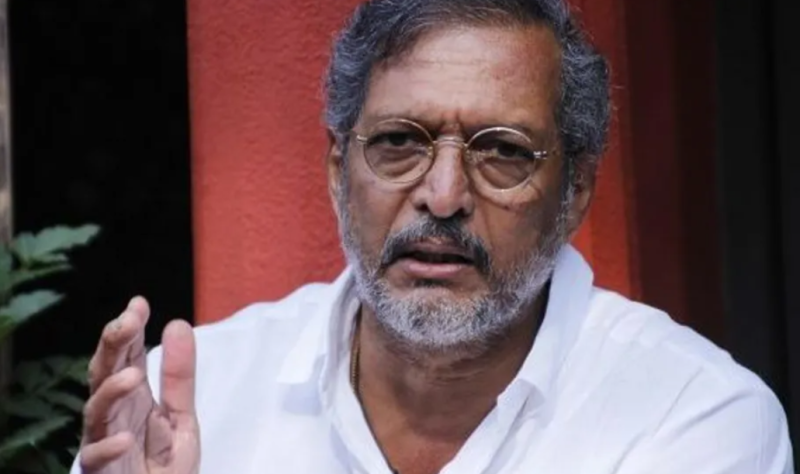
Veteran Indian actor Nana Patekar, celebrated for his powerful performances, distinctive voice, and outspoken personality, has died at 75 in Goa.
Patekar was found unconscious at his home in Goa in the early hours of Thursday and was taken to Manipal Hospital, where doctors attempted to revive him.
“Despite 45 minutes of continuous CPR, he could not be revived,” Dr Shekhar Salkar of Manipal Hospital in Goa told ANI.
His son, Malhar Patekar, confirmed his death to BBC Marathi.
His funeral was scheduled for Thursday evening at his farmhouse in Pune with full state honors, according to the Maharashtra government.
Modi, Bollywood stars pay tribute
Indian Prime Minister Narendra Modi led tributes to Patekar, describing him as a versatile performer whose characters would remain remembered by generations.
Modi said Patekar's death had created “a vast void in the artistic world” in a tribute posted on X.
Actor Akshay Kumar, who worked with Patekar in the popular comedy Welcome, also remembered him as a rare performer whose voice, intensity and honesty could command an audience.
Patekar, born in Maharashtra in 1951, began his career in theatre before moving into films. He made his screen debut with Gaman in 1978 and initially appeared in smaller roles.
His breakthrough came with Parinda in 1989, in which he played the gangster Anna. The performance earned him the National Film Award for Best Supporting Actor and a Filmfare Award.
He went on to establish himself as one of India's most distinctive performers, particularly during the 1990s.
From gangsters to politicians
Patekar became known for portraying volatile, complex and authoritative characters, but his career extended well beyond those roles.
His performances in films including Prahaar, Tirangaa, Krantiveer, Khamoshi, Agni Sakshi and Rajneeti demonstrated a wide acting range.
In Prahaar, he played Major Chauhan and also directed the film. His portrayal in Krantiveer earned him another National Film Award, while Agni Sakshi brought his third.
His role in Khamoshi, in which he played a man who could neither hear nor speak, further demonstrated his ability to move away from the loud, confrontational characters he was often associated with.
His gravelly voice and intense dialogue delivery became a defining feature of his screen presence. His dialogue became widely quoted, and comedians and performers frequently imitated his distinctive style.
A major figure in theatre
Despite his success in Hindi cinema, Patekar maintained strong connections with Marathi theatre and cinema.
Before entering films, he developed his craft on stage and appeared in acclaimed plays including Purush and Hamidabai Chi Kothi.
He continued working in theatre throughout much of his professional career, while also taking on responsibilities as a director and writer.
Activism and controversies
Patekar was also known for his outspoken views on social and political issues. He frequently criticized governments and ministers and was particularly vocal about the difficulties farmers faced.
In 2015, he and actor Makarand Anaspure established the Naam Foundation, which has worked on farmer welfare and water conservation projects in Maharashtra.
His career, however, was not without controversy.
In 2018, actor Tanushree Dutta accused Patekar of sexual harassment over an alleged incident on a film set a decade earlier. Patekar denied the allegations. The controversy became part of the wider debate that helped fuel India's #MeToo movement.
In 2019, police said they had not found sufficient evidence to substantiate the allegations and cleared Patekar of the charges.
Patekar leaves behind a career spanning nearly five decades, marked by acclaimed performances, theatre work, filmmaking, activism and a reputation for speaking his mind.
His death marks the loss of one of Indian cinema's most recognizable and unconventional performers.