
WEBDESK - NAYADAUR - Imran Malik
Venezuelan billionaire Alejandro Betancourt, who was until recently the subject of U.S. money-laundering investigations, has emerged as a key partner in a major oil agreement between Washington and Caracas, according to a Reuters investigation.
The development marks a striking reversal for Betancourt, who has played an increasingly prominent role in U.S. efforts to reshape Venezuela’s oil sector following the removal of former President Nicolas Maduro.
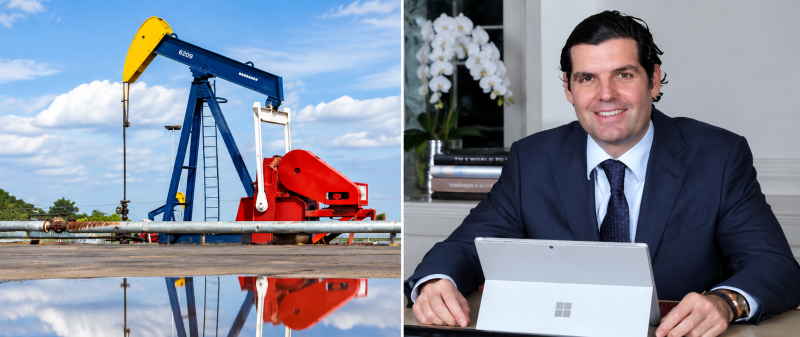
Under an agreement announced last week, the Pentagon’s Office of Strategic Capital will take a 35% stake in North American Blue Energy Partners, or NABEP, Betancourt’s company and an established crude producer in Venezuela. The U.S. State Department will also receive the right to purchase 20% of NABEP’s oil at cost, along with preferential access to the company’s remaining production.
The arrangement gives Washington access to a significant share of Venezuela’s crude production and places Betancourt at the center of an unusual partnership between the U.S. government and Venezuela’s emerging post-Maduro authorities.
A U.S. official, speaking anonymously, said Betancourt currently has no legal problems in the United States and argued that most of the legal challenges against him date back nearly a decade. The official said NABEP’s existing oil operations made Betancourt a suitable partner for increasing Venezuelan output.
Reuters, however, could not determine precisely when U.S. federal prosecutors paused their investigation or whether the decision was connected to Betancourt’s cooperation with the Trump administration.
Betancourt has assisted U.S. authorities in efforts targeting sanctioned oil shipments from Venezuela, according to people familiar with the matter. He also helped facilitate negotiations with Venezuelan officials, including Delcy Rodriguez, who became interim president following Maduro’s removal.
In January, Betancourt also helped broker an oil trading agreement that resulted in more than 135 million barrels of crude and fuel being exported to the United States, Europe, India and the Caribbean through the end of August, according to vessel-monitoring data and people familiar with the negotiations.
Yet his growing influence has raised concerns among some former U.S. intelligence officials, prosecutors and diplomats because of his previous legal scrutiny and connections to senior officials under Hugo Chavez and Maduro.
Betancourt has been investigated in the United States, Spain and Switzerland but has never been indicted. U.S. prosecutors had examined allegations involving more than $1 billion allegedly embezzled from PDVSA and laundered through property and international bank accounts. Betancourt has denied wrongdoing through his representatives.
Switzerland withdrew a UK extradition request in May, although Zurich prosecutors said the underlying criminal proceedings against Betancourt remain ongoing.
The controversy now surrounds a remarkable transformation: a businessman once scrutinized by U.S. investigators has become an important intermediary in Washington’s effort to revive Venezuela’s oil industry and establish new economic ties with Caracas.