
WEBDESK - NAYADAUR
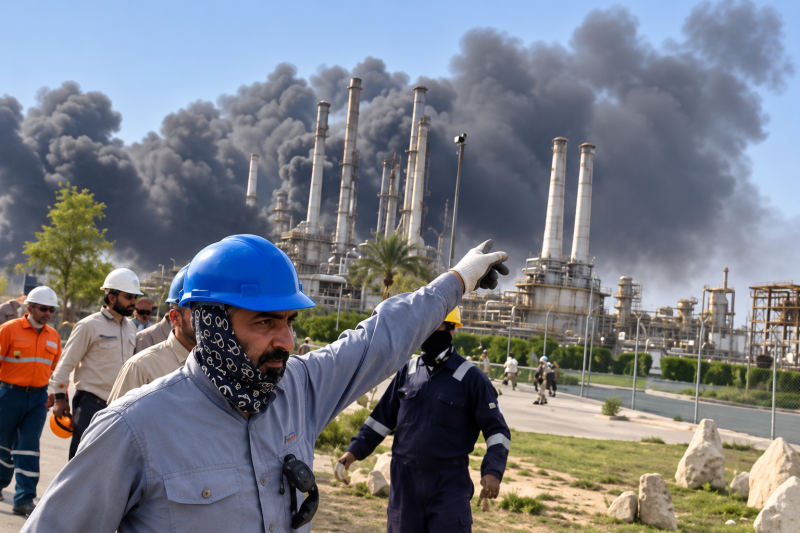
Global energy markets are facing renewed pressure as attacks and disruptions around Saudi Arabia threaten oil supplies, raising fears of higher fuel, gas and food prices worldwide.
Oil prices have risen by around 50% since July, reaching about $108 a barrel compared with roughly $70 two months earlier, according to the source material.
The sharp increase is already being felt by consumers. In Pakistan, petrol rose from Rs345.87 per litre on Sept. 5 to Rs391.22 on Sept. 17, while high-speed diesel increased from Rs378.05 to Rs415.83 per litre.
The increase comes as concerns grow over disruptions to major energy supply routes across the Middle East, including the Strait of Hormuz, the Bab al-Mandab Strait and Saudi Arabia’s alternative oil-export infrastructure.
Why are energy prices rising?
Analysts cited in the BBC report say reduced global supplies of oil, gas and liquefied natural gas are a major factor behind the latest price increases.
Before the war that began after US and Israeli attacks on Iran in late February, around 20% of global oil products and LNG shipments passed through the Strait of Hormuz, a strategically important waterway connecting the Gulf with the Arabian Sea.
The conflict has disrupted commercial shipping and energy infrastructure across the region. Attacks and blockades have reduced the volume of energy moving through the waterway, creating additional uncertainty for global markets.
Saudi Arabia responded by increasing its use of the East-West oil pipeline, allowing crude to be transported toward the Red Sea rather than relying entirely on the Strait of Hormuz.
The pipeline has the capacity to move about 3.6 million barrels of oil per day, according to maritime intelligence firm Kpler. But a drone attack last week forced the pipeline to close temporarily.
Saudi Arabia blamed Iran-backed militias in Iraq for the attack, while the Houthis have also launched drones and missiles against several Saudi oil facilities. Some facilities caught fire and operations were temporarily suspended.
The disruption has increased concerns about whether Saudi Arabia can maintain alternative routes for exporting crude if instability around regional waterways continues.
Bab al-Mandab adds another risk
The situation has also intensified around the Bab al-Mandab Strait, a major maritime route at the southern end of the Red Sea.
According to the BBC report, Houthi forces have recently pushed back Saudi-backed government forces and captured important areas close to the waterway.
Before the current disruption, around 5% of global oil supplies passed through Bab al-Mandab. Another roughly 5% moved through the northern Red Sea route toward the Mediterranean via the Suez Canal and a pipeline across Egypt.
The possibility of further attacks or restrictions on these routes is adding a risk premium to global energy prices.
The Houthis had announced a naval blockade against Saudi ships and ports in July but said ships belonging to other countries passing through the Red Sea would not be targeted.
US President Donald Trump, meanwhile, has attributed much of the recent increase in diesel prices worldwide to the Russia-Ukraine war rather than Iran. Russia is the world's second-largest diesel exporter, and Ukrainian drone attacks on Russian oil refineries have also placed pressure on diesel supplies.
However, many analysts cited in the report believe the expanding regional conflict in the Middle East is currently the main driver of the rapid increase in energy prices.
What could it mean for the global economy?
Sustained high energy prices can quickly spread through the wider economy. Higher fuel and electricity costs increase household expenses while raising transportation and production costs for businesses.
That can eventually push up prices for everyday goods, including food.
The International Monetary Fund estimates that a sustained 10% increase in oil prices could raise global inflation by 0.4 percentage points while reducing global GDP growth by about 0.2 percentage points.
The Bank of England estimates that a 10% increase in global oil prices could increase UK inflation by 0.5 percentage points in the short term and reduce economic growth by about 0.4 percentage points.
The rise in oil prices since June is roughly five times larger than the increase used in those economic models to assess the potential effects of higher oil costs.
For countries heavily dependent on imported fuel, the consequences can be particularly significant. Higher international oil prices can increase import bills, put pressure on currencies and raise transportation and electricity costs.
Pakistan is especially exposed to such changes because movements in international energy prices can feed directly into domestic petrol and diesel prices.
Could prices fall again?
The current surge is not necessarily permanent.
The BBC report notes that a peace agreement between the United States and Iran could ease pressure on global energy markets and push oil prices lower.
A similar reaction occurred in June, when an initial agreement between the warring sides caused oil prices to fall sharply. Prices had previously reached around $120 a barrel before dropping temporarily toward pre-war levels after the agreement.
The latest developments therefore leave global markets highly sensitive to both military developments and diplomatic efforts in the Middle East.
For consumers, however, the immediate concern is the possibility that continued disruption could keep energy prices elevated, increasing the cost of transportation, household energy and food.
Why it matters: A prolonged energy supply disruption in the Middle East could extend beyond petrol and diesel, affecting inflation, household budgets, interest rates, business costs and economic growth worldwide. Pakistan is already experiencing a sharp increase in domestic fuel prices.