
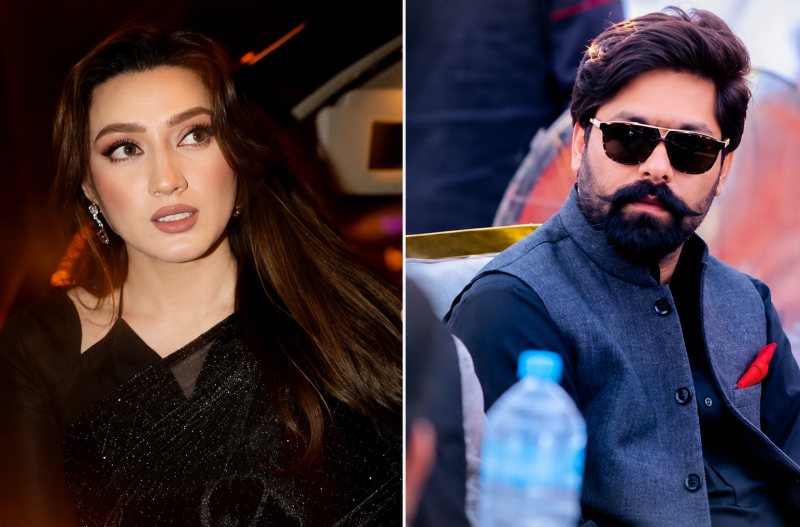
Actress Momina Iqbal has challenged a cybercrime investigation that cleared PML-N lawmaker Saqib Chadhar, alleging procedural irregularities and collusion while vowing to pursue justice.
WEBDESK - NAYADAUR
Pakistani actress Momina Iqbal and her lawyer have raised serious objections to a report by the National Cyber Crime Investigation Agency (NCCIA) that reportedly cleared Pakistan Muslim League-Nawaz lawmaker Saqib Chadhar in a harassment case, questioning the agency’s impartiality and saying they will challenge the findings in the Lahore High Court.
Speaking to reporters, Iqbal said she had initially placed her confidence in the legal process but was now deeply concerned about what she described as an unexplained change in the investigation.
“I trusted the law and closed my eyes,” Iqbal said, according to remarks reported by local media. She alleged that the investigation had been altered without informing her or her legal team and accused the agency of colluding.
Iqbal said her position from the beginning had been that the public representative facing serious allegations should be suspended while the matter was investigated.
She questioned how an elected representative could continue to hold office while facing such allegations.
“In any democracy, this does not happen,” she said, arguing that a public office-holder accused of serious wrongdoing should step aside while the allegations are examined.
The actress also said she had received offers to settle the matter and had been encouraged by others to withdraw from the dispute.
Iqbal said she had been told she was married and should now move on, while others allegedly suggested she use personal or political connections to resolve the matter.
She rejected those suggestions and said she intended to continue pursuing the case through legal and other available forums.
Iqbal also threatened to publish what she described as evidence on social media if she failed to obtain justice through the legal system.
“If I do not get justice from the law, I will put all the evidence before the public on social media,” she said, adding that she would allow the public to judge the matter.
She said she viewed her fight as representing women across Pakistan and vowed not to withdraw her allegations against Chadhar.
“I will go to every forum,” she said.
Iqbal’s lawyer separately questioned the circumstances surrounding the reported change in the investigation. He said the defense team had not requested that the investigation be transferred or altered, nor had it been informed of any such decision.
The lawyer pointed to what he described as a significant discrepancy between the agency’s earlier position before the court and its latest reported findings.
According to the lawyer, an NCCIA officer had told the court at the previous hearing that the agency required Chadhar’s arrest. He said the agency’s position had subsequently changed unexpectedly, with the latest report reportedly finding the lawmaker not responsible.
The lawyer said the sudden change raised questions that required judicial scrutiny.
He confirmed that Iqbal’s legal team was challenging the NCCIA report before the Lahore High Court.
The dispute draws renewed attention to the role of Pakistan’s cybercrime investigation authorities in cases involving allegations made on digital platforms and social media. Such cases can become particularly contentious when the people involved include public figures or elected representatives.
For now, the allegations made by Iqbal remain allegations and have not been established as facts by a court. The reported NCCIA finding that cleared Chadhar represents the agency’s position in the investigation, while Iqbal and her lawyer have disputed that conclusion and questioned how it was reached.
The controversy is therefore expected to move to court, where Iqbal’s legal team will seek to challenge the investigation and its conclusions.
The case also highlights the competing claims that can arise when a complainant disputes an investigative agency's findings. While Iqbal has said she intends to make evidence public if she does not receive justice through legal channels, any material released publicly would still be subject to scrutiny and would not, by itself, establish criminal liability.
Chadhar’s position on Iqbal’s latest allegations was not included in the material provided for this report. No independent finding has been presented in the supplied information establishing that the NCCIA acted in collusion or improperly altered its investigation.
Iqbal, however, has made clear that she intends to continue the legal battle. Her lawyer said the challenge before the Lahore High Court would seek judicial examination of the agency’s report and the circumstances surrounding the change in its investigative position.
The next stage of the dispute will therefore depend on the court’s consideration of the challenged report and any evidence presented to it by the actress, her legal representatives, and the relevant authorities.