
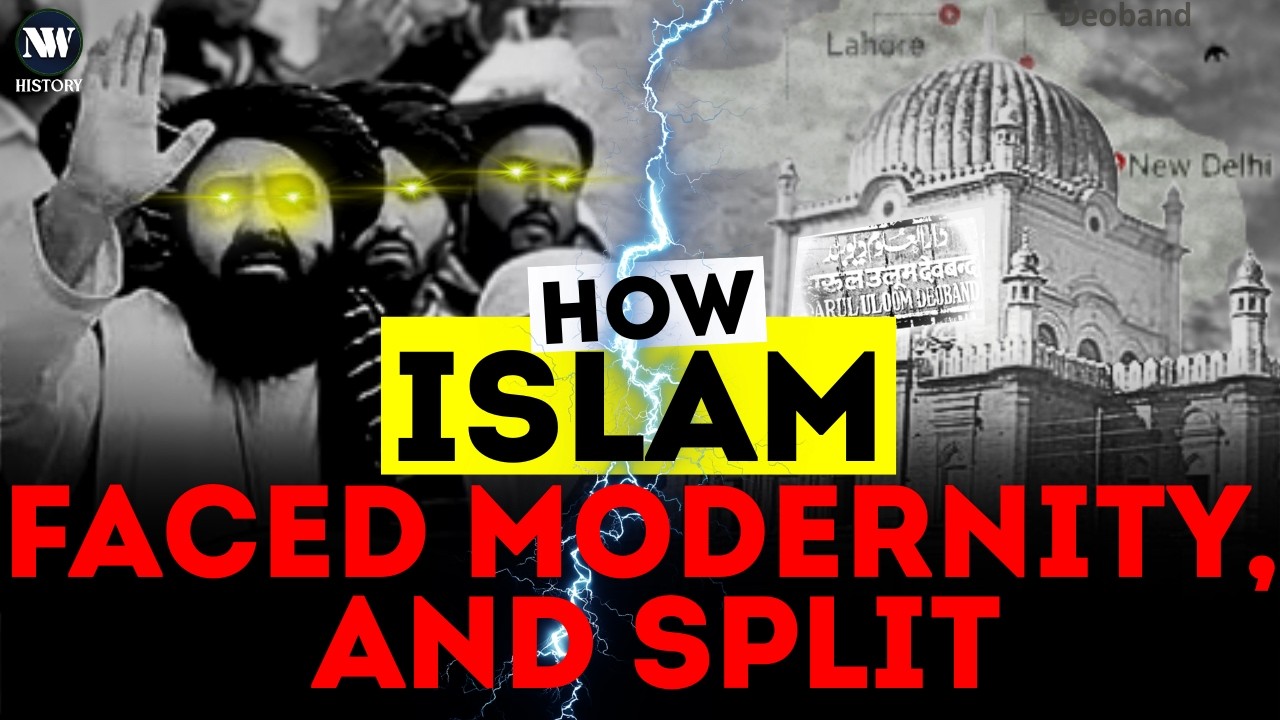
In the wake of the failed 1857 uprising, India’s Muslims faced an unprecedented crisis. The collapse of the Mughal Empire, the closure of courts, and the loss of traditional patronage networks left Islamic authority in disarray. British colonial rule reorganised law, education, and knowledge, relegating religion to private practice and ritual. How should Islam respond? Two contrasting answers emerged in late 19th-century India: the Deoband school and the Aligarh movement.
Darul Uloom Deoband, founded in 1866, chose strategic retreat. Rejecting British funding and aristocratic patronage, it relied on small public donations. Its model was institutionally modern, complete with curricula, exams, and salaried teachers, but intellectually conservative. Philosophy, historical criticism, and speculative theology were minimised or rejected, creating an “epistemic firewall” to protect religious certainty. While this approach preserved Islamic authority and moral continuity, it narrowed intellectual engagement, limited internal pluralism, and set the stage for later political divergences.
By contrast, the Aligarh movement, led by Syed Ahmad Khan, embraced modernity. Advocating engagement with science, history, and ethical reform, Aligarh positioned Islam as a tradition capable of dialogue with reason and modern institutions. Though not without flaws, including elite capture and a disconnect from popular practice, Aligarh recognised that survival required intellectual adaptation, not mere insulation.
The divergence of these two paths still resonates today. Deobandi institutions spread worldwide, often misrepresented as linked to extremism, while Aligarh’s legacy influenced educational reform and secular engagement. The historical lesson is stark: preserving tradition by retreating may safeguard authority in the short term, but it risks stagnation; engagement with modernity carries risk, but offers resilience through thought.
Ultimately, the debate is not about which approach was “right,” but about the broader question confronting every tradition: can a faith survive modernity without letting itself be changed by it?