
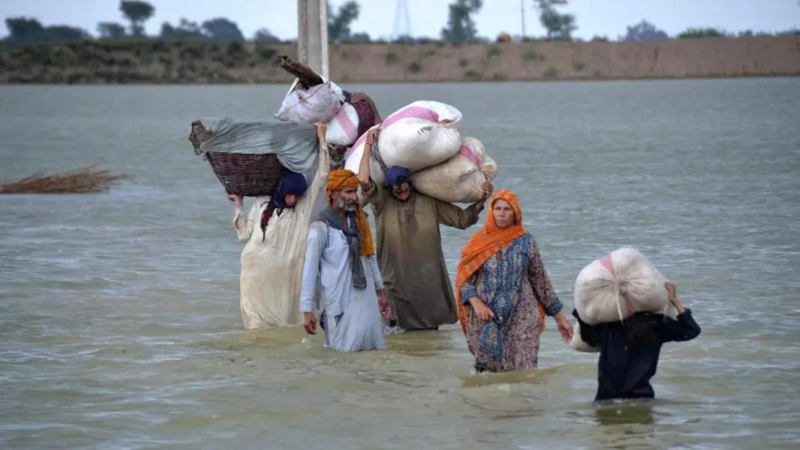
South Asia extends beyond mere geography; it represents an interconnected ecosystem where leaders, intermediaries, and communities must work together through cooperative and inclusive planning to enhance resilience and protect lives. As the global power shift moves towards Asia, China’s role in South and Southwest Asia is crucial for promoting regional climate security and tackling shared environmental challenges. The necessity of this change is emphasised by the limited progress achieved through multilateral frameworks such as the Conference of the Parties and the Paris Agreement. With COP30 taking place in Brazil this year and the Paris Agreement celebrating its tenth anniversary, countless individuals continue to be exposed to escalating climate dangers without timely means to reduce risks.
Climate change is complex, solutions are collaborative, and power dynamics are varied. These three elements must coincide to ensure a just and sustainable future for all. This requires a strategic re-evaluation and a policy overhaul that places ecological sustainability at the heart of the region’s foreign policy. Since the 1980s, China has transformed from a secluded agricultural society into a global leader with cutting-edge technology and strong human resources, positioning it as the region’s most influential actor. Boasting a $19.23 trillion economy, China has lifted 800 million people out of poverty and achieved significant advancements across key sectors.
As the highest riparian in the Himalaya-Karakoram-Hindukush (HKH) system, China possesses a total reservoir capacity approaching one trillion cubic metres. Political thought must adapt to address the existential challenge of climate change. India, with a population of 1.4 billion and an economy valued at $4.37 trillion, has made remarkable progress since the 1990s. Although malnutrition remains a concern, India has helped 171 million people escape extreme poverty. As a country situated along major rivers, it maintains numerous significant reservoirs capable of storing water for up to 170 days and continues to play a central role in regional water-sharing agreements.
Climate change is an unconventional threat that cannot be addressed through military strategies
Pakistan, with a population of 240 million, faces a diminishing resource base. The state has demonstrated resilience during periods of slow economic growth and seeks to evolve into a middle-income nation. Nevertheless, escalating climate impacts, unsustainable population growth, and rising inflation complicate this endeavour. As a lower riparian, Pakistan depends on a single river basin with only 30 days’ worth of water storage capacity.
All three countries possess nuclear capabilities, maintain robust armed forces, and are engaged in ongoing political conflicts. Ironically, they overlook a shared threat—climate change—which poses a greater risk than any military adversary. Rapidly rising temperatures are destabilising the cryosphere, particularly in the Third Pole, where snow and glacier melt support over a billion people. The consequences of this ecological collapse will be more devastating than any damage inflicted by the most advanced military equipment.
The impending ‘climate wars’ will be fought across multiple domains characterised by melting glaciers, a crumbling cryosphere, rising sea levels, catastrophic floods, wildfires, extreme heatwaves, and fierce storms. Ignoring these growing threats, as carbon feedback loops emerge throughout ecosystems, is irresponsible.
A collaborative riparian governance framework is essential for stabilising the hydrological system in the HKH region. Failure to do so will exacerbate current vulnerabilities and may trigger conflicts over diminishing resources. Progress will require attention to urgent hazards that demand cooperation, even where opinions differ on other issues. Water security should be regarded as the foundation, with hydro-diplomacy at the core of regional security to prevent potential flashpoints.
As the world’s second-largest economy, with advancing technological capabilities and an expanding middle class, China is capable of influencing the geopolitical framework of the 21st century and must now broaden that leadership to include climate security. As the highest upstream nation, China could host a regional COP, followed by rotating hosts, focusing on the cryosphere.
Traditionally, China has relied on stability to drive prosperity. Hosting a regional COP would bring HKH nations together to develop collaborative strategies for risk reduction and sustainable water management, showcasing leadership rooted in shared ecological concerns rather than political divisions.
A unified regional approach to managing the Third Pole can unite essential stakeholders and promote an ecological alliance focused on both natural ecosystems and human health. This would provide a crucial framework for cooperation, risk mitigation, and enduring ecological sustainability among HKH nations. In its absence, the region faces both ecological disaster and political strife.
Leadership in climate diplomacy would also align with the region’s cultural values. For centuries, Chinese philosophy has revered water as the source of life. In the Analects, Confucius likens the qualities of wise individuals to water—flexible, versatile, and constantly evolving. The power of water derives from its adaptability; nations must similarly adjust to changing conditions.
Now is the moment to embrace this civilisational wisdom. Just as rivers must flow to sustain life, political thought must adapt to confront the urgent challenge of climate change. A new climate security framework should emerge, founded on collaboration, environmental stewardship, and a shared understanding of human security.
South Asia faces a profound danger and requires a regional water agreement to maintain harmony. Climate change is an unconventional threat that cannot be addressed through military strategies. Nuclear weapons cannot prevent hydro-meteorological disasters, nor can tanks and fighter jets restore broken lives or heal divided communities.
Discussions, however, can prevent circumstances from escalating into conflict and result in resolutions that benefit all parties.