
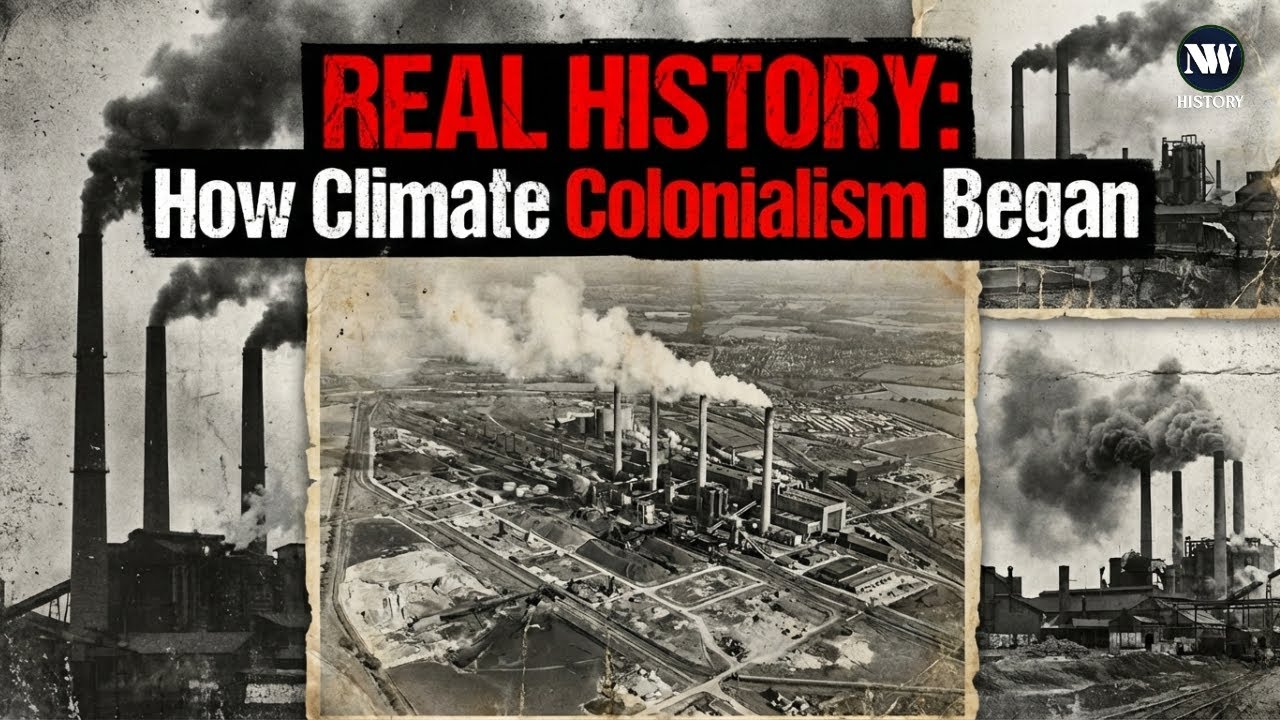
As world leaders prepare for climate summits such as COP30, the global conversation remains focused on emissions targets, green technologies and future commitments. Yet historians and climate scholars argue that this framing overlooks a deeper truth: the climate crisis did not begin in the modern industrial age, but in the centuries of colonial rule that reshaped the planet’s ecosystems for profit.
Climate change, they argue, is the long afterlife of empire. From the 16th century onwards, European colonial powers transformed land, labour and nature into extractive systems designed to feed imperial markets. Forests were cleared, rivers redirected and soils exhausted, not for local survival, but for global trade.
Colonial administrations dismantled indigenous systems of land management that had evolved over generations to maintain ecological balance. Diverse farming practices were replaced with monocultures built around export crops, sugar in the Caribbean, cotton in India, rubber in Southeast Asia and coffee in Africa. These plantation economies depleted soils, accelerated deforestation and locked entire regions into environmental vulnerability.
British rule in India offers a stark illustration. Traditional agriculture, adapted to monsoon cycles and climate variability, was reoriented towards cash crops such as indigo and cotton. When droughts or market crashes followed, famine ensued. Between the late 18th and early 20th centuries, tens of millions died in colonial-era famines, disasters now understood as climate shocks intensified by imperial policy.
The rise of fossil fuels is equally entangled with colonialism. The Industrial Revolution was powered not only by European innovation, but by coal, oil and minerals extracted from colonies that were denied the right to industrialise themselves. This created a global carbon divide, with the Global North reaping prosperity while the Global South absorbed ecological damage.
Today, the countries most exposed to floods, heatwaves and food insecurity, Pakistan, Bangladesh, Sudan and small island states, share a history of colonial extraction without investment in resilience. Climate vulnerability, scholars note, follows the map of empire.
As climate negotiations increasingly acknowledge ideas such as “climate debt”, critics argue that without confronting colonial responsibility, climate policy risks repeating old patterns: solutions designed by the powerful, imposed on the vulnerable. Until justice becomes central to climate action, they warn, the crisis will remain unresolved, history, finally, catching up.