
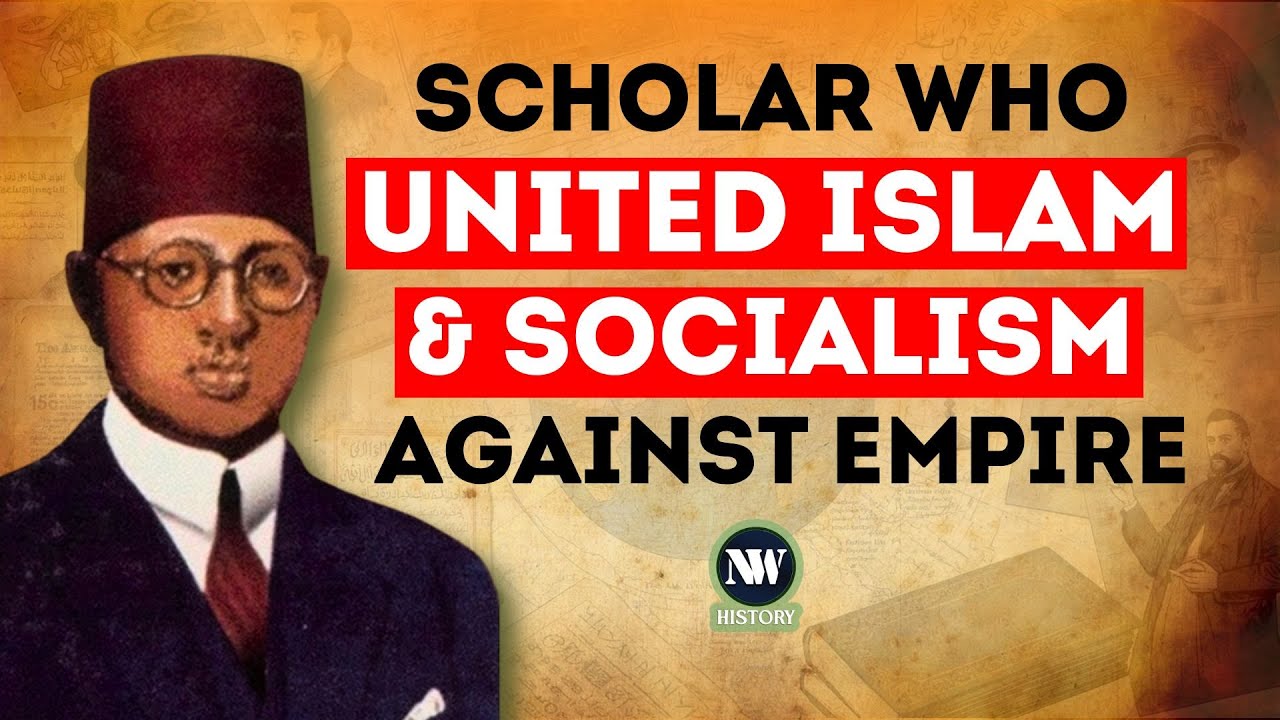
In the early 20th century, as European empires appeared unshakable, a little-known South Asian revolutionary was weaving together ideas that challenged their very foundations. Maulvi Barkatullah Bhopali, born in 1854 in the princely state of Bhopal, rose from a traditional Islamic education to become one of the most influential yet overlooked figures of the global anti-colonial movement.
Educated at Darul Uloom Deoband, Barkatullah’s worldview was reshaped by the devastating famines of the 1890s, when millions in India perished while the British exported grain abroad. These experiences pushed him beyond purely religious opposition to colonialism, towards an economic critique that echoed socialist thought.
By the early 1900s, Barkatullah had established himself in Tokyo, teaching at the Imperial University and networking with Asian revolutionaries such as Sun Yat-sen and Phan Bội Châu. Inspired by Japan’s 1905 victory over Russia, he envisioned a pan-Asian front against Western domination, blending Islamic revival with socialist internationalism. His writings, including the pamphlet The Sword, framed Japan’s triumph as a turning point for oppressed peoples worldwide.
British authorities soon marked him as a dangerous agitator. Expelled from Japan under Anglo-Japanese pressure, Barkatullah moved across continents—from Berlin to the United States—where he edited radical newspapers and built alliances with Irish republicans, African American activists, and socialist workers. During the First World War, he co-founded the Indian Independence Committee in Germany and issued the fiery 1915 fatwa Jihad Against England, reframing anti-colonial struggle as both a religious duty and a revolt against capitalist exploitation.
In Kabul, Barkatullah briefly served as Prime Minister of the Provisional Government of India in exile, advocating land reform, workers’ rights, and Islamic principles of social justice. Though his revolutionary projects faltered after the war and the fall of the Ottoman Caliphate, his intellectual legacy endured.
Barkatullah died in San Francisco in 1927, but his life symbolised the transnational character of anti-colonial resistance. Bridging Islam, socialism, and pan-Asian solidarity, he remains a powerful reminder that colonised thinkers were not mere followers but active shapers of global political ideas.